THE CLASSIC COLLECTION✦A dead man’s diaryCLASSIC FREE BOOKS
A dead man’s diary
Coulson Kernahan
THE CLASSIC COLLECTION · 1911
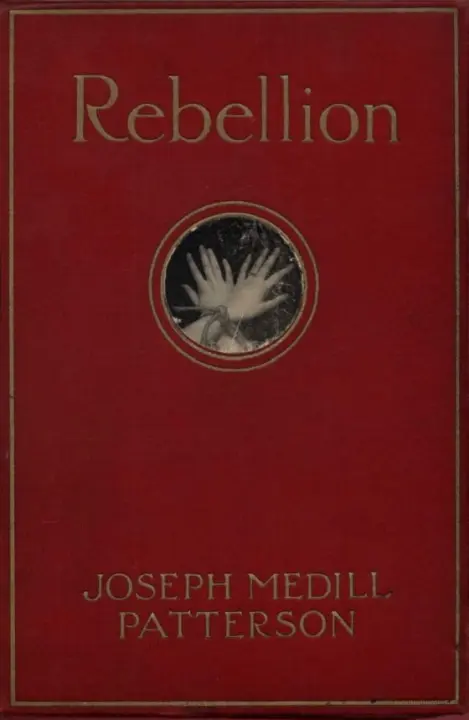
"Rebellion" by Joseph Medill Patterson is a novel written in the early 20th century. The story explores the tumultuous life of Jim Connor, a ward heeler struggling with his alcoholism, strained marriage, and the political dynamics of his job. Through Jim's perspective, it delves into themes of personal failure, the complexities of relationships, and the socio-political environment of the time. At the start of the novel, we are introduced to Jim Connor, enjoying camaraderie in a bar while trying to keep promises to his wife, Georgia. It becomes clear that Jim is trapped in a cycle of drinking, regret, and the fear of confronting Georgia over his late return home for supper. As he reflects on their past and the evolution of their relationship, it is revealed that Jim's alcoholism is a recurring issue that strains their marriage. The opening scenes establish the tone of desperation and discontent that pervades Jim's life, giving readers insight into his conflicted character and the challenges he faces both at home and in the political arena.
Introduction adapted from the source catalogue; source summaries may be automatically generated.
Free to read · English · 59,811 words · No account needed
MAKE TIME FOR A GOOD BOOK
On by default. Untick to stop anonymous reading totals. Each page counts after 10 seconds in view. How this works.
Anonymous counting is on unless you have switched it off.
"Nope, promised to be home on time for supper."
"Get panned last night!"
"Yep."
The group of men turned to the clock which was ticking high up on the wall between the smudgy painting of Leda and The Swan and the framed group photograph of famous pugilists from Paddy Ryan to the present day.
"It's only nineteen past; plenty time for just one more."
Jim Connor compared his watch with the clock and found they tallied. The grave bartender took the dice and box from behind the cigar counter and courteously placed them upon the bar.
"Well," bargained Jim, "if it is just one more."
"J.O.M." they chorused, and the dice rolled upon the polished oak.
"What'll it be, gents?"
"Beer."
"Scotch high."
"Bourbon."
"A small beer, Jack."
"Beer."
"Yours, Jim?" prompted the watchful bartender.
"Well--I guess you can give me a cigar this time, Jack."
The practiced bartender, standing by his beer pump, slid the whisky glasses along the slippery counter with a delicate touch, as a skillful dealer distributes cards. He set out the red and smoky whiskies, the charged water, the tumbler, with its cube of ice; drew two glasses of beer, scraped the top foam into the copper runway, and almost simultaneously, as if he had four hands, laid three open cigar boxes before Jim, who selected a dark "Joe Tinker."
"Join us, Jack," invited the loser of the dice game, hospitably waving his hand. The efficient bartender drew a small half-glass of lithia for himself. Five feet rested upon the comfortable rail before the bar, there was the little pause imposed by etiquette, six glasses were raised to eye-level.
"Here's whatever."
"Happy days."
"S'looking at you," ran the murmur.
"The big fellow!" exclaimed one.
Chorus: "Yes, the big fellow!"
"I'll sure have to come in on that," said Jim, pressing between two shoulders to the bar. "A little bourbon, Jack," he asked briskly.
The other glasses were lowered until Jim also received his.
Then all were again raised to eye-level. Unanimously, "The big fellow!"
Heads were thrown back and each ego there, except the bartender, received a charming little thrill.
The beer men wandered to the back of the saloon and dipped into a large pink hemisphere of cheese. The whisky men suppressed coughs. Jim tipped his head back about five degrees and inquired, "Is the big fellow coming 'round to-night?"
"He's due," replied Jack, wiping his bar dry again.
"How's things looking to you?"
"We--ell, there's always a lot of knockers about."
Your reading position is saved on this browser. Take it to another device with a library code. Reading pages adapt to text, rather than matching a printed edition.
BEHIND THE BOOK
This eBook is for the use of anyone anywhere in the United States and most other parts of the world at no cost and with almost no restrictions whatsoever. You may copy it, give it away or re-use it under the terms of the Project Gutenberg License included with this eBook or online at www.gutenberg.org. If you are not located in the United States, you will have to check the laws of the country where you are located before using this eBook. Read the source licence.
The original source file, including credits and licence, is retained by this library. Request an original-format copy at no charge. Please include the book title and Project Gutenberg identifier #56455.
KEEP YOUR CURIOSITY GOING
Coulson Kernahan

Maurice Baring
Frances Wright
Cécile Tormay

Frederic Jesup Stimson

W. H. P. (William Henry Pope) Jarvis