THE CLASSIC COLLECTION✦A dead man’s diaryCLASSIC FREE BOOKS
A dead man’s diary
Coulson Kernahan
THE CLASSIC COLLECTION · 1911
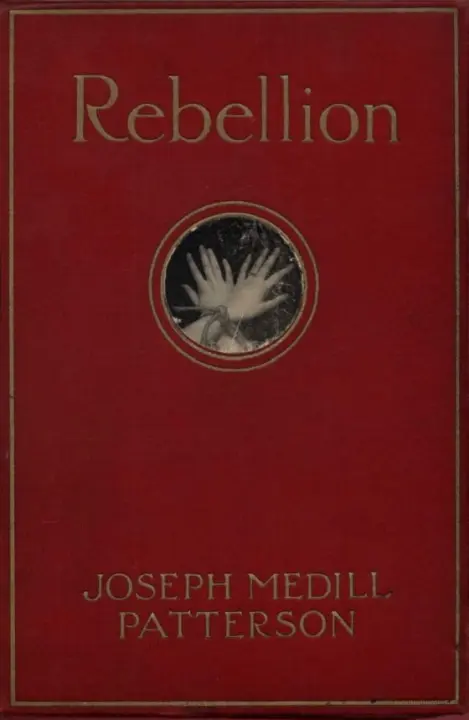
"Rebellion" by Joseph Medill Patterson is a novel written in the early 20th century. The story explores the tumultuous life of Jim Connor, a ward heeler struggling with his alcoholism, strained marriage, and the political dynamics of his job. Through Jim's perspective, it delves into themes of personal failure, the complexities of relationships, and the socio-political environment of the time. At the start of the novel, we are introduced to Jim Connor, enjoying camaraderie in a bar while trying to keep promises to his wife, Georgia. It becomes clear that Jim is trapped in a cycle of drinking, regret, and the fear of confronting Georgia over his late return home for supper. As he reflects on their past and the evolution of their relationship, it is revealed that Jim's alcoholism is a recurring issue that strains their marriage. The opening scenes establish the tone of desperation and discontent that pervades Jim's life, giving readers insight into his conflicted character and the challenges he faces both at home and in the political arena.
Introduction adapted from the source catalogue; source summaries may be automatically generated.
Free to read · English · 59,811 words · No account needed
MAKE TIME FOR A GOOD BOOK
On by default. Untick to stop anonymous reading totals. Each page counts after 10 seconds in view. How this works.
Anonymous counting is on unless you have switched it off.
There is a cement path with a sloping concrete breakwater which winds between Lake Michigan on one side and Lincoln Park on the other for a distance of several miles. Here come the people in endless procession from morning until midnight, two by two, male and female, walking slow and talking low, permeated by the souls of children begging life.
It is a chamber of Maeterlinck's azure palace of the unborn.
Presently, by good luck, Georgia and her lover came upon a bench just as another couple was quitting it--the supply of benches being inadequate to the demands of pleasant evenings in spring. The departing two passed, one around each end of the seat, and walked rapidly, several feet apart, across the strip of lawn and bridal path beyond. They were delayed at the curb by the stream of automobiles and stood out in clear relief against the passing headlights.
It was evident they had been quarreling, for the man looked sullen and the woman, half turned away, shrugged her shoulders to what he was saying.
Georgia had been watching them. "Too bad," said she, "they're having a
row."
"Perhaps they're not meant for each other."
"Everyone quarrels sometimes," she answered, "meant or not."
"Do you think we would, if----"
"I'm sure of it," she replied sharply. "We're human beings, not
angels."
There was doubtless common sense in what she said, but nevertheless it delighted him not. He wished that she could in such moments as these, yield herself fully to the illusion which possessed him that their life together would be one sempiternal climax of joy.
"I honestly believe," he asserted solemnly, "that sometimes two natures are so perfectly adjusted that there is no friction between them."
"Rubbish," she replied, quoting a newly read Shaw preface, "people aren't meant to stew in love from the cradle to the grave."
She couldn't understand her own mood. She had arranged this evening with Stevens to tell him that she was ready to marry him, and she found herself unable to. Her conscious purpose was the same as ever.
Yet as often as she summoned herself to look the look or keep the silence which would put in train his declaration, it seemed as if she received from her depths a sudden and imperative mandate against it.
It was her long silence while she was pondering over these strange things which gave him a false cue and he entered to the center of her consciousness.
"This wasting of ourselves must go on until he dies?"
"The only way out is death," she said slowly, "or apostasy."
"Apostasy!" The word had an ugly sound even for him.
Your reading position is saved on this browser. Take it to another device with a library code. Reading pages adapt to text, rather than matching a printed edition.
BEHIND THE BOOK
This eBook is for the use of anyone anywhere in the United States and most other parts of the world at no cost and with almost no restrictions whatsoever. You may copy it, give it away or re-use it under the terms of the Project Gutenberg License included with this eBook or online at www.gutenberg.org. If you are not located in the United States, you will have to check the laws of the country where you are located before using this eBook. Read the source licence.
The original source file, including credits and licence, is retained by this library. Request an original-format copy at no charge. Please include the book title and Project Gutenberg identifier #56455.
KEEP YOUR CURIOSITY GOING
Coulson Kernahan

Maurice Baring
Frances Wright
Cécile Tormay

Frederic Jesup Stimson

W. H. P. (William Henry Pope) Jarvis