THE CLASSIC COLLECTION✦A dead man’s diaryCLASSIC FREE BOOKS
A dead man’s diary
Coulson Kernahan
THE CLASSIC COLLECTION · 1911
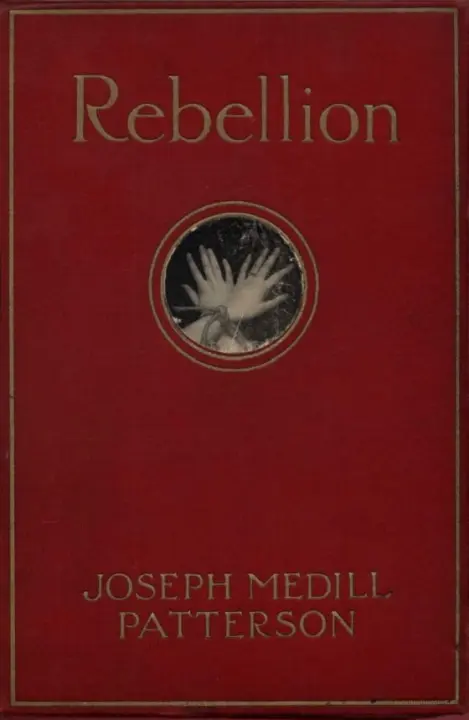
"Rebellion" by Joseph Medill Patterson is a novel written in the early 20th century. The story explores the tumultuous life of Jim Connor, a ward heeler struggling with his alcoholism, strained marriage, and the political dynamics of his job. Through Jim's perspective, it delves into themes of personal failure, the complexities of relationships, and the socio-political environment of the time. At the start of the novel, we are introduced to Jim Connor, enjoying camaraderie in a bar while trying to keep promises to his wife, Georgia. It becomes clear that Jim is trapped in a cycle of drinking, regret, and the fear of confronting Georgia over his late return home for supper. As he reflects on their past and the evolution of their relationship, it is revealed that Jim's alcoholism is a recurring issue that strains their marriage. The opening scenes establish the tone of desperation and discontent that pervades Jim's life, giving readers insight into his conflicted character and the challenges he faces both at home and in the political arena.
Introduction adapted from the source catalogue; source summaries may be automatically generated.
Free to read · English · 59,811 words · No account needed
MAKE TIME FOR A GOOD BOOK
On by default. Untick to stop anonymous reading totals. Each page counts after 10 seconds in view. How this works.
Anonymous counting is on unless you have switched it off.
Mason drew on him for one thousand dollars, and obtained two five hundred dollar bills, one of which, after duly cautious preliminaries, he handed to the cashier, the other to the auditor of the Phosphate National. Again, after duly cautious preliminaries, they accepted. These two gentlemen had been detailed a committee to draw up for the convenience of the bank's Board of Directors an analytical syllabus of the differing propositions offered by the competing insurance companies. The Eastern Life got the Phosphate National's business, followed by that of its subsidiary, the Trust & Savings Bank, and Mason got Mr. Silverman's congratulations.
Two days later Silverman walked unexpectedly into Plaisted's office. Plaisted, who had just that instant signed his name to a letter addressed to his visitor in New York, was rattled.
"Mr. Plaisted," said Mr. Silverman, biting off the end of a three-for-a-dollar, "I have found out what is the trouble, that is, the main trouble with your agency here."
Plaisted winced. He hadn't realized that there was any trouble, and certainly not any main trouble with his agency. "Yes, Mr. Silverman."
"You're undermanned."
"Why, yes--perhaps. I've thought of breaking in a few new agents this
winter."
"No," said Silverman, "I mean you're undermanned at the top. Weak on
the executive side."
"Oh," said Plaisted.
"You need new blood, new ideas, new life, hustle," he snapped his fingers with each successive word--"speed--force--energy--vigor-- enterprise--vitality--dynamics--do you get me?"
"I--yes--I'm sure I do," answered Plaisted, in considerable
apprehension.
"I suggest therefore that you appoint young Stevens--you have met him?"
"Yes," answered Plaisted, who detested the ground Mason walked on, "I
have met him."
"I suggest you appoint him as your first assistant," remarked Mr. Silverman, calmly eyeing Plaisted. "He will take the burden of details off your shoulders."
"I--ah--don't know, Mr. Silverman, if that would be entirely wise. You see our methods--his and mine--"
"I have made my suggestion, Mr. Plaisted," answered Silverman slowly. "In my judgment that would be the best thing to do."
The two men looked at each other until at last Plaisted dropped his eyes murmuring, "I will think it over."
"I leave at two. I should like to know your decision before then."
Plaisted yielded by telephone within half an hour.
He wasn't deprived of the corner room; he would continue to sign General Agent after his name. But he realized bitterly that he had left to him only the shadow of his long authority. The substance had passed to the young stranger.
Your reading position is saved on this browser. Take it to another device with a library code. Reading pages adapt to text, rather than matching a printed edition.
BEHIND THE BOOK
This eBook is for the use of anyone anywhere in the United States and most other parts of the world at no cost and with almost no restrictions whatsoever. You may copy it, give it away or re-use it under the terms of the Project Gutenberg License included with this eBook or online at www.gutenberg.org. If you are not located in the United States, you will have to check the laws of the country where you are located before using this eBook. Read the source licence.
The original source file, including credits and licence, is retained by this library. Request an original-format copy at no charge. Please include the book title and Project Gutenberg identifier #56455.
KEEP YOUR CURIOSITY GOING
Coulson Kernahan

Maurice Baring
Frances Wright
Cécile Tormay

Frederic Jesup Stimson

W. H. P. (William Henry Pope) Jarvis