THE CLASSIC COLLECTION✦A dead man’s diaryCLASSIC FREE BOOKS
A dead man’s diary
Coulson Kernahan
THE CLASSIC COLLECTION · 1923
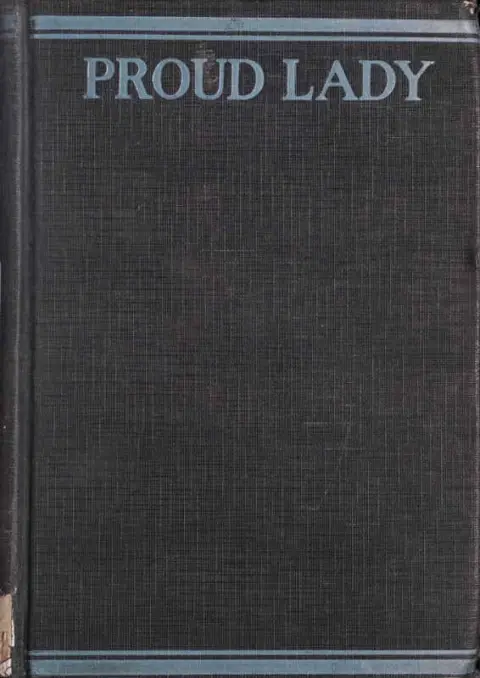
"Proud Lady" by Neith Boyce is a novel written in the early 20th century. The story centers on the life of Mary Lavinia, who navigates complex family dynamics, societal expectations, and her own feelings about love and independence as she contemplates her engagement to Laurence Carlin, a soldier returning from war. As the characters interact against the backdrop of societal class distinctions and personal trials, the novel explores themes of love, duty, and self-discovery. The opening of the story introduces Mary, who is waiting for her mother to return from church while the train carrying returning soldiers approaches. Mary's mixed emotions are palpable as she reflects on her relationship with her mother and her father, who is occupied in his office. When Laurence, the returning soldier, arrives, their reunion is marked by joy and tension as Mary grapples with her feelings towards him. The scene also reveals familial opposition to their union, especially from her mother, highlighting the class divides and the personal struggles each character must confront. The narrative sets the stage for deeper conflicts regarding love, social expectations, and what it means to be true to oneself.
Introduction adapted from the source catalogue; source summaries may be automatically generated.
Free to read · English · 79,296 words · No account needed
MAKE TIME FOR A GOOD BOOK
On by default. Untick to stop anonymous reading totals. Each page counts after 10 seconds in view. How this works.
Anonymous counting is on unless you have switched it off.
The doctor returned earlier than usual, and was able to work for an hour in his garden, before dark. Mrs. Lowell, wrapped in a purple shawl, stood in the path, while he was turning over the soil with a pitchfork. She often objected to his working on Sunday. The doctor pointed out that his hedges were thick enough to conceal him from observation; she said that being seen wasn't what mattered, but breaking the Sabbath; whereupon the doctor alleged that he felt more religious when working in his garden than any other time, so that Sunday seemed a particularly appropriate day to work in it. This would reduce Mrs. Lowell to silence; she always looked scandalized when her husband referred to religion, suspecting blasphemy somewhere.
This old dispute was not in question now, however. In answer to a question about "the young folks," Mrs. Lowell had said curtly that they were out walking. Then she had stood silent, her broad pale face, with its keen eyes and obstinate mouth, expressing so plainly trouble and chagrin that the doctor spoke very gently.
"You mustn't worry about it, Mother."
Her chin trembled and she set her mouth more firmly.
"Of course I worry about it! I never liked it!"
"No, I know you didn't. But Laurence isn't a bad fellow."
"That's a high praise for a man that--that--!"
"Yes, I know, you think he isn't good enough for Mary. But you wouldn't think anybody good enough."
"I've seen plenty better than Laurence Carlin! Who is he, anyway--the son of a labourer, a man that worked for day-wages when he wasn't too drunk!"
"Oh, come now, Mother! Don't shake the family crest at us. Your father was a carpenter--and don't I work for wages?"
"My father was a master-carpenter and had his own shops and workmen, as you know very well!" cried Mrs. Lowell, flushing with wrath. "And if you like to say you work for wages, when it isn't true, you can, of course! Anyhow my people and yours too were good Americans for generations back and not bog-trotting Irish peasants!"
"Now, Mother, who told you Laurence's ancestors trotted in bogs? They
may have been--"
"Didn't his father come over here with a bundle on his back, an
immigrant?"
"Why, now, we're all immigrants, more or less, you know. Didn't your ancestors come over from England?"
"James Lowell--"
"Yes, I know, they came in the Mayflower, or pretty nearly ... that is, those that did come. Of course, on one side you're right, and we're all immigrants and foreigners, except you! You're the only real native American!"
Your reading position is saved on this browser. Take it to another device with a library code. Reading pages adapt to text, rather than matching a printed edition.
BEHIND THE BOOK
This eBook is for the use of anyone anywhere in the United States and most other parts of the world at no cost and with almost no restrictions whatsoever. You may copy it, give it away or re-use it under the terms of the Project Gutenberg License included with this eBook or online at www.gutenberg.org. If you are not located in the United States, you will have to check the laws of the country where you are located before using this eBook. Read the source licence.
The original source file, including credits and licence, is retained by this library. Request an original-format copy at no charge. Please include the book title and Project Gutenberg identifier #62478.
KEEP YOUR CURIOSITY GOING
Coulson Kernahan

Maurice Baring
Frances Wright
Cécile Tormay

Frederic Jesup Stimson

W. H. P. (William Henry Pope) Jarvis