THE CLASSIC COLLECTION✦A dead man’s diaryCLASSIC FREE BOOKS
A dead man’s diary
Coulson Kernahan
THE CLASSIC COLLECTION · 1923
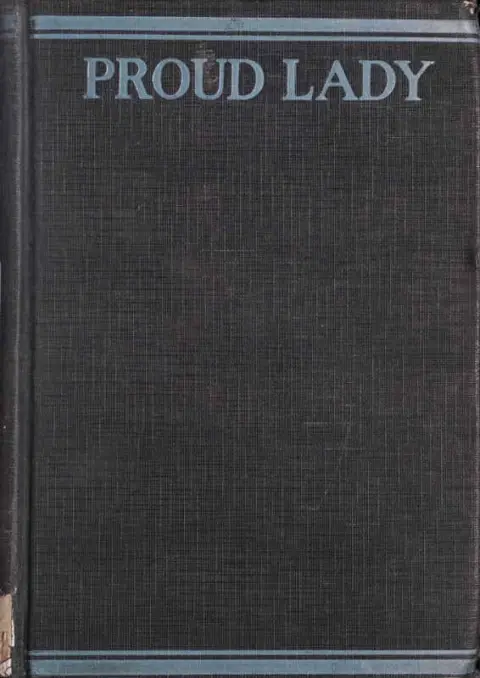
"Proud Lady" by Neith Boyce is a novel written in the early 20th century. The story centers on the life of Mary Lavinia, who navigates complex family dynamics, societal expectations, and her own feelings about love and independence as she contemplates her engagement to Laurence Carlin, a soldier returning from war. As the characters interact against the backdrop of societal class distinctions and personal trials, the novel explores themes of love, duty, and self-discovery. The opening of the story introduces Mary, who is waiting for her mother to return from church while the train carrying returning soldiers approaches. Mary's mixed emotions are palpable as she reflects on her relationship with her mother and her father, who is occupied in his office. When Laurence, the returning soldier, arrives, their reunion is marked by joy and tension as Mary grapples with her feelings towards him. The scene also reveals familial opposition to their union, especially from her mother, highlighting the class divides and the personal struggles each character must confront. The narrative sets the stage for deeper conflicts regarding love, social expectations, and what it means to be true to oneself.
Introduction adapted from the source catalogue; source summaries may be automatically generated.
Free to read · English · 79,296 words · No account needed
MAKE TIME FOR A GOOD BOOK
On by default. Untick to stop anonymous reading totals. Each page counts after 10 seconds in view. How this works.
Anonymous counting is on unless you have switched it off.
In the dusk Mary stood waiting for him by the gate. He had thought she might be piqued or angry at him, but she met him without the slightest coquetry, asking only where on earth he had been all day. Her tone was almost motherly, a little anxious, as if he had been a truant child. He liked it.
They sat on the steps. The wind had fallen and the evening was warm. There was the crescent moon over the tree-tops, but tonight it was hazy, a veil had drawn across the sky. There was rain in the air. A syringa-bush beside the steps, in flower, and the honeysuckle over the porch, were strongly fragrant.
"I'll tell you in a little while, I'm tired," said Laurence lazily. He leaned his head against her knee and she swept her cool finger-tips over his crisp black hair, touching his temples and his eyelids.
"Are you?" she asked softly.
He sighed with pleasure, shutting his eyes, knowing that he could take his time to speak, Mary was in no hurry, she never was. Sometimes her silence and repose had irritated him, but more often it was a deep pleasure to him. The night was as quiet as she. Not a leaf stirred. A cricket chirped under the porch. The honeysuckle was almost too sweet in the damp air. Thin veil upon veil hid the stars, and the moon was only a soft blur.
When her hand ceased to touch his hair, he reached up and took it, clasping the cool strong fingers and soft palm. He moved and looked up at her. She wore a white dress, sweeping out amply from the waist, open a little at the neck, and she had a flower of the syringa in her hair. The outline of her face, bent above him, was clear and lovely.
"How beautiful you are," he murmured. "I love you."
She put her arms around him and drew him up, his head to her shoulder.
"And I'm very, very fond of you," she whispered. "More than I ever was of anybody. But sometimes you're so impatient."
"Yes," he said submissively.
"You get angry with me. You always did."
"Yes," he said humbly. "I'll try not to. But sometimes I think you
don't love me."
"But I do," she assured him gently.
"But sometimes--" he stopped.
"Well, what?"
"No, I won't say it."
"Yes, tell me."
"Well, sometimes--you don't seem to like to have me touch you, you--"
"I don't like you to be rough," said Mary.
"Am I--rough?"
"Sometimes."
"But if you liked me, you--"
"No, I do, and you know it."
"I don't see why you should, after all."
"Should what?"
Your reading position is saved on this browser. Take it to another device with a library code. Reading pages adapt to text, rather than matching a printed edition.
BEHIND THE BOOK
This eBook is for the use of anyone anywhere in the United States and most other parts of the world at no cost and with almost no restrictions whatsoever. You may copy it, give it away or re-use it under the terms of the Project Gutenberg License included with this eBook or online at www.gutenberg.org. If you are not located in the United States, you will have to check the laws of the country where you are located before using this eBook. Read the source licence.
The original source file, including credits and licence, is retained by this library. Request an original-format copy at no charge. Please include the book title and Project Gutenberg identifier #62478.
KEEP YOUR CURIOSITY GOING
Coulson Kernahan

Maurice Baring
Frances Wright
Cécile Tormay

Frederic Jesup Stimson

W. H. P. (William Henry Pope) Jarvis