THE CLASSIC COLLECTION✦A dead man’s diaryCLASSIC FREE BOOKS
A dead man’s diary
Coulson Kernahan
THE CLASSIC COLLECTION · 1923
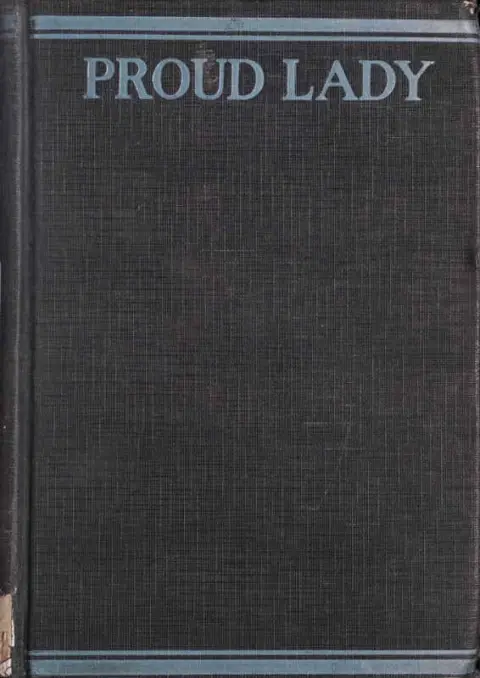
"Proud Lady" by Neith Boyce is a novel written in the early 20th century. The story centers on the life of Mary Lavinia, who navigates complex family dynamics, societal expectations, and her own feelings about love and independence as she contemplates her engagement to Laurence Carlin, a soldier returning from war. As the characters interact against the backdrop of societal class distinctions and personal trials, the novel explores themes of love, duty, and self-discovery. The opening of the story introduces Mary, who is waiting for her mother to return from church while the train carrying returning soldiers approaches. Mary's mixed emotions are palpable as she reflects on her relationship with her mother and her father, who is occupied in his office. When Laurence, the returning soldier, arrives, their reunion is marked by joy and tension as Mary grapples with her feelings towards him. The scene also reveals familial opposition to their union, especially from her mother, highlighting the class divides and the personal struggles each character must confront. The narrative sets the stage for deeper conflicts regarding love, social expectations, and what it means to be true to oneself.
Introduction adapted from the source catalogue; source summaries may be automatically generated.
Free to read · English · 79,296 words · No account needed
MAKE TIME FOR A GOOD BOOK
On by default. Untick to stop anonymous reading totals. Each page counts after 10 seconds in view. How this works.
Anonymous counting is on unless you have switched it off.
"He took to drinking hard and didn't work--couldn't. And he made the house miserable, of course. They quarrelled terribly, he beat her.... She reproached him for being a useless drunken loafer, spoiling her life and the children's--then she told him she wished he'd died.... It was after that...."
Carlin was silent. The Judge nodded his white head and said abruptly: "Yes, the poor simpleton--lost his head."
"He doesn't remember how it happened--he was drunk. But he doesn't deny it--can't, of course," said Carlin in a low voice. "He said to me that he could hardly believe it ... he'd always loved her ... he said it didn't seem possible he could have hurt her ... he thought he must have been crazy ... he wished he had been killed down south, then it wouldn't have happened and she would have been happy, and the children taken care of, while now.... And then he cried...."
Carlin's voice broke, and he turned away to the window. The Judge's eyes followed him eagerly, dwelt on his bent head, his bowed shoulders for some moments.
"The poor fool," he said, taking off his spectacles and looking at them
critically.
"Judge, it was an awful thing to see--that big fellow, all crumpled up like a wet rag--broken, crushed--helpless as a baby,--not a soul to put out a hand to him--and he was sinking, lost--lost forever.... And a good man too, that's the mystery ... why, Judge, anybody might have acted that way--might have ... if people could only see that, feel it...."
The Judge had polished his spectacles to a nicety and now put them on
and stood up.
"Well, Laurence, I guess you can make them feel it--I guess you can, my
boy!" he burst out.
His broad face lighted up with enthusiasm, with professional ardour.
"Laurence, you were right and I was wrong. If you feel the thing as much as this, it's a chance for you. Nothing counts so much with a jury as feeling--real feeling--and you've got it. We'll take that case and you shall make the address--I'm not a jury lawyer myself, but I know one when I see him! You won't save your man, Laurence, but many a reputation has been made in a lost cause!"
And the Judge, advancing, took Carlin's hand and shook it warmly. Carlin looked at him with troubled, bewildered eyes, and the Judge clapped him on the shoulder briskly.
"Laurence, my boy, I knew you had it in you!" he cried.
"I'm not taking this case to distinguish myself," Carlin said angrily.
"No, no, of course not--that makes it all the better!" the Judge assured him, with the utmost cheerfulness.
But suddenly he became grave again and pondered.
Your reading position is saved on this browser. Take it to another device with a library code. Reading pages adapt to text, rather than matching a printed edition.
BEHIND THE BOOK
This eBook is for the use of anyone anywhere in the United States and most other parts of the world at no cost and with almost no restrictions whatsoever. You may copy it, give it away or re-use it under the terms of the Project Gutenberg License included with this eBook or online at www.gutenberg.org. If you are not located in the United States, you will have to check the laws of the country where you are located before using this eBook. Read the source licence.
The original source file, including credits and licence, is retained by this library. Request an original-format copy at no charge. Please include the book title and Project Gutenberg identifier #62478.
KEEP YOUR CURIOSITY GOING
Coulson Kernahan

Maurice Baring
Frances Wright
Cécile Tormay

Frederic Jesup Stimson

W. H. P. (William Henry Pope) Jarvis