THE CLASSIC COLLECTION✦A dead man’s diaryCLASSIC FREE BOOKS
A dead man’s diary
Coulson Kernahan
THE CLASSIC COLLECTION · 1923
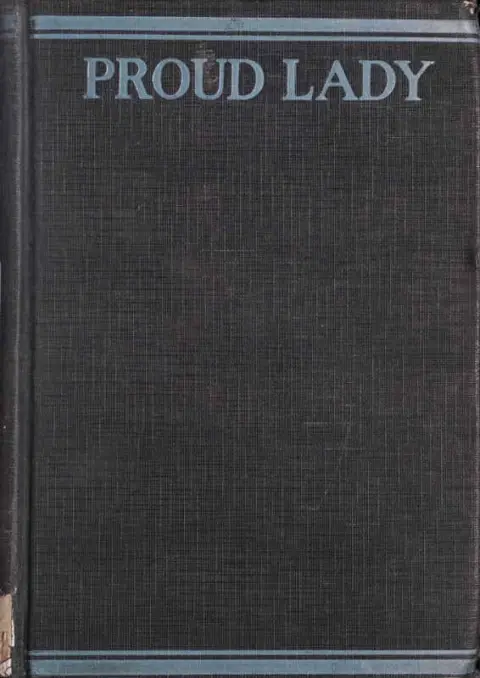
"Proud Lady" by Neith Boyce is a novel written in the early 20th century. The story centers on the life of Mary Lavinia, who navigates complex family dynamics, societal expectations, and her own feelings about love and independence as she contemplates her engagement to Laurence Carlin, a soldier returning from war. As the characters interact against the backdrop of societal class distinctions and personal trials, the novel explores themes of love, duty, and self-discovery. The opening of the story introduces Mary, who is waiting for her mother to return from church while the train carrying returning soldiers approaches. Mary's mixed emotions are palpable as she reflects on her relationship with her mother and her father, who is occupied in his office. When Laurence, the returning soldier, arrives, their reunion is marked by joy and tension as Mary grapples with her feelings towards him. The scene also reveals familial opposition to their union, especially from her mother, highlighting the class divides and the personal struggles each character must confront. The narrative sets the stage for deeper conflicts regarding love, social expectations, and what it means to be true to oneself.
Introduction adapted from the source catalogue; source summaries may be automatically generated.
Free to read · English · 79,296 words · No account needed
MAKE TIME FOR A GOOD BOOK
On by default. Untick to stop anonymous reading totals. Each page counts after 10 seconds in view. How this works.
Anonymous counting is on unless you have switched it off.
They had come to the end of the board sidewalk; beyond was only a path by the roadside. They went a little distance along this, but it was muddy; a stream, dividing the road from the pasture, had overflowed. Mary thought they had better turn back, but Laurence protested. So they sat down on the trunk of a fallen tree, among a clump of willows that hung over the stream.
The lights of the town were faintly visible on one side; on the other, the prairie stretched out dark and silent, with the starry sky bright by contrast. A slight breeze swayed the long fronds of the willows, the stream gurgled softly along its mud-bed, and from a pond out in the pasture rose the musical bassoon of an amorous bull-frog.... The damp heavy air, hardly stirring, had a sweet oppression, a troubled languor, the pulse of the spring....
Laurence sighed deeply. Turning, he took Mary gently in his arms, and kissed her lowered eyelids and her lips, first lightly, then lingeringly, then as she began to resist, with passionate possession.
"Don't--don't push me away," he begged. "Come near to me...."
But she was frightened, and struggled against his strong clasp, till she slipped down, bent backward over the tree-trunk, and cried out with pain and anger. Laurence released her suddenly, roughly.
"You don't love me," he said.
She got to her feet, trembling, but Laurence sat still, turning away
from her.
"You don't love me," he repeated bitterly. "You'd better leave me--go
back."
Without a word she moved away, her head bent, stumbling a little on the dark path. He looked after her sullenly. Yes, she would go, like that, without a word to him, without a sign.... Was she angry--was she hurt?... That silence of hers was a strong weapon. She disappeared beyond the trees.... No, he couldn't let her go like that. In a moment he overtook her.
"Take my arm," he said curtly. "The path's rough."
She took it, and they went back in silence. As they came to a street-light he looked at her, and saw the mysterious mask of her face more immobile, more impassive than ever. Doubt had come back upon him, now it was almost despair. He had a strong impulse to break with her, to tell her that he was going away. She was too elusive, too distant, too cold.... But instead, when they came to her gate, he only murmured sadly:
"Forgive me, Mary."
And to his surprise she bent toward him to kiss him good-night, and
said steadily:
Your reading position is saved on this browser. Take it to another device with a library code. Reading pages adapt to text, rather than matching a printed edition.
BEHIND THE BOOK
This eBook is for the use of anyone anywhere in the United States and most other parts of the world at no cost and with almost no restrictions whatsoever. You may copy it, give it away or re-use it under the terms of the Project Gutenberg License included with this eBook or online at www.gutenberg.org. If you are not located in the United States, you will have to check the laws of the country where you are located before using this eBook. Read the source licence.
The original source file, including credits and licence, is retained by this library. Request an original-format copy at no charge. Please include the book title and Project Gutenberg identifier #62478.
KEEP YOUR CURIOSITY GOING
Coulson Kernahan

Maurice Baring
Frances Wright
Cécile Tormay

Frederic Jesup Stimson

W. H. P. (William Henry Pope) Jarvis