THE CLASSIC COLLECTION✦A dead man’s diaryCLASSIC FREE BOOKS
A dead man’s diary
Coulson Kernahan
THE CLASSIC COLLECTION · 1923
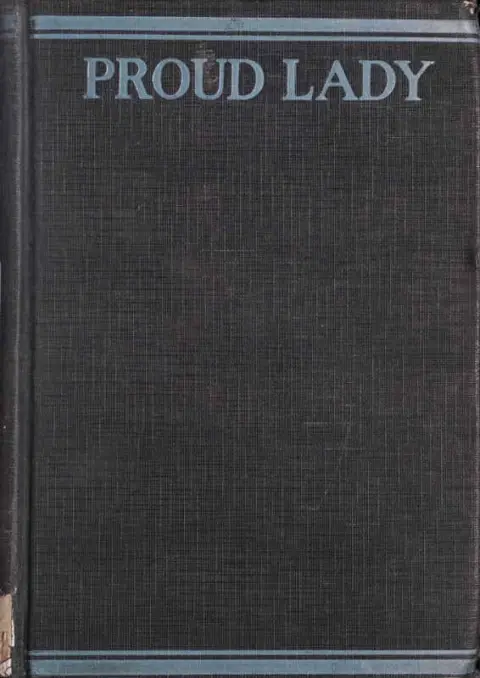
"Proud Lady" by Neith Boyce is a novel written in the early 20th century. The story centers on the life of Mary Lavinia, who navigates complex family dynamics, societal expectations, and her own feelings about love and independence as she contemplates her engagement to Laurence Carlin, a soldier returning from war. As the characters interact against the backdrop of societal class distinctions and personal trials, the novel explores themes of love, duty, and self-discovery. The opening of the story introduces Mary, who is waiting for her mother to return from church while the train carrying returning soldiers approaches. Mary's mixed emotions are palpable as she reflects on her relationship with her mother and her father, who is occupied in his office. When Laurence, the returning soldier, arrives, their reunion is marked by joy and tension as Mary grapples with her feelings towards him. The scene also reveals familial opposition to their union, especially from her mother, highlighting the class divides and the personal struggles each character must confront. The narrative sets the stage for deeper conflicts regarding love, social expectations, and what it means to be true to oneself.
Introduction adapted from the source catalogue; source summaries may be automatically generated.
Free to read · English · 79,296 words · No account needed
MAKE TIME FOR A GOOD BOOK
On by default. Untick to stop anonymous reading totals. Each page counts after 10 seconds in view. How this works.
Anonymous counting is on unless you have switched it off.
He tucked the napkin under his thin beard, still auburn more than grey, and began to eat. Mary took a biscuit and broke it open.
"It's light," she conceded. "I guess she's a good enough cook."
"Oh, she's first-rate--I live in clover," smiled Dr. Lowell.
"Well, hardly that--"
"Oh, yes.... But say, how splendid you look, Mary! Been to some grand
blowout?"
"No, I made some calls. Do you like this bonnet?"
"It's fine--what there is of it. Dress too--there's plenty of that. Why have that long tail on it?"
"Well, it's the fashion," said Mary indulgently.
"You look very nice indeed. Better than you have all summer."
"Well, Father, I can't say as much for you. You look tired out."
"I am, at night. But I get up like a lark in the morning."
"You work too hard. You ought to have a man to drive you now, and an assistant--and only go out on great occasions, when you get a big fee, you know!"
A faint uneasiness showed in Dr. Lowell's face.
"Now don't you go trying to take away my work. That's the quick way to break a man up.... I'm going to die in harness," he declared.
"Well, I'm afraid you will," and Mary's lips quivered. He was quick to
notice and to soothe her.
"Don't you worry. There's a lot of work in the old man yet. I'm not seventy. And I don't go out much at night any more, you know, or in very bad weather--unless it's life or death.... Oh, they have to consider me now!"
"Well, it's time they did. You never considered yourself."
There was unwonted emotion in her face and voice. He was touched, and
surprised.
"I should think you'd be proud of me," he said lightly. "All these smart young doctors in town--but they don't get my practice unless I want to give it to 'em.... People sending for me from all over the county--pay my expenses and anything I want to ask. They don't think I'm too old to work."
"I am proud of you. I never said you were too old. I think you're a
great man."
He laughed. "I wasn't fishing to that extent."
"Well, I want you to know that I admire you. I think you've had the most successful life I know about."
"Sounds like my obituary," he commented.
But Mary was groping for something she wanted to say, something newly felt. Looking at his small bent figure, his face, so gentle yet with something hard and firm in its calmness, suddenly she seemed to see him, his long laborious life, in a flash of light.
"I think you're beautiful," she said solemnly.
Your reading position is saved on this browser. Take it to another device with a library code. Reading pages adapt to text, rather than matching a printed edition.
BEHIND THE BOOK
This eBook is for the use of anyone anywhere in the United States and most other parts of the world at no cost and with almost no restrictions whatsoever. You may copy it, give it away or re-use it under the terms of the Project Gutenberg License included with this eBook or online at www.gutenberg.org. If you are not located in the United States, you will have to check the laws of the country where you are located before using this eBook. Read the source licence.
The original source file, including credits and licence, is retained by this library. Request an original-format copy at no charge. Please include the book title and Project Gutenberg identifier #62478.
KEEP YOUR CURIOSITY GOING
Coulson Kernahan

Maurice Baring
Frances Wright
Cécile Tormay

Frederic Jesup Stimson

W. H. P. (William Henry Pope) Jarvis