THE CLASSIC COLLECTION✦A dead man’s diaryCLASSIC FREE BOOKS
A dead man’s diary
Coulson Kernahan
THE CLASSIC COLLECTION · 1923
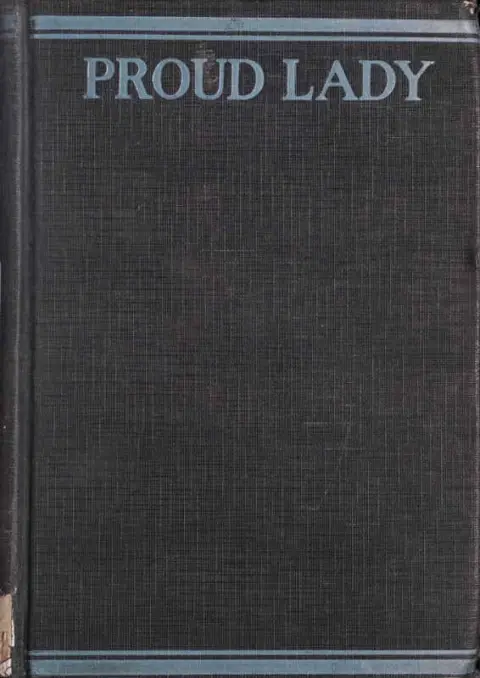
"Proud Lady" by Neith Boyce is a novel written in the early 20th century. The story centers on the life of Mary Lavinia, who navigates complex family dynamics, societal expectations, and her own feelings about love and independence as she contemplates her engagement to Laurence Carlin, a soldier returning from war. As the characters interact against the backdrop of societal class distinctions and personal trials, the novel explores themes of love, duty, and self-discovery. The opening of the story introduces Mary, who is waiting for her mother to return from church while the train carrying returning soldiers approaches. Mary's mixed emotions are palpable as she reflects on her relationship with her mother and her father, who is occupied in his office. When Laurence, the returning soldier, arrives, their reunion is marked by joy and tension as Mary grapples with her feelings towards him. The scene also reveals familial opposition to their union, especially from her mother, highlighting the class divides and the personal struggles each character must confront. The narrative sets the stage for deeper conflicts regarding love, social expectations, and what it means to be true to oneself.
Introduction adapted from the source catalogue; source summaries may be automatically generated.
Free to read · English · 79,296 words · No account needed
MAKE TIME FOR A GOOD BOOK
On by default. Untick to stop anonymous reading totals. Each page counts after 10 seconds in view. How this works.
Anonymous counting is on unless you have switched it off.
"Oh, yes, you have," he said. "You have faith--everything shows it."
"How? What?"
"Well, what you just said, that a man ought to die rather than do what is wrong--there's faith, in the ideal of what a man is, what he ought to be.... And then you live without compromise, you don't forgive--that's faith."
"How do you know that--that I don't forgive?"
"Well, I can guess that you didn't."
"And you think that's good--not to forgive?"
"I didn't say it was good. It depends on how it works out. I said it showed faith. It means you have a standard and you can't condone an offence against it--at any cost."
"Yes, but it might be only--that I couldn't forgive an offence against me.... It might be only--pride. You see how I mean, that I've lost faith. I don't feel sure of anything."
"You've lost faith in yourself, you mean, but--"
"Oh, not only in myself--in everything else!"
"And you used to feel sure?"
"Oh, yes--I knew!"
"And how was it, that you ceased to be sure?"
"I think--people disappointed me--people I believed in--"
"But you believe in something that isn't people, don't you--some rule of right and wrong that is above human life--"
"I did--yes, I was very religious--I believed in a rule and measured
people by it--"
"And when they didn't measure up to it, you--"
"Yes, I--didn't forgive. Even now I despise people, for all sorts of reasons--can't help it.... But now I think I was wrong. I don't think I was religious at all--because, you see, it didn't stand the test--I lost it--"
"And when was that--that you lost it?"
"I don't know. It seems as if it had been going on for a long time, dying.... I used to think that happiness didn't count, that we ought not to think of it. But now I think that was when I was really happy. It isn't so easy to live without it, really, for many years--it isn't so easy!"
She had lost all feeling of the personality of Lavery. It was like speaking out to the night-wind and the starlight. She had spoken the last sentences in a rush, passionately, and in her voice was the tremor of a sob. But she compressed her lips sharply, and sat silent. Lavery took her hand, and her fingers closed on his desperately.... All she cared for just then was not to cry.
"Well, it's true, we can't live without it," muttered Lavery. "You see, we lose faith in ourselves, without it--we feel we've been wrong, and we have been wrong--that's the sign.... Then if we can't get it back we take to dope--like me."
Your reading position is saved on this browser. Take it to another device with a library code. Reading pages adapt to text, rather than matching a printed edition.
BEHIND THE BOOK
This eBook is for the use of anyone anywhere in the United States and most other parts of the world at no cost and with almost no restrictions whatsoever. You may copy it, give it away or re-use it under the terms of the Project Gutenberg License included with this eBook or online at www.gutenberg.org. If you are not located in the United States, you will have to check the laws of the country where you are located before using this eBook. Read the source licence.
The original source file, including credits and licence, is retained by this library. Request an original-format copy at no charge. Please include the book title and Project Gutenberg identifier #62478.
KEEP YOUR CURIOSITY GOING
Coulson Kernahan

Maurice Baring
Frances Wright
Cécile Tormay

Frederic Jesup Stimson

W. H. P. (William Henry Pope) Jarvis