THE CLASSIC COLLECTION✦A dead man’s diaryCLASSIC FREE BOOKS
A dead man’s diary
Coulson Kernahan
THE CLASSIC COLLECTION · 1923
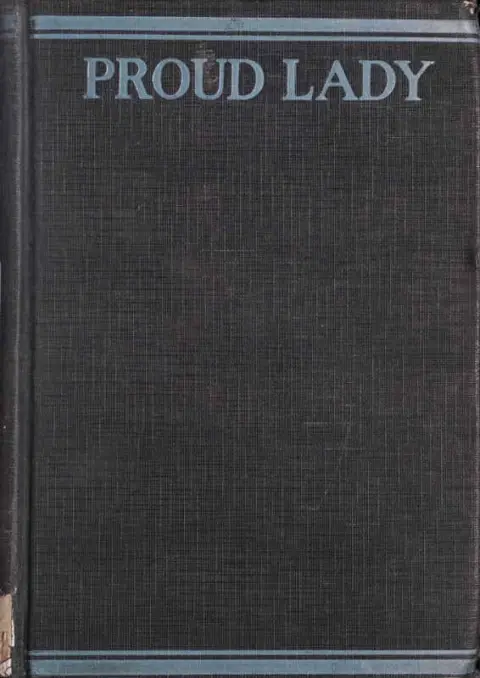
"Proud Lady" by Neith Boyce is a novel written in the early 20th century. The story centers on the life of Mary Lavinia, who navigates complex family dynamics, societal expectations, and her own feelings about love and independence as she contemplates her engagement to Laurence Carlin, a soldier returning from war. As the characters interact against the backdrop of societal class distinctions and personal trials, the novel explores themes of love, duty, and self-discovery. The opening of the story introduces Mary, who is waiting for her mother to return from church while the train carrying returning soldiers approaches. Mary's mixed emotions are palpable as she reflects on her relationship with her mother and her father, who is occupied in his office. When Laurence, the returning soldier, arrives, their reunion is marked by joy and tension as Mary grapples with her feelings towards him. The scene also reveals familial opposition to their union, especially from her mother, highlighting the class divides and the personal struggles each character must confront. The narrative sets the stage for deeper conflicts regarding love, social expectations, and what it means to be true to oneself.
Introduction adapted from the source catalogue; source summaries may be automatically generated.
Free to read · English · 79,296 words · No account needed
MAKE TIME FOR A GOOD BOOK
On by default. Untick to stop anonymous reading totals. Each page counts after 10 seconds in view. How this works.
Anonymous counting is on unless you have switched it off.
"I'd been better pleased, Larry, if you'd stuck by your own class. It's men like you we need--you could have been a leader! But it's the old story, so soon as a man of ours shows the ability, the other side gets him--he goes after the fleshpots, and he's lost to us!"
"There are no classes in this country, you're thinking of the old world, Dad," said Laurence tolerantly.
"There's always two classes--them that have and them that want!"
declared the old man curtly.
"You're for a class-war, then?"
"I'm for it!... Not for myself, thank God the day's long past, if it ever was, when I wanted anything for myself. But I belong to the Knights of Labour and I've travelled the country over, helping to organize here and there. I see the big fight coming. This country's changed. The rich get richer and the poor poorer. The big fortunes are piling up. You'll see ... you'll see."
"You're a true Irishman, Dad, always spoiling for a fight--always
against the powers that be."
"And you come of the same stock, but you've gone back on it! Maybe you've sold yourself to the powers that be!"
"No," said Laurence coolly. "No man can say that of me. Look over my record, if you like to take the trouble. Ask what my reputation is.... You'll find I've stood for the poor and oppressed as much as you, or maybe more--I've fought many a poor man's case against a rich corporation, and won it too."
"Then how did you get all this?"
The old man waved his hand, clasping the stubby black pipe, and fixed a shrewd sparkling glance on his son.
Laurence laughed abruptly.
"Partly by inheritance, by investments, speculation sometimes, not by bribery or corruption!... But it seems rather funny to me that you should drop down on me this way, all of a sudden, and accuse me! Yes, by George, it's funny! Life is certainly amusing, at times."
"You mean I haven't any right to call you to account," said the old man placidly. "But I don't do it because you're my son--but because you're a strong man that was born of us and ought to have stayed with us."
"Us? You mean I ought to have been a day-labourer?... You're a fanatic, Dad.... If you were so anxious to have me go the right way, why didn't you stay and train me up?"
"It was weakness, I know, but, as I told you, I couldn't stand your mother, God rest her soul.... But of course I didn't see as much then as I do now. I've picked up some education, I've studied Marx and the Internationalists...."
Your reading position is saved on this browser. Take it to another device with a library code. Reading pages adapt to text, rather than matching a printed edition.
BEHIND THE BOOK
This eBook is for the use of anyone anywhere in the United States and most other parts of the world at no cost and with almost no restrictions whatsoever. You may copy it, give it away or re-use it under the terms of the Project Gutenberg License included with this eBook or online at www.gutenberg.org. If you are not located in the United States, you will have to check the laws of the country where you are located before using this eBook. Read the source licence.
The original source file, including credits and licence, is retained by this library. Request an original-format copy at no charge. Please include the book title and Project Gutenberg identifier #62478.
KEEP YOUR CURIOSITY GOING
Coulson Kernahan

Maurice Baring
Frances Wright
Cécile Tormay

Frederic Jesup Stimson

W. H. P. (William Henry Pope) Jarvis