THE CLASSIC COLLECTION✦A dead man’s diaryCLASSIC FREE BOOKS
A dead man’s diary
Coulson Kernahan
THE CLASSIC COLLECTION · 1923
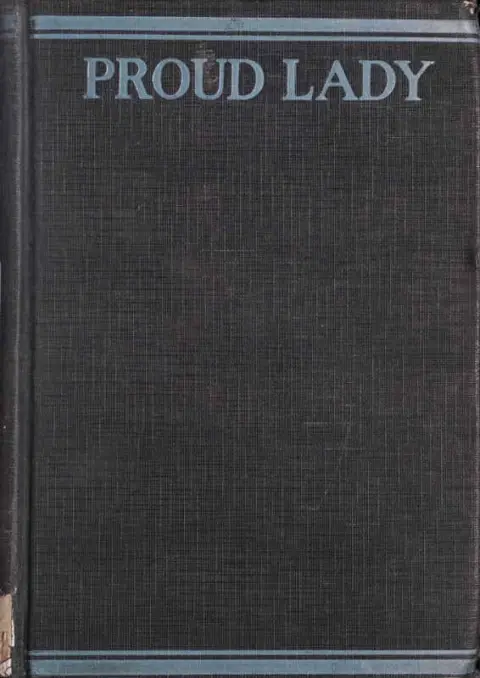
"Proud Lady" by Neith Boyce is a novel written in the early 20th century. The story centers on the life of Mary Lavinia, who navigates complex family dynamics, societal expectations, and her own feelings about love and independence as she contemplates her engagement to Laurence Carlin, a soldier returning from war. As the characters interact against the backdrop of societal class distinctions and personal trials, the novel explores themes of love, duty, and self-discovery. The opening of the story introduces Mary, who is waiting for her mother to return from church while the train carrying returning soldiers approaches. Mary's mixed emotions are palpable as she reflects on her relationship with her mother and her father, who is occupied in his office. When Laurence, the returning soldier, arrives, their reunion is marked by joy and tension as Mary grapples with her feelings towards him. The scene also reveals familial opposition to their union, especially from her mother, highlighting the class divides and the personal struggles each character must confront. The narrative sets the stage for deeper conflicts regarding love, social expectations, and what it means to be true to oneself.
Introduction adapted from the source catalogue; source summaries may be automatically generated.
Free to read · English · 79,296 words · No account needed
MAKE TIME FOR A GOOD BOOK
On by default. Untick to stop anonymous reading totals. Each page counts after 10 seconds in view. How this works.
Anonymous counting is on unless you have switched it off.
"Well," said the doctor. "The war has made a difference, you know. Life has been harder--not many amusements--and lots of tragedies and suffering. We've had losses in our own family.... The church was about the only social thing that didn't seem wrong, to the women, you see. And they've done a lot of work, through it, for the soldiers and all that.... Yes, Mary's changed a good deal, she's very serious. I think the preacher has had a good deal of influence."
"How?" asked Carlin abruptly.
"Why, in getting her to think this world is vanity, a vale of tears, a place of trial, and so on.... It is, maybe, but she's too young to feel it so. I hope she'll get out of that and enjoy life a little," the doctor ended, with much feeling.
They walked on in silence. Carlin's heart was sore. The doctor had not mentioned his absence and peril as having anything to do with the change in Mary. Well, perhaps it hadn't had. He gave way to a sudden impulse.
"You're not against her marrying me, are you?" he asked tremulously. "I know your wife is. She doesn't like me."
"No, I like you, and I think well of you, Laurence," was the doctor's grave answer. "As far as you're concerned, I've no objection.... But sometimes I think Mary isn't ready to marry yet."
"She says she is," said Laurence quickly.
"I don't pretend to understand anything," said the doctor plaintively,
and sighed.
"Perhaps--you think she doesn't care enough about me--is that it?"
"Sometimes I think she doesn't care about anybody," was the regretful
answer.
When they reached the gate, Carlin did not go in.
"I'll walk on, for a bit," he said.
The doctor went into his office-study and lighted a lamp. This room was arranged to suit him, and he did as he pleased in it. It smelt very much of tobacco, though there were no curtains and no carpet, only a couple of small rugs on the painted floor. The furniture consisted of a large desk, a sofa and two chairs, besides some shelves full of books. Out of it opened his bedroom, which had an outside door with a night-bell.
The doctor established himself in his easy-chair, with a pipe and a medical review. But his attention wandered from the printed page, and twice he let his pipe go out. Half an hour passed before the women-folk returned, and he noted that they entered the house in silence.
He opened his door and called Mary gently. As she came in, she asked with surprise, "Where's Laurence?"
Your reading position is saved on this browser. Take it to another device with a library code. Reading pages adapt to text, rather than matching a printed edition.
BEHIND THE BOOK
This eBook is for the use of anyone anywhere in the United States and most other parts of the world at no cost and with almost no restrictions whatsoever. You may copy it, give it away or re-use it under the terms of the Project Gutenberg License included with this eBook or online at www.gutenberg.org. If you are not located in the United States, you will have to check the laws of the country where you are located before using this eBook. Read the source licence.
The original source file, including credits and licence, is retained by this library. Request an original-format copy at no charge. Please include the book title and Project Gutenberg identifier #62478.
KEEP YOUR CURIOSITY GOING
Coulson Kernahan

Maurice Baring
Frances Wright
Cécile Tormay

Frederic Jesup Stimson

W. H. P. (William Henry Pope) Jarvis