THE CLASSIC COLLECTION✦A dead man’s diaryCLASSIC FREE BOOKS
A dead man’s diary
Coulson Kernahan
THE CLASSIC COLLECTION · 1923
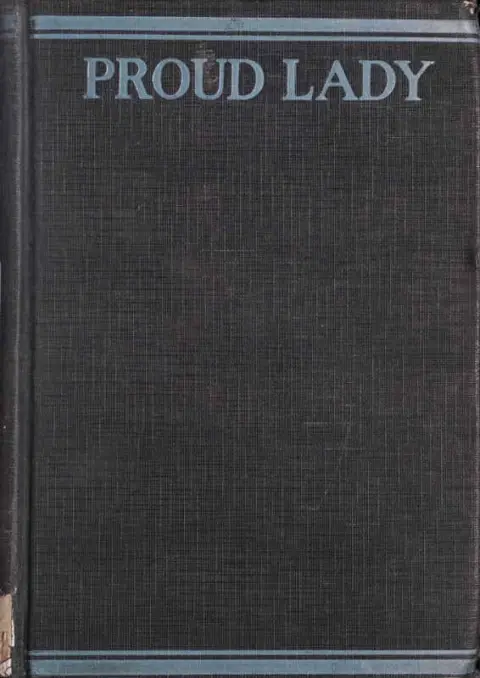
"Proud Lady" by Neith Boyce is a novel written in the early 20th century. The story centers on the life of Mary Lavinia, who navigates complex family dynamics, societal expectations, and her own feelings about love and independence as she contemplates her engagement to Laurence Carlin, a soldier returning from war. As the characters interact against the backdrop of societal class distinctions and personal trials, the novel explores themes of love, duty, and self-discovery. The opening of the story introduces Mary, who is waiting for her mother to return from church while the train carrying returning soldiers approaches. Mary's mixed emotions are palpable as she reflects on her relationship with her mother and her father, who is occupied in his office. When Laurence, the returning soldier, arrives, their reunion is marked by joy and tension as Mary grapples with her feelings towards him. The scene also reveals familial opposition to their union, especially from her mother, highlighting the class divides and the personal struggles each character must confront. The narrative sets the stage for deeper conflicts regarding love, social expectations, and what it means to be true to oneself.
Introduction adapted from the source catalogue; source summaries may be automatically generated.
Free to read · English · 79,296 words · No account needed
MAKE TIME FOR A GOOD BOOK
On by default. Untick to stop anonymous reading totals. Each page counts after 10 seconds in view. How this works.
Anonymous counting is on unless you have switched it off.
"Where were you all last night?"
"I went out for a long ride," said Jim sulkily.
"And were you riding from eight o'clock till three?"
"No--I stopped a while to see a friend."
"What friend?"
"Oh, somebody you don't know--a fellow."
Controlling himself, he answered more gently; his dark eyes met hers
imperturbably.
"Well, you oughtn't to stay out all night!"
"I didn't," said Jim reasonably. "And a fellow has to do something in
this dead place."
"You shouldn't have taken your father's horse either, without
permission."
"Why, Mother, he was simply spoiling for exercise--you know he doesn't
get ridden half enough."
"I don't like you to ride him, he's dangerous--"
"Oh, I can manage him, all right, don't you worry!" Jim smiled cheerfully. "But I've got to run out now and see to the pony--he's a bit lame still--"
She let him go, turning away from him and walking to the end of the long room. Yes, he wanted to escape--he had his own life now, was beginning to be a man and to take his secret way, like the rest of them. Her mouth curved bitterly. She did not believe Jim, about the friend--she suspected something else, and she recoiled jealously, miserably.... Yes, her son too--he was like the rest....
She stood by the open window, looking out blindly on the garden. The night was mild, it was moonlight, greenish, like a glowworm's light. The long lace curtains waved inward in the soft breeze. There were sounds of life astir all about. She heard a burst of laughter from the dining-room; then the faint click of the billiard-balls and a shout from Timothy. Then, on the lake, some one began to sing Schubert's boat-song. A clear soprano trilled out joyously the song of love and youth....
A piercing sense of loneliness, of life passing by her, leaving her, stabbed to her very heart. She gave a long, shuddering sigh.... Youth, love--they had passed by. Like the song growing fainter, receding into distance. And the bitter thing was, one did not realize them till they were gone. The sweetness of life--all it was, might have been--one did not feel it till it had slipped away.... Gone, lost--then, in loneliness you felt it....
Some one came into the room. She turned, and at sight of her face, Lavery's gay apology dropped half-spoken. He came and stood beside her at the window.
"I hate music," she said abruptly. "Some one was singing out there. It makes one sad.... It makes one remember all the things--"
"I don't like it myself," said Lavery, when she stopped as abruptly. "Unless it's an opera--with gay dresses, lights, all that--then it distracts you."
Your reading position is saved on this browser. Take it to another device with a library code. Reading pages adapt to text, rather than matching a printed edition.
BEHIND THE BOOK
This eBook is for the use of anyone anywhere in the United States and most other parts of the world at no cost and with almost no restrictions whatsoever. You may copy it, give it away or re-use it under the terms of the Project Gutenberg License included with this eBook or online at www.gutenberg.org. If you are not located in the United States, you will have to check the laws of the country where you are located before using this eBook. Read the source licence.
The original source file, including credits and licence, is retained by this library. Request an original-format copy at no charge. Please include the book title and Project Gutenberg identifier #62478.
KEEP YOUR CURIOSITY GOING
Coulson Kernahan

Maurice Baring
Frances Wright
Cécile Tormay

Frederic Jesup Stimson

W. H. P. (William Henry Pope) Jarvis