THE CLASSIC COLLECTION✦Hawthorne (English Men of Letters Series)CLASSIC FREE BOOKS
Hawthorne (English Men of Letters Series)
Henry James
THE CLASSIC COLLECTION · 1883
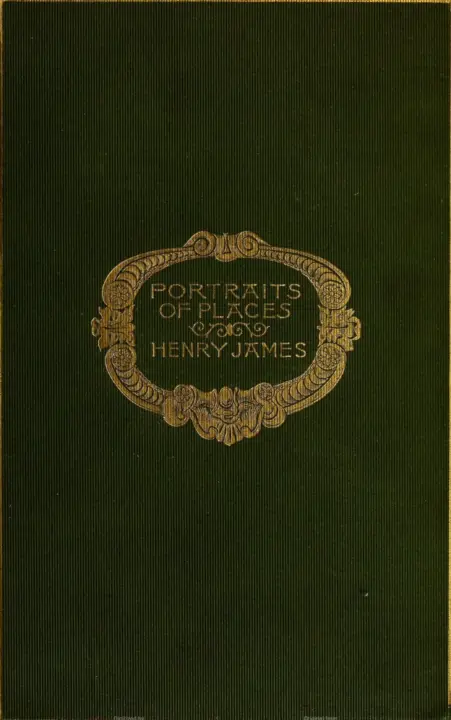
"Portraits of Places" by Henry James is a collection of essays that captures the author’s reflective travel experiences, likely written in the late 19th century. The essays showcase various cities and locations, focusing on their unique atmospheres and cultural significance, with Venice taking center stage as a prime example of beauty and complexity intertwined with the weight of history. Through James’ intricate observations, readers can anticipate insights into both the charm and the disillusionment that often accompany travel. The opening of the work begins with an affectionate exploration of Venice, where the author expresses both admiration and resignation towards its well-trodden paths and familiar sights. He reflects on the allure of the city that has been celebrated countless times, acknowledging its status as a beloved yet over-visited destination. James embraces the idea of revisiting well-known experiences, finding depth in simple pleasures that Venice offers, such as the vibrant local life and its art. This initial portion sets the stage for a travel narrative that is steeped in nostalgia, as James invites readers to engage with the emotional and intellectual dimensions of travel, while pondering the changes that time inevitably brings to iconic places.
Introduction adapted from the source catalogue; source summaries may be automatically generated.
Free to read · English · 102,626 words · No account needed
MAKE TIME FOR A GOOD BOOK
On by default. Untick to stop anonymous reading totals. Each page counts after 10 seconds in view. How this works.
Anonymous counting is on unless you have switched it off.
I mention this trifle, which is doubtless not creditable to my fortitude, because I found that the information given me was not strictly accurate, and that at the end of three months I had another array of London Sundays to face. On this occasion, however, nothing occurred to suggest again the dreadful image I have just sketched, though I devoted a good deal of time to observing the manners of the lower orders. From Good Friday to Easter Monday, inclusive, they were very much en évidence, and it was an excellent occasion for getting an impression of the British populace. Gentility had retired to the background, and in the West End all the blinds were lowered; the streets were void of carriages, and well-dressed pedestrians were rare; but the "masses" were all abroad and making the most of their holiday, and I strolled about and watched them at their gambols. The heavens were most unfavourable, but in an English "outing" there is always a margin left for a drenching, and throughout the vast smoky city, beneath the shifting gloom of the sky, the grimy crowds trooped about with a kind of weatherproof stolidity. The parks were full of them, the railway stations overflowed, and the Thames embankment was covered. The "masses," I think, are usually an entertaining spectacle, even when observed through the distorting medium of London bad weather. There are indeed few things in their way more impressive than a dusky London holiday; it suggests a variety of reflections. Even looked at superficially, the British capital is one of the most interesting of cities, and it is perhaps on such occasions as this that I have most felt its interest. London is ugly, dusky, dreary, more destitute than any European city of graceful and decorative incident; and though on festal days, like those I speak of, the populace is massed in large numbers at certain points, many of the streets are empty enough of human life to enable you to perceive their intrinsic want of charm. A Christmas-day or a Good Friday uncovers the ugliness of London. As you walk along the streets, having no fellow-pedestrians to look at, you look up at the brown brick house-walls, corroded with soot and fog, pierced with their straight stiff window-slits, and finished, by way of a cornice, with a little black line resembling a slice of curbstone. There is not an accessory, not a touch of architectural fancy, not the narrowest concession to beauty. If I were a foreigner it would make me rabid; being an Anglo-Saxon I find in it what Thackeray found in Baker Street--a delightful proof of English domestic virtue, of the sanctity of the British home. There are miles and miles of these edifying monuments, and it would seem that a city made up of them should have no claim to that larger effectiveness of which I just now spoke. London, however, is not made up of them; there are architectural combinations of a statelier kind, and the impression moreover does not rest on details. London is pictorial in spite of details--from its dark-green, misty parks, the way the light comes down leaking and filtering from its cloud-ceiling, and the softness and richness of tone which objects put on in such an atmosphere as soon as they begin to recede. Nowhere is there such a play of light and shade, such a struggle of sun and smoke, such aërial gradations and confusions. To eyes addicted to such contemplations this is a constant diversion, and yet this is only part of it. What completes the effect of the place is its appeal to the feelings, made in so many ways, but made above all by agglomerated immensity. At any given point London looks huge; even in narrow corners you have a sense of its hugeness, and petty places acquire a certain interest from their being parts of so mighty a whole. Nowhere else is so much human life gathered together, and nowhere does it press upon you with so many suggestions. These are not all of an exhilarating kind; far from it. But they are of every possible kind, and that is the interest of London. Those that were most forcible during the showery Easter season were certain of the more perplexing and depressing ones; but even with these was mingled a brighter strain.
Your reading position is saved on this browser. Take it to another device with a library code. Reading pages adapt to text, rather than matching a printed edition.
Henry James
Henry James
Henry James

Henry James
BEHIND THE BOOK
This eBook is for the use of anyone anywhere in the United States and most other parts of the world at no cost and with almost no restrictions whatsoever. You may copy it, give it away or re-use it under the terms of the Project Gutenberg License included with this eBook or online at www.gutenberg.org. If you are not located in the United States, you will have to check the laws of the country where you are located before using this eBook. Read the source licence.
The original source file, including credits and licence, is retained by this library. Request an original-format copy at no charge. Please include the book title and Project Gutenberg identifier #68961.
KEEP YOUR CURIOSITY GOING
Wilfrid Scawen Blunt
Wilfrid Scawen Blunt

E. W. (Edgar Watson) Howe

David Patterson (Spirit) Hatch

David Patterson (Spirit) Hatch

David Patterson (Spirit) Hatch