THE CLASSIC COLLECTION✦Hawthorne (English Men of Letters Series)CLASSIC FREE BOOKS
Hawthorne (English Men of Letters Series)
Henry James
THE CLASSIC COLLECTION · 1883
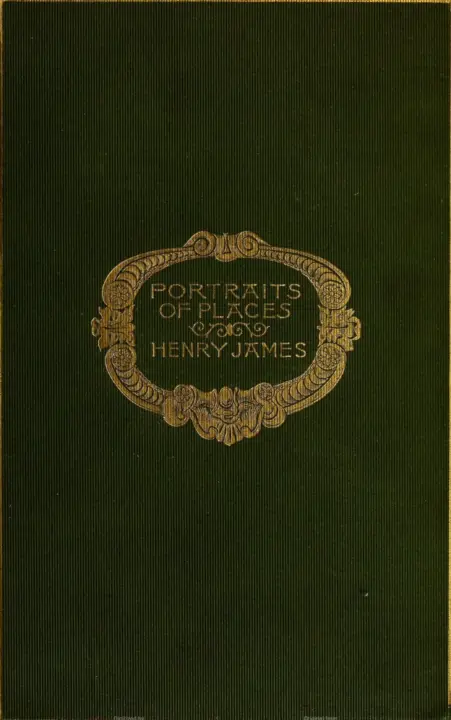
"Portraits of Places" by Henry James is a collection of essays that captures the author’s reflective travel experiences, likely written in the late 19th century. The essays showcase various cities and locations, focusing on their unique atmospheres and cultural significance, with Venice taking center stage as a prime example of beauty and complexity intertwined with the weight of history. Through James’ intricate observations, readers can anticipate insights into both the charm and the disillusionment that often accompany travel. The opening of the work begins with an affectionate exploration of Venice, where the author expresses both admiration and resignation towards its well-trodden paths and familiar sights. He reflects on the allure of the city that has been celebrated countless times, acknowledging its status as a beloved yet over-visited destination. James embraces the idea of revisiting well-known experiences, finding depth in simple pleasures that Venice offers, such as the vibrant local life and its art. This initial portion sets the stage for a travel narrative that is steeped in nostalgia, as James invites readers to engage with the emotional and intellectual dimensions of travel, while pondering the changes that time inevitably brings to iconic places.
Introduction adapted from the source catalogue; source summaries may be automatically generated.
Free to read · English · 102,626 words · No account needed
MAKE TIME FOR A GOOD BOOK
On by default. Untick to stop anonymous reading totals. Each page counts after 10 seconds in view. How this works.
Anonymous counting is on unless you have switched it off.
But I recouped myself, as they say in England, by stopping afterwards at Chichester. In this dense and various old England two places may be very near together and yet strike a very different note. I knew in a general way that there was a cathedral at Chichester; indeed, I had seen its beautiful spire from the window of the train. I had always regarded an afternoon in a little cathedral-town as a high order of entertainment, and a morning at Portsmouth had left me in the mood for not missing such an exhibition. The spire of Chichester at a little distance greatly resembles that of Salisbury. It is on a smaller scale, but it tapers upward with a delicate slimness which, like that of its famous rival, makes a picture of the level landscape in which it stands. Unlike the spire of Salisbury, however, it has not at present the charm of antiquity. A few years ago the old steeple collapsed and tumbled into the church, and the present structure is but a modern facsimile. The cathedral is not of the highest interest; it is rather plain and bare, and, except a curious old detached bell-tower which stands beside it, has no particular element of unexpectedness. But an English cathedral of restricted grandeur may yet be a very charming affair; and I spent an hour or so lounging around this highly respectable edifice, without the spell of contemplation being broken by satiety. I approached it, from the station, by the usual quiet red-brick street of the usual cathedral town--a street of small, excellent shops, before which, here and there, one of the vehicles of the neighbouring gentry was drawn up beside the curbstone, while the grocer or the bookseller, who had hurried out obsequiously, was waiting upon the comfortable occupant. I went into a bookseller's to buy a Chichester guide, which I perceived in the window; I found the shopkeeper talking to a young curate in a soft hat. The guide seemed very desirable, though it appeared to have been but scantily desired; it had been published in the year 1841, and a very large remnant of the edition, with a muslin back and a little white label and paper-covered boards, was piled up on the counter. It was dedicated, with terrible humility, to the Duke of Richmond, and ornamented with primitive woodcuts and steel plates; the ink had turned brown and the page musty; and the style itself--that of a provincial antiquary of upwards of forty years ago penetrated with the grandeur of the aristocracy--had grown rather sallow and stale. Nothing could have been more mellifluous and urbane than the young curate: he was arranging to have the Times newspaper sent him every morning for perusal. "So it will be a penny if it is fetched away at noon?" he said, smiling very sweetly and with the most gentlemanly voice possible; "and it will be three halfpence if it is fetched away at four o'clock?" At the top of the street, into which, with my guide-book, I relapsed, was an old market-cross, of the fifteenth century--a florid, romantic little structure. It consists of a stone pavilion, with open sides and a number of pinnacles and crockets and buttresses, besides a goodly medallion of the high-nosed visage of Charles I., which was placed above one of the arches, at the Restoration, in compensation for the violent havoc wrought upon the little town by the Parliamentary soldiers, who had wrested the place from the Royalists, and who amused themselves, in their grim fashion, with infinite hacking and hewing in the cathedral. Here, to the left, the cathedral discloses itself, lifting its smart gray steeple out of a pleasant garden. Opposite to the garden was the Dolphin or the Dragon--in fine, the most eligible inn. I must confess that for a time it divided my attention with the cathedral, in virtue of an ancient, musty parlour on the second floor, with hunting-pictures hung above haircloth sofas; of a red-faced waiter, in evening dress; of a big round of cold beef and a tankard of ale. The prettiest thing at Chichester is a charming little three-sided cloister, attached to the cathedral, where, as is usual in such places, you may sit upon a gravestone amid the deep grass in the middle, and measure the great central mass of the church--the large gray sides, the high foundations of the spire, the parting of the nave and transept. From this point the greatness of a cathedral seems more complex and impressive. You watch the big shadows slowly change their relations; you listen to the cawing of rooks and the twittering of swallows; you hear a slow footstep echoing in the cloisters.
Your reading position is saved on this browser. Take it to another device with a library code. Reading pages adapt to text, rather than matching a printed edition.
Henry James
Henry James
Henry James

Henry James
BEHIND THE BOOK
This eBook is for the use of anyone anywhere in the United States and most other parts of the world at no cost and with almost no restrictions whatsoever. You may copy it, give it away or re-use it under the terms of the Project Gutenberg License included with this eBook or online at www.gutenberg.org. If you are not located in the United States, you will have to check the laws of the country where you are located before using this eBook. Read the source licence.
The original source file, including credits and licence, is retained by this library. Request an original-format copy at no charge. Please include the book title and Project Gutenberg identifier #68961.
KEEP YOUR CURIOSITY GOING
Wilfrid Scawen Blunt
Wilfrid Scawen Blunt

E. W. (Edgar Watson) Howe

David Patterson (Spirit) Hatch

David Patterson (Spirit) Hatch

David Patterson (Spirit) Hatch