THE CLASSIC COLLECTION✦Hawthorne (English Men of Letters Series)CLASSIC FREE BOOKS
Hawthorne (English Men of Letters Series)
Henry James
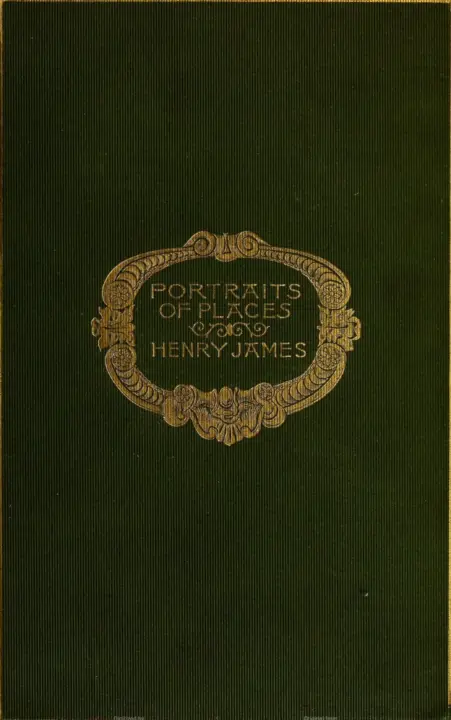
THE CLASSIC COLLECTION · 1883
"Portraits of Places" by Henry James is a collection of essays that captures the author’s reflective travel experiences, likely written in the late 19th century. The essays showcase various cities and locations, focusing on their unique atmospheres and cultural significance, with Venice taking center stage as a prime example of beauty and complexity intertwined with the weight of history. Through James’ intricate observations, readers can anticipate insights into both the charm and the disillusionment that often accompany travel. The opening of the work begins with an affectionate exploration of Venice, where the author expresses both admiration and resignation towards its well-trodden paths and familiar sights. He reflects on the allure of the city that has been celebrated countless times, acknowledging its status as a beloved yet over-visited destination. James embraces the idea of revisiting well-known experiences, finding depth in simple pleasures that Venice offers, such as the vibrant local life and its art. This initial portion sets the stage for a travel narrative that is steeped in nostalgia, as James invites readers to engage with the emotional and intellectual dimensions of travel, while pondering the changes that time inevitably brings to iconic places.
Introduction adapted from the source catalogue; source summaries may be automatically generated.
Free to read · English · 102,626 words · No account needed
MAKE TIME FOR A GOOD BOOK
On by default. Untick to stop anonymous reading totals. Each page counts after 10 seconds in view. How this works.
Anonymous counting is on unless you have switched it off.
There is no great play of humour in the interior of Rheims, but there is a great deal of beauty and solemnity. This interior is a spectacle that excites the sensibility, as our forefathers used to say; but it is not an easy matter to describe. It is no description of it to say that it is four hundred and sixty-six feet in length, and that the roof is one hundred and twenty-four feet above the pavement; nor is there any very vivid portraiture in the statement that if there is no coloured glass in the lower windows, there is, per contra, a great deal of the most gorgeous and most ancient in the upper ones. The long sweep of the nave, from the threshold to the point where the coloured light-shafts of the choir lose themselves in the gray distance, is a triumph of perpendicular perspective. The white light in the lower part of Rheims really contributes to the picturesqueness of the interior. It makes the gloom above look richer still, and throws that part of the roof which rests upon the gigantic piers of the transepts into mysterious remoteness. I wandered about for a long time; I sat first in one place and then in another; I attached myself to that most fascinating part of every great church, the angle at which the nave and transept divide. It was the better to observe this interesting point, I think, that I passed into the side gate of the choir--the gate that stood ajar in the tall gilded railing. I sat down on a stool near the threshold; I leaned back against the side of one of the stalls; the church was empty, and I lost myself in the large perfection of the place. I lost myself, but the beadle found me; he stood before me, and with a silent, imperious gesture, motioned me to depart. I risked an argumentative glance, whereupon he signified his displeasure, repeated his gesture, and pointed to an old gentleman with a red cape, who had come into the choir softly, without my seeing him, and had seated himself in one of the stalls. This old gentleman seemed plunged in pious thoughts; I was not, after all, very near him, and he did not look as if I disturbed him. A canon is at any time, I imagine, a more merciful man than a beadle. But of course I obeyed the beadle, and eliminated myself from this peculiarly sacred precinct. I found another chair, and I fell to admiring the cathedral again. But this time I think it was with a difference--a difference which may serve as an excuse for the triviality of my anecdote. Sundry other old gentlemen in red capes emerged from the sacristy and went into the choir; presently, when there were half a dozen, they began to chant, and I perceived that the impending vespers had been the reason of my expulsion. This was highly proper, and I forgave the beadle; but I was not so happy as before, for my thoughts had passed out of the architectural channel into--what shall I say?--into the political. Here they found nothing so sweet to feed upon. It was the 5th of October; ten days later the elections for the new Chamber were to take place--the Chamber which was to replace the Assembly dissolved on the 16th of May by Marshal MacMahon, on a charge of "latent" radicalism. Stranger though one was, it was impossible not to be much interested in the triumph of the republican cause; it was impossible not to sympathise with this supreme effort of a brilliant and generous people to learn the lesson of national self-control and self-government. It was impossible by the same token, not to have noted and detested the alacrity with which the Catholic party had rallied to the reactionary cause, and the unction with which the clergy had converted itself into the go-betweens of Bonapartism. The clergy was giving daily evidence of its devotion to arbitrary rule and to every iniquity that shelters itself behind the mask of "authority." These had been frequent and irritating reflections; they lurked in the folds of one's morning paper. They came back to me in the midst of that tranquil grandeur of Rheims, as I listened to the droning of the old gentlemen in the red capes. Some of the canons, it was painful to observe, had not been punctual; they came hurrying gut of the sacristy after the service had, begun. They looked like amiable and venerable men; their chanting and droning, as it spread itself under the great arches, was not disagreeable to listen to; I could certainly bear them no grudge. But their presence there was distracting and vexatious; it had spoiled my enjoyment of their church, in which I doubtless had no business. It had set me thinking of the activity and vivacity of the great organisation to which they belonged, and of all the odious things it would have done before the 15th of October. To what base uses do we come at last! It was this same organisation that had erected the magnificent structure around and above me, and which had then seemed an image of generosity and benignant power. Such an edifice might at times make one feel tenderly sentimental toward the Catholic church--make one remember how many of the great achievements of the past we owe to her. To lapse gently into this state of mind seems indeed always, while one strolls about a great cathedral, a proper recognition of its hospitality; but now I had lapsed gently out of it, and it was one of the exasperating elements of the situation that I felt, in a manner, called upon to decide how far such a lapse was unbecoming. I found myself even extending the question a little, and picturing to myself that conflict which must often occur at such a moment as the present--which is actually going on, doubtless, in many thousands of minds--between the actively; practically liberal instinct and what one may call the historic, æsthetic sense, the sense upon which old cathedrals lay a certain palpable obligation. How far should a lover of old cathedrals let his hands be tied by the sanctity of their traditions? How far should he let his imagination bribe him, as it were, from action? This of course is a question for each man to answer for himself; but as I sat listening to the drowsy old canons of Rheims, I was visited, I scarcely know why, by a kind of revelation of the anti-catholic passion, as it must bum to-day in the breasts of certain radicals. I felt that such persons must be intent upon war to the death; how that must seem the most sacred of all duties. Can anything, in the line of action, for a votary of the radical creed, be more sacred? I asked myself; and can any instruments be too trenchant? I raised my eyes again to the dusky splendour of the upper aisles and measured their enchanting perspective, and it was with a sense of doing them full justice that I gave my fictive liberal my good wishes.
Your reading position is saved on this browser. Take it to another device with a library code. Reading pages adapt to text, rather than matching a printed edition.
Henry James
Henry James
Henry James

Henry James
BEHIND THE BOOK
This eBook is for the use of anyone anywhere in the United States and most other parts of the world at no cost and with almost no restrictions whatsoever. You may copy it, give it away or re-use it under the terms of the Project Gutenberg License included with this eBook or online at www.gutenberg.org. If you are not located in the United States, you will have to check the laws of the country where you are located before using this eBook. Read the source licence.
The original source file, including credits and licence, is retained by this library. Request an original-format copy at no charge. Please include the book title and Project Gutenberg identifier #68961.
KEEP YOUR CURIOSITY GOING
Wilfrid Scawen Blunt
Wilfrid Scawen Blunt

E. W. (Edgar Watson) Howe

David Patterson (Spirit) Hatch

David Patterson (Spirit) Hatch

David Patterson (Spirit) Hatch