THE CLASSIC COLLECTION✦Hawthorne (English Men of Letters Series)CLASSIC FREE BOOKS
Hawthorne (English Men of Letters Series)
Henry James
THE CLASSIC COLLECTION · 1883
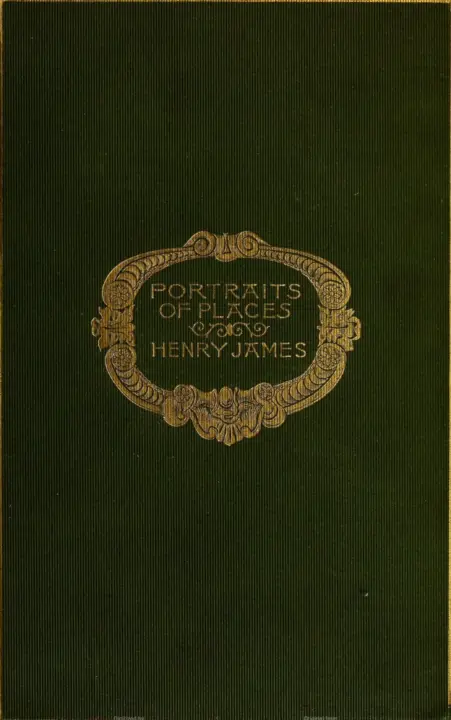
"Portraits of Places" by Henry James is a collection of essays that captures the author’s reflective travel experiences, likely written in the late 19th century. The essays showcase various cities and locations, focusing on their unique atmospheres and cultural significance, with Venice taking center stage as a prime example of beauty and complexity intertwined with the weight of history. Through James’ intricate observations, readers can anticipate insights into both the charm and the disillusionment that often accompany travel. The opening of the work begins with an affectionate exploration of Venice, where the author expresses both admiration and resignation towards its well-trodden paths and familiar sights. He reflects on the allure of the city that has been celebrated countless times, acknowledging its status as a beloved yet over-visited destination. James embraces the idea of revisiting well-known experiences, finding depth in simple pleasures that Venice offers, such as the vibrant local life and its art. This initial portion sets the stage for a travel narrative that is steeped in nostalgia, as James invites readers to engage with the emotional and intellectual dimensions of travel, while pondering the changes that time inevitably brings to iconic places.
Introduction adapted from the source catalogue; source summaries may be automatically generated.
Free to read · English · 102,626 words · No account needed
MAKE TIME FOR A GOOD BOOK
On by default. Untick to stop anonymous reading totals. Each page counts after 10 seconds in view. How this works.
Anonymous counting is on unless you have switched it off.
An important feature in many a watering-place is the facility for leaving it a little behind you and tasting of the unmitigated country. You may wander to some shady hillside and sentimentalise upon the vanity of a high civilisation. But at Saratoga civilisation holds you fast. The most important feature of the place, perhaps, is the impossibility of carrying out any such pastoral dream. The surrounding country is a charming wilderness, but the roads are so abominably bad that walking and driving are alike unprofitable. Of course, however, if you are bent upon a walk, you will take a walk. There is a striking contrast between the concentrated prodigality of life in the immediate neighbourhood of the hotels and the pastoral solitudes into which a walk of half an hour may lead you. You have left the American citizen and his wife, the orchestras, the pools, the precocious infants, the cocktails, the importations from Worth, but a mile or two behind, but already the forest is primeval and the landscape is without figures. Nothing could be less manipulated than the country about Saratoga. The heavy roads are little more than sandy wheel-tracks; by the tangled wayside the blackberries wither unpicked. The horizon undulates with an air of having it all its own way. There are no white villages gleaming in the distance, no spires of churches, no salient details. It is all green, lonely, and vacant. If you wish to enjoy a detail, you must stop beneath a cluster of pines and listen to the murmur of the softly-troubled air, or follow upward the scaly straightness of their trunks to where the afternoon light gives it a colour. Here and there on a slope by the roadside stands a rough unpainted farmhouse, looking as if its dreary blackness were the result of its standing dark and lonely amid so many months--and such a wide expanse--of winter snow. It has turned black by contrast. The principal feature of the grassy unfurnished yard is the great wood-pile, telling grimly of the long reversion of the summer. For the time, however, it looks down contentedly enough over a goodly appanage of grain-fields and orchards, and I can fancy that it may be amusing to be a boy there. But to be a man, it must be quite what the lean, brown, serious farmers physiognomically hint it to be. You have, however, at the present season, for your additional beguilement, on the eastern horizon, the vision of the long bold chain of the Green Mountains, clad in that single coat of simple, candid blue which is the favourite garment of our American hills. As a visitor, too, you have for an afternoon's excursion your choice between a couple of lakes. Saratoga Lake, the larger and more distant of the two, is the goal of the regular afternoon drive. Above the shore is a well-appointed tavern--"Moon's" it is called by the voice of fame--where you may sit upon a broad piazza and partake of fried potatoes and "drinks;" the latter, if you happen to have come from poor dislicensed Boston, a peculiarly gratifying privilege. You enjoy the felicity sighed for by that wanton Italian lady of the anecdote, when, one summer evening, to the sound of music, she wished that to eat an ice were a sin. The other lake is small, and its shores are unadorned by any edifice but a boat-house, where you may hire a skiff and pull yourself out into the minnow-tickled, wood-circled oval. Here, floating in its darkened half, while you watch on the opposite shore the tree-stems, white and sharp in the declining sunlight, and their foliage whitening and whispering in the breeze, and you feel that this little solitude is part of a greater and more portentous solitude, you may recall certain passages of Ruskin, in which he dwells upon the needfulness of some human association, however remote, to make natural scenery fully impressive. You may recall that magnificent page in which he relates having tried with such fatal effect, in a battle-haunted valley of the Jura, to fancy himself in a nameless solitude of our own continent. You feel around you, with irresistible force, the eloquent silence of undedicated nature--the absence of serious associations, the nearness, indeed, of the vulgar and trivial associations of the least complete of all the cities of pleasure--you feel this, and you wonder what it is you so deeply and calmly enjoy. You make up your mind, possibly, that it is a great advantage to be able at once to enjoy Mr. Ruskin and to enjoy Mr. Ruskin's alarms. And hereupon you return to your hotel and read the New York papers on the plan of the French campaign and the Nathan murder.
Your reading position is saved on this browser. Take it to another device with a library code. Reading pages adapt to text, rather than matching a printed edition.
Henry James
Henry James
Henry James

Henry James
BEHIND THE BOOK
This eBook is for the use of anyone anywhere in the United States and most other parts of the world at no cost and with almost no restrictions whatsoever. You may copy it, give it away or re-use it under the terms of the Project Gutenberg License included with this eBook or online at www.gutenberg.org. If you are not located in the United States, you will have to check the laws of the country where you are located before using this eBook. Read the source licence.
The original source file, including credits and licence, is retained by this library. Request an original-format copy at no charge. Please include the book title and Project Gutenberg identifier #68961.
KEEP YOUR CURIOSITY GOING
Wilfrid Scawen Blunt
Wilfrid Scawen Blunt

E. W. (Edgar Watson) Howe

David Patterson (Spirit) Hatch

David Patterson (Spirit) Hatch

David Patterson (Spirit) Hatch