THE CLASSIC COLLECTION✦Letters of a Traveller; Or, Notes of Things Seen in Europe and AmericaCLASSIC FREE BOOKS
Letters of a Traveller; Or, Notes of Things Seen in Europe and America
William Cullen Bryant
THE CLASSIC COLLECTION · 1881
"Poetical Works of William Cullen Bryant" by William Cullen Bryant is a collection of poetry written in the mid-19th century. The work encompasses a broad range of themes, including nature, mortality, and the human experience, showcasing Bryant's deep appreciation for the American landscape and philosophical reflections on life. As one of the prominent figures in American poetry, Bryant's writings showcase his skill in evoking emotion and imagery, appealing to readers interested in richly layered verse. At the start of this compilation, the narrative introduces the poet’s familial background, highlighting his lineage tied to early American history, specifically the Mayflower. It reflects on his childhood, marked by a supportive father who encouraged his poetic inclinations despite expectations for him to pursue a medical career. This opening sets the stage for understanding Bryant's evolution as a poet, leading into discussions of his early works, including "Thanatopsis," and his formative experiences that inspired his poetic voice. Each poem is crafted with careful attention to both form and theme, ensuring a resonant exploration of nature’s beauty and humanity's intertwined fate, while the introductory section serves to contextualize Bryant's literary legacy.
Introduction adapted from the source catalogue; source summaries may be automatically generated.
Free to read · English · 93,106 words · No account needed
MAKE TIME FOR A GOOD BOOK
On by default. Untick to stop anonymous reading totals. Each page counts after 10 seconds in view. How this works.
Anonymous counting is on unless you have switched it off.
Fill up the bowl from the brook that glides
Where the fire-flies light the brake;
A ruddier juice the Briton hides
In his fortress by the lake.
Build high the fire, till the panther leap
From his lofty perch in flight,
And we'll strengthen our weary arms with sleep
For the deeds of to-morrow night.
"Oh father, let us hence--for hark,
A fearful murmur shakes the air;
The clouds are coming swift and dark;--
What horrid shapes they wear!
A wingèd giant sails the sky;
Oh father, father, let us fly!"
"Hush, child; it is a grateful sound,
That beating of the summer shower;
Here, where the boughs hang close around,
We'll pass a pleasant hour,
Till the fresh wind, that brings the rain,
Has swept the broad heaven clear again."
"Nay, father, let us haste--for see,
That horrid thing with hornèd brow--
His wings o'erhang this very tree,
He scowls upon us now;
His huge black arm is lifted high;
Oh father, father, let us fly!"
"Hush, child;" but, as the father spoke,
Downward the livid firebolt came,
Close to his ear the thunder broke,
And, blasted by the flame,
The child lay dead; while dark and still
Swept the grim cloud along the hill.
Fair is thy sight, Sorrento, green thy shore, Black crags behind thee pierce the clear blue skies; The sea, whose borderers ruled the world of yore, As clear and bluer still before thee lies.
Vesuvius smokes in sight, whose fount of fire, Outgushing, drowned the cities on his steeps; And murmuring Naples, spire o'ertopping spire, Sits on the slope beyond where Virgil sleeps.
Here doth the earth, with flowers of every hue, Prank her green breast when April suns are bright; Flowers of the morning-red, or ocean-blue, Or like the mountain-frost of silvery white.
Currents of fragrance, from the orange-tree,
And sward of violets, breathing to and fro,
Mingle, and, wandering out upon the sea,
Refresh the idle boatsman where they blow.
Yet even here, as under harsher climes,
Tears for the loved and early lost are shed;
That soft air saddens with the funeral-chimes,
Those shining flowers are gathered for the dead.
Here once a child, a smiling playful one,
All the day long caressing and caressed,
Died when its little tongue had just begun
To lisp the names of those it loved the best.
The father strove his struggling grief to quell,
The mother wept as mothers use to weep,
Two little sisters wearied them to tell
When their dear Carlo would awake from sleep.
Your reading position is saved on this browser. Take it to another device with a library code. Reading pages adapt to text, rather than matching a printed edition.
William Cullen Bryant
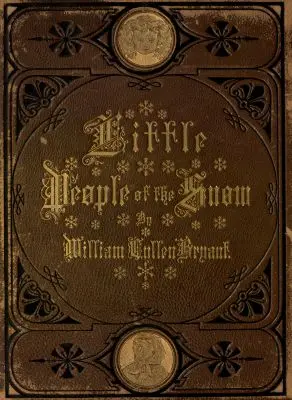
William Cullen Bryant
William Cullen Bryant
William Cullen Bryant
BEHIND THE BOOK
This eBook is for the use of anyone anywhere in the United States and most other parts of the world at no cost and with almost no restrictions whatsoever. You may copy it, give it away or re-use it under the terms of the Project Gutenberg License included with this eBook or online at www.gutenberg.org. If you are not located in the United States, you will have to check the laws of the country where you are located before using this eBook. Read the source licence.
The original source file, including credits and licence, is retained by this library. Request an original-format copy at no charge. Please include the book title and Project Gutenberg identifier #29700.
KEEP YOUR CURIOSITY GOING

Eric Mackay
Edmund Gosse
Sophia Margaretta Hensley
Gilbert Parker
George MacDonald

Elizabeth Bibesco