THE CLASSIC COLLECTION✦Letters of a Traveller; Or, Notes of Things Seen in Europe and AmericaCLASSIC FREE BOOKS
Letters of a Traveller; Or, Notes of Things Seen in Europe and America
William Cullen Bryant
THE CLASSIC COLLECTION · 1881
"Poetical Works of William Cullen Bryant" by William Cullen Bryant is a collection of poetry written in the mid-19th century. The work encompasses a broad range of themes, including nature, mortality, and the human experience, showcasing Bryant's deep appreciation for the American landscape and philosophical reflections on life. As one of the prominent figures in American poetry, Bryant's writings showcase his skill in evoking emotion and imagery, appealing to readers interested in richly layered verse. At the start of this compilation, the narrative introduces the poet’s familial background, highlighting his lineage tied to early American history, specifically the Mayflower. It reflects on his childhood, marked by a supportive father who encouraged his poetic inclinations despite expectations for him to pursue a medical career. This opening sets the stage for understanding Bryant's evolution as a poet, leading into discussions of his early works, including "Thanatopsis," and his formative experiences that inspired his poetic voice. Each poem is crafted with careful attention to both form and theme, ensuring a resonant exploration of nature’s beauty and humanity's intertwined fate, while the introductory section serves to contextualize Bryant's literary legacy.
Introduction adapted from the source catalogue; source summaries may be automatically generated.
Free to read · English · 93,106 words · No account needed
MAKE TIME FOR A GOOD BOOK
On by default. Untick to stop anonymous reading totals. Each page counts after 10 seconds in view. How this works.
Anonymous counting is on unless you have switched it off.
Within an inner room his couch they spread,
His funeral-couch; with mingled grief and love,
They laid a crown of roses on his head,
And murmured, "Brighter is his crown above."
They scattered round him, on the snowy sheet,
Laburnum's strings of sunny-colored gems,
Sad hyacinths, and violets dim and sweet,
And orange-blossoms on their dark-green stems.
And now the hour is come, the priest is there;
Torches are lit and bells are tolled; they go,
With solemn rites of blessing and of prayer,
To lay the little one in earth below.
The door is opened; hark! that quick glad cry;
Carlo has waked, has waked, and is at play;
The little sisters laugh and leap, and try
To climb the bed on which the infant lay.
And there he sits alive, and gayly shakes
In his full hands the blossoms red and white,
And smiles with winking eyes, like one who wakes
From long deep slumbers at the morning light.
Once this soft turf, this rivulet's sands,
Were trampled by a hurrying crowd,
And fiery hearts and armèd hands
Encountered in the battle-cloud.
Ah! never shall the land forget
How gushed the life-blood of her brave--
Gushed, warm with hope and courage yet,
Upon the soil they fought to save.
Now all is calm, and fresh, and still;
Alone the chirp of flitting bird,
And talk of children on the hill,
And bell of wandering kine, are heard.
No solemn host goes trailing by
The black-mouthed gun and staggering wain;
Men start not at the battle-cry,
Oh, be it never heard again!
Soon rested those who fought; but thou
Who minglest in the harder strife
For truths which men receive not now,
Thy warfare only ends with life.
A friendless warfare! lingering long
Through weary day and weary year,
A wild and many-weaponed throng
Hang on thy front, and flank, and rear.
Yet nerve thy spirit to the proof,
And blench not at thy chosen lot.
The timid good may stand aloof,
The sage may frown--yet faint thou not.
Nor heed the shaft too surely cast,
The foul and hissing bolt of scorn;
For with thy side shall dwell, at last,
The victory of endurance born.
Truth, crushed to earth, shall rise again;
Th' eternal years of God are hers;
But Error, wounded, writhes in pain,
And dies among his worshippers.
Yea, though thou lie upon the dust,
When they who helped thee flee in fear,
Die full of hope and manly trust,
Like those who fell in battle here.
Another hand thy sword shall wield,
Another hand the standard wave,
Till from the trumpet's mouth is pealed
The blast of triumph o'er thy grave.
Your reading position is saved on this browser. Take it to another device with a library code. Reading pages adapt to text, rather than matching a printed edition.
William Cullen Bryant
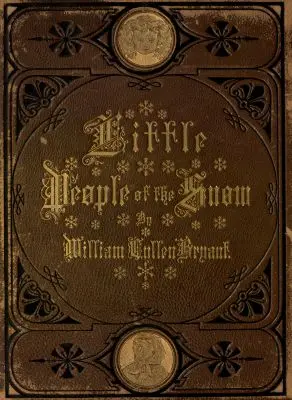
William Cullen Bryant
William Cullen Bryant
William Cullen Bryant
BEHIND THE BOOK
This eBook is for the use of anyone anywhere in the United States and most other parts of the world at no cost and with almost no restrictions whatsoever. You may copy it, give it away or re-use it under the terms of the Project Gutenberg License included with this eBook or online at www.gutenberg.org. If you are not located in the United States, you will have to check the laws of the country where you are located before using this eBook. Read the source licence.
The original source file, including credits and licence, is retained by this library. Request an original-format copy at no charge. Please include the book title and Project Gutenberg identifier #29700.
KEEP YOUR CURIOSITY GOING

Eric Mackay
Edmund Gosse
Sophia Margaretta Hensley
Gilbert Parker
George MacDonald

Elizabeth Bibesco