
Letters to a Friend, Written to Mrs. Ezra S. Carr, 1866-1879
John Muir
THE CLASSIC COLLECTION · 1896
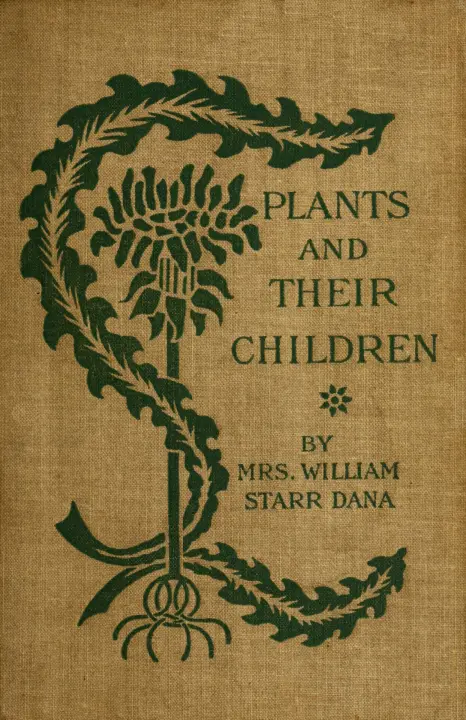
"Plants and their Children" by Frances Theodora Parsons is a children's educational book written in the late 19th century. The publication focuses on teaching young readers about the various aspects of plant life, how plants grow, reproduce, and their importance to the ecosystem. Through engaging narratives and illustrations, it aims to cultivate a sense of curiosity and appreciation for nature in children, making it accessible and enjoyable. The opening portion introduces readers to the concept of plants, particularly apples, through a lively and imaginative narrative that encourages children to relate everyday experiences in nature to their learning. Parsons employs vivid descriptions of an apple orchard, inviting readers to explore the lifecycle of an apple from blossom to fruit while engaging them with questions that stimulate curiosity. The section also outlines practical suggestions for teachers to enhance classroom learning with observations of nature, underscoring the significance of hands-on experiences with the natural world. Overall, this initial part sets a foundation for understanding and appreciating the intricate connections between plants, their growth processes, and their roles in a child’s learning journey.
Introduction adapted from the source catalogue; source summaries may be automatically generated.
Free to read · English · 60,770 words · No account needed
MAKE TIME FOR A GOOD BOOK
On by default. Untick to stop anonymous reading totals. Each page counts after 10 seconds in view. How this works.
Anonymous counting is on unless you have switched it off.
Daffodil, 216.
Daisy, pollen of, 196.
plan of, 249-251.
blue, 251.
flower head of, 252.
strap and tube flowers of, 254, 255.
Dandelion, puffball of, 35, 36, 95.
fruit cluster of, 60.
plan of, 247, 248.
flower head of, 252.
strap flowers of, 254, 255.
Dicotyledonous plants (plants with two seed leaves), 85-87.
Dodder, 108-110, 114, 123.
Dogwood, berries of, 42.
Dogwood blossom, plan of, 245.
Duckweed, 111.
Dust boxes (anthers), position of, 14, 227.
contents of, 17.
function of, 188.
varieties of, 193-195.
Dutchman’s breeches, 203.
Easter lily, building plan of, 191.
stamens of, 193.
description of, 218, 219.
Elm, seed of, 62.
Enchanter’s nightshade, stamen of, 195.
English ivy, 106, 107, 115, 116.
Eucalyptus, perspiration of, 149.
Evening primrose, a night-blooming
flower, 229, 230.
pollen of, 197.
Evergreen leaves, 184.
Evergreen plants, 171.
Everlasting, 255.
Eyes of potato, 104, 131.
False Solomon’s seal, 48.
Ferns, 215.
Fertilization, see “pollen.”
Fibrous roots, 102, 103.
Fir tree, trunk of, 121.
Fireweed, pod of, 58.
stamens and pistil of, 227, 228.
Flax plant, 110.
Fleshy root, 102-104.
Flower cluster, 245, 246.
Flower dust, see “pollen.”
Flower head, 244, 247-255.
Flower leaves, 192.
Flowering plants, 22.
Flowers, 187-255.
with many pistils, 201, 202.
with stamens only, 206-211.
with pistils only, 207-211, 250.
of trees, 209-211.
night-opening, 228-230.
design of odor of, 231.
Food of plants, 143-148, 150.
Forsythia, buds of, 129.
Foxglove, garden, 225.
Foxglove, yellow false, 112, 225, 226.
Fruit, the plant’s object, 24.
the seed holder, 33-36.
defined, 34, 94.
wild and cultivated, 39, 40.
varieties of, 52-55, 95.
function of, 95.
formed from pistil, 202.
Fruits and seeds, 9-73.
Garden foxglove, 225.
Geranium, wild, 65, 66, 220.
Golden-rod, fruit clusters of, 59.
stamens of, 194, 195.
plan of, 252, 253.
description of, 254.
Grass of Parnassus, pistil of, 200.
Grass plants, classified, 88.
Hairy leaves, design of, 170-175.
Hanging roots, 107.
Haws, 49.
Hemlock cone, 62.
Hemlock tree, 171, 184.
Hobblebush, leaves of, 215.
buds of, 130.
flower cluster of, 245, 246.
Holly leaves, 174, 175.
Hop hornbeam fruit, 62.
Horse chestnut, buds of, 126, 128.
Hyacinth, 216.
Your reading position is saved on this browser. Take it to another device with a library code. Reading pages adapt to text, rather than matching a printed edition.
BEHIND THE BOOK
This eBook is for the use of anyone anywhere in the United States and most other parts of the world at no cost and with almost no restrictions whatsoever. You may copy it, give it away or re-use it under the terms of the Project Gutenberg License included with this eBook or online at www.gutenberg.org. If you are not located in the United States, you will have to check the laws of the country where you are located before using this eBook. Read the source licence.
The original source file, including credits and licence, is retained by this library. Request an original-format copy at no charge. Please include the book title and Project Gutenberg identifier #71942.
KEEP YOUR CURIOSITY GOING
John Muir

Asa Gray
Asa Gray

Florence Nightingale
Elizabeth Robins Pennell
Denison Olmsted