
Letters to a Friend, Written to Mrs. Ezra S. Carr, 1866-1879
John Muir
THE CLASSIC COLLECTION · 1896
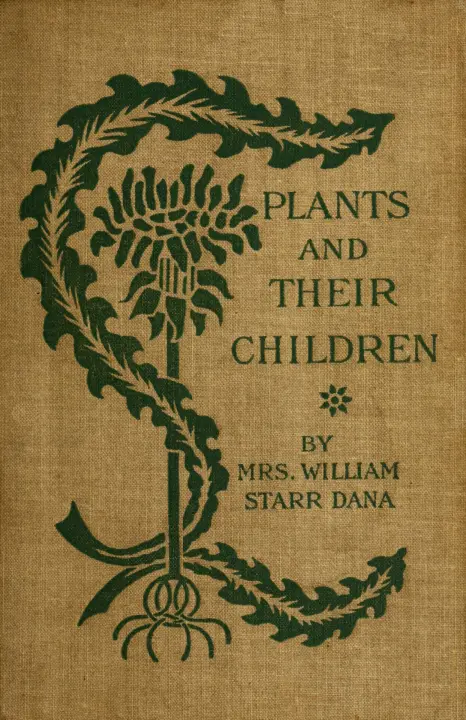
"Plants and their Children" by Frances Theodora Parsons is a children's educational book written in the late 19th century. The publication focuses on teaching young readers about the various aspects of plant life, how plants grow, reproduce, and their importance to the ecosystem. Through engaging narratives and illustrations, it aims to cultivate a sense of curiosity and appreciation for nature in children, making it accessible and enjoyable. The opening portion introduces readers to the concept of plants, particularly apples, through a lively and imaginative narrative that encourages children to relate everyday experiences in nature to their learning. Parsons employs vivid descriptions of an apple orchard, inviting readers to explore the lifecycle of an apple from blossom to fruit while engaging them with questions that stimulate curiosity. The section also outlines practical suggestions for teachers to enhance classroom learning with observations of nature, underscoring the significance of hands-on experiences with the natural world. Overall, this initial part sets a foundation for understanding and appreciating the intricate connections between plants, their growth processes, and their roles in a child’s learning journey.
Introduction adapted from the source catalogue; source summaries may be automatically generated.
Free to read · English · 60,770 words · No account needed
MAKE TIME FOR A GOOD BOOK
On by default. Untick to stop anonymous reading totals. Each page counts after 10 seconds in view. How this works.
Anonymous counting is on unless you have switched it off.
It seems as though the woods and fields were more ready to tell their stories, to whisper their secrets, to children than to grown people. If people learn to use their eyes and ears only after they are grown, I hardly think that they will ever read quite the same stories, ever listen to quite such wonderful secrets, as if they had begun to look and to listen when they were little children.
If fairy godmothers came now, as the stories tell us they did once upon a time, to the christenings of our little ones, offering whatever gifts the parents should choose, it seems to me one of the wisest selections would be the power to see.
And so when I ask you children, now that you are putting by your lesson books for many weeks, to learn one lesson this holiday time,—to learn to see,—I am asking you to do something that will make your lives far happier than they could be were this lesson left unlearned.
(For the convenience of teachers and other older readers, technical terms avoided in the body of the book are given in the index.)
Above-ground roots, 106-111.
Acorn, seed of oak, 68.
seed leaves of, 87.
a fruit, 95.
Adder’s tongue, yellow, 203, 216, 219.
Air, composition of, 151.
Air roots, 107.
Alder, black, 49.
Alder, speckled, 173.
Alder, swamp, 173.
Alder tassels, 207-209.
Almond seed, a food, 91.
Amphibious knotweed, 119, 123.
Anemone, 203, 209, 216, 219.
Animals and plants, difference between, 154, 155.
Anthers, see “dust boxes.”
Apple, study of, 11-19.
seed of, 20, 24, 27, 29, 93.
signs of ripeness of, 28, 29.
Apple blossom, parts of, 14, 15, 32.
buds of, 129.
Ash, seed of, 62.
Aster puffball, 59.
Asters, 251, 252, 254.
Baneberry, red, 49.
Baneberry, white, 49.
Barberry, 49.
stamens of, 193.
Bark, defined, 120, 121.
Basswood, leaves of, 165.
Bean, planting of seed of, 80.
seed leaves of, 81.
development of seed, 81-83, 96-98.
root of, 99.
stem of, 115, 117.
Bee, a pollen carrier, 17, 18, 189, 207, 226, 227, 233.
Beech tree, 215.
Beet, root of, 102, 103.
Birch tassels, 208, 209.
Birds, as seed transporters, 72, 73.
Bittersweet berries, 42.
Black alder, 49.
Blackberry, development of, 235-237.
Bladderwort, 179, 180.
Bloodroot, 106.
Bloom, 173.
Blue daisy, 251.
Blue flag, classified, 88.
Bristles, 175.
Bryophyllum, 132, 133, 150.
Buckwheat seed, a food, 91.
Buds, 125-133.
protection of, 126, 127, 131.
position of, 128, 132.
unprotected, 130.
on leaves, 132, 133.
Bulb, described, 105, 106.
an underground stem, 216, 217.
Bulblets, defined, 132.
Burdock burr, 35, 36, 52, 53, 95.
Burrs, description of, 52.
use of, to plant, 53.
as seed cases, 67, 68.
Buttercup, pistils and stamens of, 201
Buttonwood buds, 130, 131.
Your reading position is saved on this browser. Take it to another device with a library code. Reading pages adapt to text, rather than matching a printed edition.
BEHIND THE BOOK
This eBook is for the use of anyone anywhere in the United States and most other parts of the world at no cost and with almost no restrictions whatsoever. You may copy it, give it away or re-use it under the terms of the Project Gutenberg License included with this eBook or online at www.gutenberg.org. If you are not located in the United States, you will have to check the laws of the country where you are located before using this eBook. Read the source licence.
The original source file, including credits and licence, is retained by this library. Request an original-format copy at no charge. Please include the book title and Project Gutenberg identifier #71942.
KEEP YOUR CURIOSITY GOING
John Muir

Asa Gray
Asa Gray

Florence Nightingale
Elizabeth Robins Pennell
Denison Olmsted