THE CLASSIC COLLECTION✦Bardell v. PickwickCLASSIC FREE BOOKS
Bardell v. Pickwick
Percy Fitzgerald & Charles Dickens
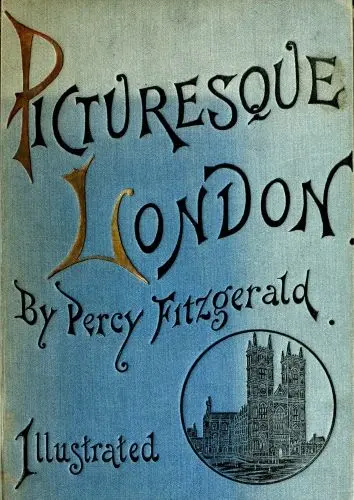
THE CLASSIC COLLECTION · 1890
"Picturesque London" by Percy Fitzgerald is a descriptive work that falls under the category of a historical account, likely written in the late 19th century. This book serves as an exploration of London's artistic treasures and architectural beauties, presenting the city as rich in picturesque elements, much like its more famous European counterparts. Fitzgerald offers his impressions of various notable sites and lesser-known gems, aiming to inspire readers to appreciate the often-overlooked charm of the city. The beginning of "Picturesque London" lays the groundwork for this exploration by emphasizing the author's desire to act as a sympathetic guide to the city's sights. Fitzgerald discusses his years of discovery, recounting the richness and variety of London’s artistic heritage, and often contrasting the traditional guidebook approach with a more personal interpretation of beauty and character. The preface sets an inviting tone and details Fitzgerald’s intention to enrich the reader’s experience through vivid descriptions and an appreciation for the hidden wonders of the city's history and architecture, leading into a depiction of St. Margaret’s Church in Westminster. While planning to explore renowned landmarks and quaint corners alike, the author hints at the multiplicity of perspectives through which one can understand London, setting a warm and engaging backdrop for the subsequent chapters.
Introduction adapted from the source catalogue; source summaries may be automatically generated.
Free to read · English · 121,041 words · No account needed
MAKE TIME FOR A GOOD BOOK
On by default. Untick to stop anonymous reading totals. Each page counts after 10 seconds in view. How this works.
Anonymous counting is on unless you have switched it off.
A crying blemish to the collection is the room full of fantastic pictures, so called, the terrible legacy which Turner bequeathed to the nation. These grotesques have neither form nor meaning, and seem to be mad, wild caprices. There is nothing to match them in existence, and no gallery, private or public, would tolerate them. Some are nothing but streaks and smears--yellows and blues utterly amorphous; yet admirers will protest that there is some deep-seated “no meaning” mystery beneath, which study and sympathy will reveal. Some arrangement by Act of Parliament or otherwise should be made for disposing of these performances, which we have heard again and again excite the derision of the foreigner as “polissonneries.” The serious and responsible works of Turner are here, and excite admiration: but these, it is well known, were the eccentricities of his dotage. Some of his large grand pieces are truly fine, such as “The Sea Fight” and the beautiful Italian landscape placed as a pendant to the well-known Claude, though it is easy to note that the exquisitely sultry luminousness of the French painter cannot be approached, Turner’s atmosphere, from the very contrast, being somewhat thick and heavy. Any one who goes from picture to picture of Turner’s, those, I mean, of his sane manner, with care and regularity, will be lost in wonder at the variety of his styles, and will conclude that he could “do anything.” The mistake of his later days was his attempt to simulate with colours atmospheric tones and effects, such as the “actual sense of effulgence” in the sun when we attempt to look straight at it, or the glare from a passing train, or a steamer showing lights and letting off steam.
Perhaps the truest “painter” of the modern English school who could be called a master, and whose works would stand the test of criticism, is Wilkie. No praise could do justice to that masterpiece, “The Blind Fiddler,” with its minutely delicate handling of faces and hands, yet offering a grand breadth of style. The beautiful limpid colouring, the firmness, yet delicacy, of the touch, the pleasant, quiet, unforced humour of the scene--akin to that of Goldsmith--the brilliancy and largeness of treatment, are perfectly miraculous in a youth little more than twenty. Neither Mieris nor Meissonier have works that can be classed with this gem, which, by-the-way, would gain by being hung higher. His picture of “The Beadle” leading away the Mountebanks and their Dancing Dogs, with figures brilliantly and exquisitely finished, is not, however, his best specimen. We should note the contrast with his well-known “Knox Preaching,” which seems the work of a different hand. Many would be puzzled at this; but art critics know that Wilkie altered his style completely after a visit to Spain, and affected a rich, juicy, full-coloured tone, even adopting a large unfinished “streaky” manner. In this contrasting of style we may profitably turn for comparison to a picture truly unique, of which, as Lamb says, “One species is the genus,” and which may be coveted by any gallery, that is, the famous “Treaty of Munster,” by Terburg, a small cabinet picture, the gift of a private person. This extraordinary little masterpiece is worth an hour’s study, and illustrates all the principles of painting. There are some fifty or sixty figures, and the force, dramatic expression, and feeling of the whole is surprising. Every minute face is distinct, and leaves the air of perfect finish; yet, if we look closely, we shall see the workmanship is rough and bold. Mr. Ruskin has happily illustrated this valuable principle by a minute vignette of Turner’s, which decorates his “Italy.” It represents the marvellous windows and elaborate details of the Ducal palace in Venice, all within a couple of inches; yet, if we take a magnifying glass, we shall find that none of the objects represented are actually drawn. There are only a number of dots and touches, and yet the effect of the relief, details, and carvings is perfectly conveyed. On the other hand, had the details been actually drawn on so small a scale, these details would at a distance have failed to convey the idea intended. Here is one of the secrets of largeness of style. Meissonier has much in common with Terburg. Our fashionable modern painters have little idea of relative values. They copy all before them with the accuracy of a photograph.
Your reading position is saved on this browser. Take it to another device with a library code. Reading pages adapt to text, rather than matching a printed edition.
Percy Fitzgerald & Charles Dickens
Percy Fitzgerald
Percy Fitzgerald
BEHIND THE BOOK
This eBook is for the use of anyone anywhere in the United States and most other parts of the world at no cost and with almost no restrictions whatsoever. You may copy it, give it away or re-use it under the terms of the Project Gutenberg License included with this eBook or online at www.gutenberg.org. If you are not located in the United States, you will have to check the laws of the country where you are located before using this eBook. Read the source licence.
The original source file, including credits and licence, is retained by this library. Request an original-format copy at no charge. Please include the book title and Project Gutenberg identifier #59188.
KEEP YOUR CURIOSITY GOING
Wilfrid Scawen Blunt
Wilfrid Scawen Blunt

E. W. (Edgar Watson) Howe
Cécile Tormay

Moritz Busch
John L. Ransom