THE CLASSIC COLLECTION✦Bardell v. PickwickCLASSIC FREE BOOKS
Bardell v. Pickwick
Percy Fitzgerald & Charles Dickens
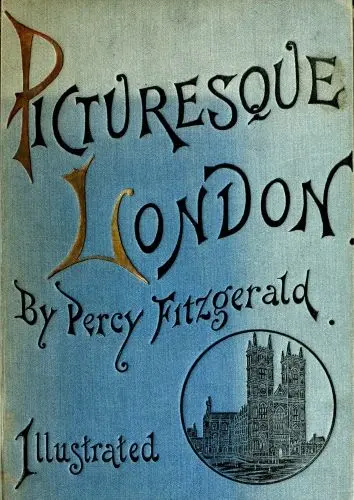
THE CLASSIC COLLECTION · 1890
"Picturesque London" by Percy Fitzgerald is a descriptive work that falls under the category of a historical account, likely written in the late 19th century. This book serves as an exploration of London's artistic treasures and architectural beauties, presenting the city as rich in picturesque elements, much like its more famous European counterparts. Fitzgerald offers his impressions of various notable sites and lesser-known gems, aiming to inspire readers to appreciate the often-overlooked charm of the city. The beginning of "Picturesque London" lays the groundwork for this exploration by emphasizing the author's desire to act as a sympathetic guide to the city's sights. Fitzgerald discusses his years of discovery, recounting the richness and variety of London’s artistic heritage, and often contrasting the traditional guidebook approach with a more personal interpretation of beauty and character. The preface sets an inviting tone and details Fitzgerald’s intention to enrich the reader’s experience through vivid descriptions and an appreciation for the hidden wonders of the city's history and architecture, leading into a depiction of St. Margaret’s Church in Westminster. While planning to explore renowned landmarks and quaint corners alike, the author hints at the multiplicity of perspectives through which one can understand London, setting a warm and engaging backdrop for the subsequent chapters.
Introduction adapted from the source catalogue; source summaries may be automatically generated.
Free to read · English · 121,041 words · No account needed
MAKE TIME FOR A GOOD BOOK
On by default. Untick to stop anonymous reading totals. Each page counts after 10 seconds in view. How this works.
Anonymous counting is on unless you have switched it off.
It is always pleasant to see some old, well-preserved mansion, with its pictures and doorways in good condition, the attendant housekeeper directing attention in her prim “show-woman” way to the carvings by “Grumbling Gibbons” (a phrase once actually uttered). More grateful, however, is it to come by chance on some neglected, unsung mansion which is celebrated by no flourishings of housekeepers, and which lingers on in its modest seclusion. Such used to be Hoghton Tower in Lancashire, with its long-forsaken court and leaden statue in the centre, its terraces and balustrades, all sad and dilapidated, but now restored to its old uses.
There are still to be found about London suburbs a few of the old and picturesque family mansions built in the days of King William or Queen Anne. These veterans of ripe, time-defying brick, spacious and even elegant in their proportions, excite more interest than many of us are able to explain. Some of the best have been levelled. A few still exist--usually altered and added to, for the use of schools or “institutions”; but not many of them are likely to last much longer.
Last year we heard of a fine old house at Wandsworth that had been doomed: it was to be cleared away by some builder of suburban villas. It was a very interesting specimen of its kind. It stood back a little from the road--presenting a rather imposing front of ripe and hard old red brick, with a richly-carved tympanum curiously protected from the incursions of the birds by a wire netting--a building well disposed and balanced, with two little low wings or “dependences” peeping from behind luxuriant shrubs. Over all was that sort of red rust which gives a grateful look of ripeness to old brickwork. The doorway was well and richly carved. Welcome, on entering, was the prospect of the old hall, dusky, panelled in oak, and crossed by three airy arches, well carved, with light pillars suggesting a colonnade. Beyond was the stair, rising effectively in short lengths. The elegant, twisted rail, slight but stable, the solidly-moulded balustrade--were admirably effective and interesting. The wall of the stair was richly dight with allegorical painting; whilst in the carved ceiling, among the clouds and vapours, were stately medallions with portraits. The colours, though somewhat faded and overlaid with grime, were in good order, and when cleaned would no doubt make a brave show. Verrio’s work--a country job--we may easily believe it to be. All through the mansion was abundant panelling and doors, with cornices richly cut. There was a perplexing little room, seemingly sliced off some greater apartment, the ceiling of which also displayed pictorial glories--two tremendous dames seated on clouds, one handing a sealed letter to the other. In the broad ceiling over the stair a medallion picture, said to be a portrait of the Duchess of York; and another believed to represent Queen Anne. In all this there was a sense of surprise mingled with a tranquil charm, a kind of new sensation. It was pleasant to think that the hard and grinding London practical spirit had overlooked this graceful relic. The spirit of Anne seemed to flutter through the old chambers. But it was on passing through to the back, to the old-fashioned “grounds,” that this sentiment was intensified. Looking up we could see that its back façade was as architectural as the front, displaying another richly-carved pediment and scutcheon with what appeared to be a cipher. The solemn brickwork, rusted and mellow, looked down on an old-fashioned, low-lying plaisaunce. From the richly-carved doorway we entered upon a stone platform, two gracefully-curved flights of steps sweeping down to the garden. Here you could scarcely believe that you were close to the high-road and to the ever-jingling tram-cars. Beyond, there were shady old trees and velvet lawns, strongly marked by an old-fashioned air of tranquillity. This old place is said to have been the residence of the Princess Anne and her husband. For my part, I have no hesitation in accepting the tradition. In any case, let us hope that the spoiler will not be allowed to intrude. There are but few of this pattern in or near London, and none so interesting as this “Wandsworth Manor-house.”
Your reading position is saved on this browser. Take it to another device with a library code. Reading pages adapt to text, rather than matching a printed edition.
Percy Fitzgerald & Charles Dickens
Percy Fitzgerald
Percy Fitzgerald
BEHIND THE BOOK
This eBook is for the use of anyone anywhere in the United States and most other parts of the world at no cost and with almost no restrictions whatsoever. You may copy it, give it away or re-use it under the terms of the Project Gutenberg License included with this eBook or online at www.gutenberg.org. If you are not located in the United States, you will have to check the laws of the country where you are located before using this eBook. Read the source licence.
The original source file, including credits and licence, is retained by this library. Request an original-format copy at no charge. Please include the book title and Project Gutenberg identifier #59188.
KEEP YOUR CURIOSITY GOING
Wilfrid Scawen Blunt
Wilfrid Scawen Blunt

E. W. (Edgar Watson) Howe
Cécile Tormay

Moritz Busch
John L. Ransom