THE CLASSIC COLLECTION✦Bardell v. PickwickCLASSIC FREE BOOKS
Bardell v. Pickwick
Percy Fitzgerald & Charles Dickens
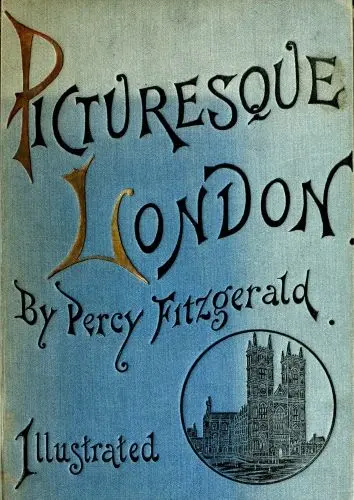
THE CLASSIC COLLECTION · 1890
"Picturesque London" by Percy Fitzgerald is a descriptive work that falls under the category of a historical account, likely written in the late 19th century. This book serves as an exploration of London's artistic treasures and architectural beauties, presenting the city as rich in picturesque elements, much like its more famous European counterparts. Fitzgerald offers his impressions of various notable sites and lesser-known gems, aiming to inspire readers to appreciate the often-overlooked charm of the city. The beginning of "Picturesque London" lays the groundwork for this exploration by emphasizing the author's desire to act as a sympathetic guide to the city's sights. Fitzgerald discusses his years of discovery, recounting the richness and variety of London’s artistic heritage, and often contrasting the traditional guidebook approach with a more personal interpretation of beauty and character. The preface sets an inviting tone and details Fitzgerald’s intention to enrich the reader’s experience through vivid descriptions and an appreciation for the hidden wonders of the city's history and architecture, leading into a depiction of St. Margaret’s Church in Westminster. While planning to explore renowned landmarks and quaint corners alike, the author hints at the multiplicity of perspectives through which one can understand London, setting a warm and engaging backdrop for the subsequent chapters.
Introduction adapted from the source catalogue; source summaries may be automatically generated.
Free to read · English · 121,041 words · No account needed
MAKE TIME FOR A GOOD BOOK
On by default. Untick to stop anonymous reading totals. Each page counts after 10 seconds in view. How this works.
Anonymous counting is on unless you have switched it off.
The old, smaller squares in London are very interesting from their tranquil, retired air and antique pattern, and venerable trees. None is more characteristic than Queen Square in Bloomsbury, with its pleasant Queen Anne and Georgian houses running round. Most of these inclosures were laid out originally after the Dutch manner, which is still apparent. It must be a curious solitary sensation to live in one of these retreats, and they are affected by students and literary men. Old fashion, indeed, reigns in Queen Square, though now they have pulled down some of the houses to rear hospitals. The houses have a pleasant, tranquil air, though within they are gloomy enough. Everyone knows the curious half solemnity, half chill, inspired by an old Queen Anne house, such as one has experienced in Church Row, Hampstead. Here, you would think you were miles away from town, in some sleepy suburb. At the upper end lived Dr. Charles Burney--the father of the brilliant Fanny Burney--in a house which had been inhabited by Alderman Barber, and to which Swift was accustomed to resort. This house, I fancy, was one of those recently pulled down to give place to the hospital. In this worthy mansion one has the interest that one takes in all connected with Johnson.
Not far away is another antique square, very old-fashioned, and with good houses, Red Lion Square. The inclosures of both these places have more the air of “grounds” than of the prim and trim modern square. There is a certain wildness, and the grass grows carelessly. But it is now completely invaded by business, and every house is subdivided into offices. Curious little foot-alleys lead into it from various quarters.
Another interesting little square is the one yclept Golden. Many a Londoner scarcely knows of its existence, and many more have never seen it; yet it is within a stone’s throw of Regent Street. It is prettily proportioned, the grass flourishing with extraordinary greenness, and in the centre rises an effective statue. Not so many years ago private persons of high respectability lived here, among others Cardinal Wiseman. Now it is entirely given over to commercial offices, and has a busy air in consequence. It would seem strange now to look for any person of condition residing here. Some of the most forlorn and dismal places are those curious squares found in the long roads that lead out of London. There is one such near the Old Kent Road, built in a pretentious style and now utterly gone to seed and decay. All the doorways, of a curious pattern, are the same, so are all the windows. No one walks there, no custom appears to visit it. It seems one mass of abandonment and we hurry away depressed. Soho Square is really quaint and interesting: it is in a sound and flourishing condition; and so full of interest, that a small book has been written on its history. Nothing is more pleasing than the sudden glimpse that is obtained of it from Oxford Street, or from Dean Street, its fine old trees spreading out umbrageously. The old houses have a quaint, solid air, notably those at the corners. Still flourishes the old Soho Bazaar at one corner, a visit to which in days gone by was thought a treat and a wonder for children. The houses, with the streets surrounding, are valuable as suggesting how old London of a hundred and fifty years back must have looked. It can have been little altered, and though shops have been opened in many of the lower stories, these have in many instances retained their old parlour shape. One is struck by the handsome quality of the mansions, the sound, solid doors, and the “detached” character of each house; that is, each was finished by itself, and not built in “rows.” A long blank wall pierced with windows, now a chapel, was formerly Mrs. Cornely’s Ridotto Rooms. On the same side of Soho Square we may note a singularly handsome house, architectural in its bold pilasters and cornices, and the cheerful red of its brick, which suggest that famous old Inigo Jones’s house in Great Queen Street. This imposing-looking edifice belongs to the flourishing firm of Crosse and Blackwell, who have taken pains to keep it in sound condition, and have fitted up one of the handsome old chambers as a sort of baronial hall, with oaken panellings and ornamental chimney. Wardour Street is suspiciously close at hand, but the spirit that prompted the work was good. Some of the houses display curious devices--faces, roses, and fleur-de-lys. Close by, in Oxford Street, we find the wine-famed Messrs. Gilbey in occupation of a rather stately building with a heavy porch and architectural front. It is long forgotten now that this was erst the Pantheon, originally one of the most beautiful buildings ever erected in London, as we can learn from the fine series of engraved plates published in its heyday. The interior was burnt early in the century, and it was reconstructed, but not with the same magnificence. It has a curious history therefore--being used as an opera house, and a place of entertainment for assemblies. A well-known man of fashion in Sheridan’s days, Colonel Greville, was much concerned with its fortunes.
Your reading position is saved on this browser. Take it to another device with a library code. Reading pages adapt to text, rather than matching a printed edition.
Percy Fitzgerald & Charles Dickens
Percy Fitzgerald
Percy Fitzgerald
BEHIND THE BOOK
This eBook is for the use of anyone anywhere in the United States and most other parts of the world at no cost and with almost no restrictions whatsoever. You may copy it, give it away or re-use it under the terms of the Project Gutenberg License included with this eBook or online at www.gutenberg.org. If you are not located in the United States, you will have to check the laws of the country where you are located before using this eBook. Read the source licence.
The original source file, including credits and licence, is retained by this library. Request an original-format copy at no charge. Please include the book title and Project Gutenberg identifier #59188.
KEEP YOUR CURIOSITY GOING
Wilfrid Scawen Blunt
Wilfrid Scawen Blunt

E. W. (Edgar Watson) Howe
Cécile Tormay

Moritz Busch
John L. Ransom