THE CLASSIC COLLECTION✦Bardell v. PickwickCLASSIC FREE BOOKS
Bardell v. Pickwick
Percy Fitzgerald & Charles Dickens
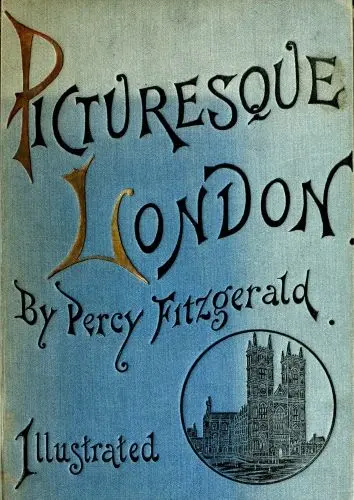
THE CLASSIC COLLECTION · 1890
"Picturesque London" by Percy Fitzgerald is a descriptive work that falls under the category of a historical account, likely written in the late 19th century. This book serves as an exploration of London's artistic treasures and architectural beauties, presenting the city as rich in picturesque elements, much like its more famous European counterparts. Fitzgerald offers his impressions of various notable sites and lesser-known gems, aiming to inspire readers to appreciate the often-overlooked charm of the city. The beginning of "Picturesque London" lays the groundwork for this exploration by emphasizing the author's desire to act as a sympathetic guide to the city's sights. Fitzgerald discusses his years of discovery, recounting the richness and variety of London’s artistic heritage, and often contrasting the traditional guidebook approach with a more personal interpretation of beauty and character. The preface sets an inviting tone and details Fitzgerald’s intention to enrich the reader’s experience through vivid descriptions and an appreciation for the hidden wonders of the city's history and architecture, leading into a depiction of St. Margaret’s Church in Westminster. While planning to explore renowned landmarks and quaint corners alike, the author hints at the multiplicity of perspectives through which one can understand London, setting a warm and engaging backdrop for the subsequent chapters.
Introduction adapted from the source catalogue; source summaries may be automatically generated.
Free to read · English · 121,041 words · No account needed
MAKE TIME FOR A GOOD BOOK
On by default. Untick to stop anonymous reading totals. Each page counts after 10 seconds in view. How this works.
Anonymous counting is on unless you have switched it off.
A serious difficulty is what to do with the accepted bequests which for half a century or so have held possession. These keep their place by virtue of law and Acts of Parliament, and as they entered in company with works of real value, there would be an ungraciousness in rejecting them. The pigments of this era seem to have faded: the pictures are flat, stiff, and, in some cases, seem the work of amateurs. One instance of this “white elephant” sort of donation is the picture of Rembrandt’s “Night Watch,” said to be a copy of no startling merit, which is yet allowed a conspicuous place.
The visitor is assisted by guides and guide-books of all kinds; one, a full, reformed one, in two volumes, has been issued recently. I always think that a model guide-book, such as the eager but uninformed public would desire, has yet to be devised. The usual system is after this pattern: The name and number is given, then the painter and school, say, “The Umbrian School”--with the size of the picture in inches, a few lines about the painter, his birth and death, and to what “school” he succeeded; then a rather banal description of what the figures are doing--which the spectator can discover for himself without assistance. These points, such as size in inches, and the description, are, of course, valuable for the Waagens and other critical persons, but are caviare to the visiting public. I venture to say that the questions every one puts to himself on seeing a “famous” picture are these: “Why is it that this work is so admired? What are the particular merits?” The effect is admittedly good and beautiful; but it seems so like many others that we have seen, excellent, pleasing; but it puzzles us to say why it exceeds in merit the others. How delightful, on the other hand, and improving is it, when it is our good fortune to be attended by some real critic and trained judge, who in a few words points out the merits, the contrast of colour, the drawing of that arm, the difficulty overcome in grouping in figures! Again, what is style? Corot, the French landscape painter, is deservedly admired, and the spectator, looking at his catalogue, will exclaim, “Oh! that is a Corot.” He sees, with wonder, a sort of marsh or fen with gloomy “furry”-looking trees. He is told of the enormous price this small work fetches in the market, and wonders again. It seems to him sketchy, blurred, and unfinished, perhaps meaningless, but it must be a great work from its price: he cannot puzzle it out, and he has to pass on to others. The critic, however, at his elbow, will draw him back and tell him, first, what the Corot theory was, viz., that nature has moods of humour, of feeling and passion, which can be noted, just as we note expression on the human countenance; that this often becomes so marked and absorbing that we do not observe mere details. The painter, who wished to seize the humour or expression, passes by all details of leaves, branches, etc., and even the outlines, so that the spectator, like the painter, will note only, say, the general sadness of the whole. This is roughly and, perhaps, broadly expressed, but it furnishes a sort of key. But we now look at our Corot with a different interest, and its meaning gradually grows upon us. So with the Dutch school. We pass from one to the other in the Peel collection, from Teniers and Van Steen to De Hooge, with a sense of sameness. There are the usual “Boors” and “Vrows” carousing or dancing; or there are “Interiors” by De Hooge; or Hobbema, with his alleys and trees, all great, clever, finished minutely, and curious. But we have no key, and there is a mystery beyond us. Here, again, we should reflect that this “style” is due to the conditions of climate and character. Dutch skies are sad and sombre, the country flat and bare, the long avenues of trees add to the mournful feeling; the interiors are dark. There is a wonderful, much-admired Hobbema, here a “grand piece,” as it is called; an alley of long bare trees stretching away from the spectator, a landscape spreading away beyond. The spectator as he gazes will feel a curious sense of melancholy, owing to the flat wastes, the trunks exposed to the sweeping winds, the earth redeemed by stern toil from the sea, the feeling of isolation, with a suggestion of the indomitable Dutch character, which has battled successfully for centuries with the ocean, and which finds a relief in scenes of carousal. They have no mountains or valleys, or woods to draw from. The houses in the cities are narrow, their rooms small and dark; hence everything is looked at in miniature; hence, too, the laborious finish. Hence, too, plenty of dark corners and shadows. All which explains Rembrandt’s traditional effects, his faces emerging from dark backgrounds. Hence, too, the costume of the Dutch portrait, with its white collar and black jerkin. In the small dark rooms, panelled with dark oak, the light falls only on the face; rich-coloured clothes would lose their lustre. So with De Hooge’s picture of the “Entrance to a Dutch Yard,” where there is a welcome but unexpected stream of light, and which is treated as light that enters into a dark place.
Your reading position is saved on this browser. Take it to another device with a library code. Reading pages adapt to text, rather than matching a printed edition.
Percy Fitzgerald & Charles Dickens
Percy Fitzgerald
Percy Fitzgerald
BEHIND THE BOOK
This eBook is for the use of anyone anywhere in the United States and most other parts of the world at no cost and with almost no restrictions whatsoever. You may copy it, give it away or re-use it under the terms of the Project Gutenberg License included with this eBook or online at www.gutenberg.org. If you are not located in the United States, you will have to check the laws of the country where you are located before using this eBook. Read the source licence.
The original source file, including credits and licence, is retained by this library. Request an original-format copy at no charge. Please include the book title and Project Gutenberg identifier #59188.
KEEP YOUR CURIOSITY GOING
Wilfrid Scawen Blunt
Wilfrid Scawen Blunt

E. W. (Edgar Watson) Howe
Cécile Tormay

Moritz Busch
John L. Ransom