THE CLASSIC COLLECTION✦Bardell v. PickwickCLASSIC FREE BOOKS
Bardell v. Pickwick
Percy Fitzgerald & Charles Dickens
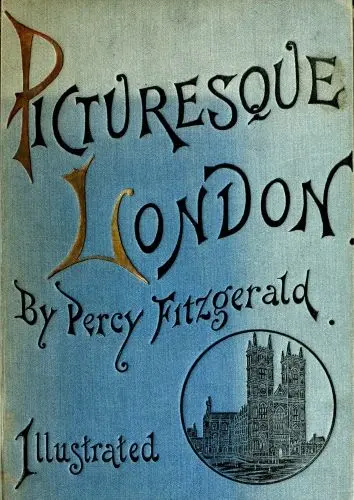
THE CLASSIC COLLECTION · 1890
"Picturesque London" by Percy Fitzgerald is a descriptive work that falls under the category of a historical account, likely written in the late 19th century. This book serves as an exploration of London's artistic treasures and architectural beauties, presenting the city as rich in picturesque elements, much like its more famous European counterparts. Fitzgerald offers his impressions of various notable sites and lesser-known gems, aiming to inspire readers to appreciate the often-overlooked charm of the city. The beginning of "Picturesque London" lays the groundwork for this exploration by emphasizing the author's desire to act as a sympathetic guide to the city's sights. Fitzgerald discusses his years of discovery, recounting the richness and variety of London’s artistic heritage, and often contrasting the traditional guidebook approach with a more personal interpretation of beauty and character. The preface sets an inviting tone and details Fitzgerald’s intention to enrich the reader’s experience through vivid descriptions and an appreciation for the hidden wonders of the city's history and architecture, leading into a depiction of St. Margaret’s Church in Westminster. While planning to explore renowned landmarks and quaint corners alike, the author hints at the multiplicity of perspectives through which one can understand London, setting a warm and engaging backdrop for the subsequent chapters.
Introduction adapted from the source catalogue; source summaries may be automatically generated.
Free to read · English · 121,041 words · No account needed
MAKE TIME FOR A GOOD BOOK
On by default. Untick to stop anonymous reading totals. Each page counts after 10 seconds in view. How this works.
Anonymous counting is on unless you have switched it off.
[19] A sympathetic frequenter of the “Cheshire Cheese” has sent me a glowing account of its alternations, which I can cordially endorse. “The ‘Cheese’ is really the last of our old taverns, conducted on genuine principles, which one wishes to cherish. When genial spring has brought forward vegetation the waiter’s cheerful intimation that ‘Asparagus is on, sir,’ recalls the fact forcibly to your notice. When later, ‘’Am and peas’ can be secured, the vision of early summer is perfect, and is not even disturbed by boiled beans and bacon. In the hot, sultry days, cool salads are appropriate, and when these disappear there is a closing in of daylight and a general warning that the year is past its prime. Then does the ‘Cheese’ draw its blinds and light its gas, stoke up its fires and announce its great puddings. Yet, further ahead, when raw November days come upon us, the savoury smell of Irish stew--that fine winter lining for the hungry--pervades the place, and so the season goes round. Of all the changes brought about by the rolling year, however, none is so popular as the advent of the pudding, though it means frost, and damp, and cold winds. The pudding (italics for ‘the,’ please) has no rival in size or quality. Its glories have been sung in every country, even the Fort Worth Texas Gazette having something to say on the subject. The pudding ranges from fifty to sixty, seventy, and eighty pounds weight, and gossip has it that in the dim past the rare dish was constructed to proportions of a hundredweight. It is composed of a fine light crust in a huge china basin, and there are entombed therein beefsteaks, kidneys, oysters, larks, mushrooms, and wondrous spices and gravies, the secret of which is known only to the compounder. The boiling process takes about sixteen to twenty hours, and the smell on a windy day has been known to reach as far as the Stock Exchange. The process of carving the pudding on Wednesdays and Saturdays when it is served is as solemn a ceremony as the cutting of the mistletoe with the golden sickle of the Druids. The late proprietor, Mr. Beaufoy A. Moore, could be with difficulty restrained from rising from his bed when stricken down with illness to drive to the ‘Cheese’ and serve out the pudding. No one, he believed, could do it with such judicious care and judgment as he did. The dining-room is fitted with rows of wooden benches and wooden tables without the slightest pretence of show. But the cloths are white and clean, and the cutlery bright, while the china service is of that ancient and undemonstrative blue design which delighted our forefathers, and is known as the willow pattern. The glasses are large, thick, and heavy, and might be used with effect in an argument. But the silver is silver, not Brummagem, and has seen more service than would destroy half the property of modern public-houses. On the walls hang three prominent objects (in addition to the usual advertisements of brands of champagnes and clarets), viz., a barometer, a print of Dr. Johnson, and an old oil painting by Wageman, representing the interior of the room with a gentleman trying his steak with his knife, a waiter holding up a port wine cork in the well-known attitude ‘two with you’; and a cat rubbing her oleaginous hide in anxious expectation against the leg of the settle. This picture, like one in the bar, is an heirloom, or rather a fixture, which cannot be sold, but must pass from landlord to landlord. The fireplaces are huge and commodious, capable of holding a hundredweight of coal at a time. On a cold winter’s day, when their genial warmth penetrates every portion of the room, and the merry flames dance and leap after each other up the capacious chimney space, a man listens to the howling wind without, or hears the rain pattering on the paved courts. Here gather poets, painters, lawyers, barristers, preachers, journalists, stockbrokers, musicians, town councillors, and vestrymen, with just a soupçon of sporting celebrities, and a decided dash of the impecunious ‘Have beens.’ The latter represent in the ‘Cheese’ colony the Irish division in Parliament. Up-stairs there are extensive ranges of kitchens, where burnt sacrifices are being perpetually offered up in the shape of mutton and beef; a dining room, and a smoke-room, dark-panelled and cosy, where a man may forget the world and be lost to it during a much-coveted midday rest. The privileged few who are allowed to go into the wondrous cellars--redolent of sawdust, cobweb-coated, and covered with dust--wander amidst avenues of wine-bins with wonder and astonishment at the space occupied underground as compared with the upper regions.”
Your reading position is saved on this browser. Take it to another device with a library code. Reading pages adapt to text, rather than matching a printed edition.
Percy Fitzgerald & Charles Dickens
Percy Fitzgerald
Percy Fitzgerald
BEHIND THE BOOK
This eBook is for the use of anyone anywhere in the United States and most other parts of the world at no cost and with almost no restrictions whatsoever. You may copy it, give it away or re-use it under the terms of the Project Gutenberg License included with this eBook or online at www.gutenberg.org. If you are not located in the United States, you will have to check the laws of the country where you are located before using this eBook. Read the source licence.
The original source file, including credits and licence, is retained by this library. Request an original-format copy at no charge. Please include the book title and Project Gutenberg identifier #59188.
KEEP YOUR CURIOSITY GOING
Wilfrid Scawen Blunt
Wilfrid Scawen Blunt

E. W. (Edgar Watson) Howe
Cécile Tormay

Moritz Busch
John L. Ransom