THE CLASSIC COLLECTION✦Bardell v. PickwickCLASSIC FREE BOOKS
Bardell v. Pickwick
Percy Fitzgerald & Charles Dickens
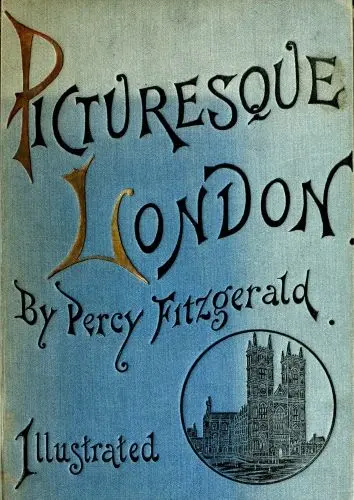
THE CLASSIC COLLECTION · 1890
"Picturesque London" by Percy Fitzgerald is a descriptive work that falls under the category of a historical account, likely written in the late 19th century. This book serves as an exploration of London's artistic treasures and architectural beauties, presenting the city as rich in picturesque elements, much like its more famous European counterparts. Fitzgerald offers his impressions of various notable sites and lesser-known gems, aiming to inspire readers to appreciate the often-overlooked charm of the city. The beginning of "Picturesque London" lays the groundwork for this exploration by emphasizing the author's desire to act as a sympathetic guide to the city's sights. Fitzgerald discusses his years of discovery, recounting the richness and variety of London’s artistic heritage, and often contrasting the traditional guidebook approach with a more personal interpretation of beauty and character. The preface sets an inviting tone and details Fitzgerald’s intention to enrich the reader’s experience through vivid descriptions and an appreciation for the hidden wonders of the city's history and architecture, leading into a depiction of St. Margaret’s Church in Westminster. While planning to explore renowned landmarks and quaint corners alike, the author hints at the multiplicity of perspectives through which one can understand London, setting a warm and engaging backdrop for the subsequent chapters.
Introduction adapted from the source catalogue; source summaries may be automatically generated.
Free to read · English · 121,041 words · No account needed
MAKE TIME FOR A GOOD BOOK
On by default. Untick to stop anonymous reading totals. Each page counts after 10 seconds in view. How this works.
Anonymous counting is on unless you have switched it off.
Soane Collection in Lincoln’s Inn Fields, 94
Soho Square, 171;
Chapel near, 241
Somerset House, 126
Square, St. James’s, 174
Squares, Old London, 170
Staple Inn described, 102
Steeples, Eccentric, 238
Steevens, Alfred, Sad Story of, 139; Specimen of his art in the railings of British Museum, 265
Stephen’s, St., Walbrook, 234
Sterne, Ghastly Story connected with, 75
Street Names, Origin of, 55
Studios, Some--Herkomer’s, 312;
Sir F. Leighton’s, 300;
Sir John Millais’s, 302
Sundial, Negro, in Clement’s Inn, 101
Tablets on Celebrated Houses, 165
Teddington, 284
Temple, Inns in the, described, 109
The “Antients” in the old Inns of Court, 103
Theodore of Corsica, his story, 73
Tottenham, 288
Tradescants, House of, 166
Trumpeter House, Richmond, 282
Tyrrel Monument, 34
Vanbrugh, the architect, and his work, 68
Vauxhall, Figure-heads at, 270
Wade, Marshal, Grotesque Monument to, 45
Wandsworth Manor House, 145
“Warwick Arms,” The Old, 175
Waterloo Bridge, Praise of, by a French critic, 123;
and the Embankment, 122;
The Toll-keeper and Dickens, 125
Wellington Monument, St. Paul’s, History of, 139
Westminster Abbey described, 26
Westminster Hall, 23
White Hart Tavern, Boro’, 178
Whittington’s House, 199
Willis’s Rooms and its associations, 293
Woffington’s Almshouses at Teddington, 284
Wren, Sir C., his Churches, 232;
Steeples, 233
York House and Gate, 46
[1] This has turned out a singularly accurate prophecy. Chippendale’s work now fetches an enormous sum whenever it appears at a sale by auction. It lately brought close on £30.
[2] Few are aware of the number of these mediæval obstructions, of which there are some 250 in London. “In most parishes there are two or three; in some the number reaches thirty or forty. The whole metropolitan area is dotted with them. There are nine in Marylebone; thirty in St. Pancras, principally on the Camden Estate and Crown property. St. George’s, Hanover Square, has a dozen; St. Mary, Islington, twenty; St. Giles’s, Camberwell, sixteen. There are four each in St. James and St. John, Clerkenwell, in Chelsea, and in Woolwich. Paddington has five; but the number increases, sometimes by leaps and bounds, until we reach such totals as 27 for Wandsworth, 28 for Lewisham, and 36 for Fulham. Poplar has only one, but it reconciles the deficiency to its self-respect by levying a toll. The privilege of shutting out vehicles is highly prized in some parts of St. Pancras, and highly paid for. It makes a substantial addition to the rent, and it constitutes a sort of permanent charge on the rates, in the form of payment on the original cost of the roads.”
Your reading position is saved on this browser. Take it to another device with a library code. Reading pages adapt to text, rather than matching a printed edition.
Percy Fitzgerald & Charles Dickens
Percy Fitzgerald
Percy Fitzgerald
BEHIND THE BOOK
This eBook is for the use of anyone anywhere in the United States and most other parts of the world at no cost and with almost no restrictions whatsoever. You may copy it, give it away or re-use it under the terms of the Project Gutenberg License included with this eBook or online at www.gutenberg.org. If you are not located in the United States, you will have to check the laws of the country where you are located before using this eBook. Read the source licence.
The original source file, including credits and licence, is retained by this library. Request an original-format copy at no charge. Please include the book title and Project Gutenberg identifier #59188.
KEEP YOUR CURIOSITY GOING
Wilfrid Scawen Blunt
Wilfrid Scawen Blunt

E. W. (Edgar Watson) Howe
Cécile Tormay

Moritz Busch
John L. Ransom