THE CLASSIC COLLECTION✦Bardell v. PickwickCLASSIC FREE BOOKS
Bardell v. Pickwick
Percy Fitzgerald & Charles Dickens
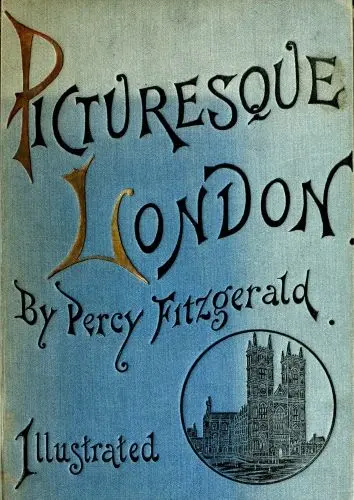
THE CLASSIC COLLECTION · 1890
"Picturesque London" by Percy Fitzgerald is a descriptive work that falls under the category of a historical account, likely written in the late 19th century. This book serves as an exploration of London's artistic treasures and architectural beauties, presenting the city as rich in picturesque elements, much like its more famous European counterparts. Fitzgerald offers his impressions of various notable sites and lesser-known gems, aiming to inspire readers to appreciate the often-overlooked charm of the city. The beginning of "Picturesque London" lays the groundwork for this exploration by emphasizing the author's desire to act as a sympathetic guide to the city's sights. Fitzgerald discusses his years of discovery, recounting the richness and variety of London’s artistic heritage, and often contrasting the traditional guidebook approach with a more personal interpretation of beauty and character. The preface sets an inviting tone and details Fitzgerald’s intention to enrich the reader’s experience through vivid descriptions and an appreciation for the hidden wonders of the city's history and architecture, leading into a depiction of St. Margaret’s Church in Westminster. While planning to explore renowned landmarks and quaint corners alike, the author hints at the multiplicity of perspectives through which one can understand London, setting a warm and engaging backdrop for the subsequent chapters.
Introduction adapted from the source catalogue; source summaries may be automatically generated.
Free to read · English · 121,041 words · No account needed
MAKE TIME FOR A GOOD BOOK
On by default. Untick to stop anonymous reading totals. Each page counts after 10 seconds in view. How this works.
Anonymous counting is on unless you have switched it off.
There is a good deal of the “peacock blue,” and other colouring that combines with it. This somewhat “barbaric” scheme of colour is scarcely suited to our country; and the rich tint is likely enough to fade, or grow darker and yet darker, with time. We select this studio as a typical one, though it exceeds its fellows in magnificence and eastern luxe.[30]
At Palace Gate, at the entrance to Kensington, Sir John Millais has his studio, in a substantial house, designed by Mr. Hardwicke. The studio, however, is a simple building, attached to the house. Mr. Alma Tadema’s studio was an old house in Porchester Terrace, on the banks of the canal, which he had fitted up and adapted to his purposes. He has now, however, built himself a new one. Mr. Hubert Herkomer’s is down at his well-known artistic colony at Bushey.
Adam, the Brothers, 39
Adelphi, The, 40
All-Hallows Staining Church, destroyed, 214
All-Hallows Barking, Church of, described, 216
All Saints’ Church, Margaret St., described, 240
Amen Court, St. Paul’s, sequestered enclosure of, 144
Anne’s, St., Church, Soho, and its Associations, 73
Austin Friars, House destroyed in, 167
Barn Elms at Putney, 275
Barnard’s Inn, 105
Barry, the Painter, his Adelphi Pictures, 48
Bartholomew’s, St., rudely treated, 221;
“Blacksmiths’ Forge and Fringe Factory,” 222;
judiciously restored, 224
Bell Tavern, The Old, 177
Berkeley Square, 172
Billett’s “Maids of Honour” cakes, 280
Blackheath, its “Paragons,” etc., 291
“Blew Coat” School, The, 19
Bow Steeple, 234
Brewers’ Hall, The, described, 208
Brick, Proper Treatment of, 258
Bride’s, St., Steeple, Story connected with, 233
Burlington House, described, 163
Campden Hill and its old Houses, 29
Canonbury Tower, 253
Carlyle, Thomas, Visit to, before his death, 269;
his House, 269
Catholic Churches in London, 241
Changes in London by demolition, and rebuilding, 152
Chapels, The Embassy, 241
Charterhouse, The, 249
Chelsea, “Modern Antiques” at, 270
Chelsea, Old Church of, 270
Chelsea “Physick Garden,” The, 271
Chelsea, Sketch of, a few years ago, 266
Chenery, Mr., A tenant in Clement’s Inn, 100
Cheshire Cheese Tavern, The, Account of, 190
Chesterfield House, 161
Chiswick Church and Old Houses, 277
Christ’s Hospital, Public supping at, 250
City, Charm of exploring, 195
City Companies, Vast number of, 209
Clapham, Church Row, 219
Clement Danes, St., Romantic View of, 234
Clement’s Inn, its Garden House, 100
Clifford’s Inn, described, 99
Clock Tower, The, 25
Cock Tavern, The Fleet Street, Account of, 185
College Street, Westminster, picturesque, 18
Covent Garden and St. Paul’s Church, 52
Cripplegate Church, 202, 212
Crosby Hall, fine Oriel Window in, 229
Cornelys’ Rooms, Mrs., now a Chapel, 241
Cremorne Gardens, Sketch of, 269
Cromwell House, 146
Dane’s Inn, 101
Devonshire House, 161
“Dickens in London,” Various associations, 115;
His Wooden Midshipman, 116;
His sketches of the Inns of Court, 117;
His residences in London, 118
Dining Halls in the Old Inns of Court, 107
Doorways, Old, Various specimens of, described, 260;
Old Carved, in Carey Street, 100
Drapers’ Hall, 210
Dublin, Old Houses in, 216
Your reading position is saved on this browser. Take it to another device with a library code. Reading pages adapt to text, rather than matching a printed edition.
Percy Fitzgerald & Charles Dickens
Percy Fitzgerald
Percy Fitzgerald
BEHIND THE BOOK
This eBook is for the use of anyone anywhere in the United States and most other parts of the world at no cost and with almost no restrictions whatsoever. You may copy it, give it away or re-use it under the terms of the Project Gutenberg License included with this eBook or online at www.gutenberg.org. If you are not located in the United States, you will have to check the laws of the country where you are located before using this eBook. Read the source licence.
The original source file, including credits and licence, is retained by this library. Request an original-format copy at no charge. Please include the book title and Project Gutenberg identifier #59188.
KEEP YOUR CURIOSITY GOING
Wilfrid Scawen Blunt
Wilfrid Scawen Blunt

E. W. (Edgar Watson) Howe
Cécile Tormay

Moritz Busch
John L. Ransom