THE CLASSIC COLLECTION✦Bardell v. PickwickCLASSIC FREE BOOKS
Bardell v. Pickwick
Percy Fitzgerald & Charles Dickens
THE CLASSIC COLLECTION · 1890
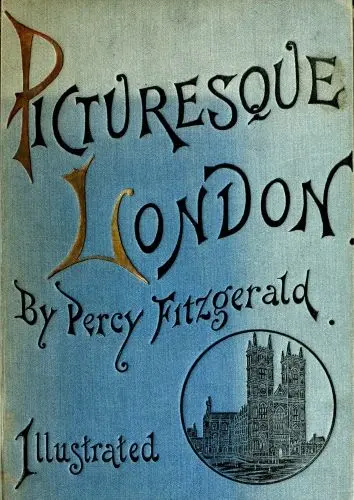
"Picturesque London" by Percy Fitzgerald is a descriptive work that falls under the category of a historical account, likely written in the late 19th century. This book serves as an exploration of London's artistic treasures and architectural beauties, presenting the city as rich in picturesque elements, much like its more famous European counterparts. Fitzgerald offers his impressions of various notable sites and lesser-known gems, aiming to inspire readers to appreciate the often-overlooked charm of the city. The beginning of "Picturesque London" lays the groundwork for this exploration by emphasizing the author's desire to act as a sympathetic guide to the city's sights. Fitzgerald discusses his years of discovery, recounting the richness and variety of London’s artistic heritage, and often contrasting the traditional guidebook approach with a more personal interpretation of beauty and character. The preface sets an inviting tone and details Fitzgerald’s intention to enrich the reader’s experience through vivid descriptions and an appreciation for the hidden wonders of the city's history and architecture, leading into a depiction of St. Margaret’s Church in Westminster. While planning to explore renowned landmarks and quaint corners alike, the author hints at the multiplicity of perspectives through which one can understand London, setting a warm and engaging backdrop for the subsequent chapters.
Introduction adapted from the source catalogue; source summaries may be automatically generated.
Free to read · English · 121,041 words · No account needed
MAKE TIME FOR A GOOD BOOK
On by default. Untick to stop anonymous reading totals. Each page counts after 10 seconds in view. How this works.
Anonymous counting is on unless you have switched it off.
James Barry, 36, Castle Street, Oxford Street; Edmund Burke, 37, Gerrard Street, Soho; Lord Byron, 16, Holles Street; George Canning, 37, Conduit Street; John Dryden, 43, Gerrard Street; Michael Faraday, 2, Blandford Street, Portman Square; John Flaxman, 7, Buckingham Street, Fitzroy Square; Benjamin Franklin, 7, Craven Street, Strand; David Garrick, 5, Adelphi Terrace; George Frederick Handel, 25, Brook Street; William Hogarth, 30, Leicester Square; Samuel Johnson, 17, Gough Square, Fleet Street; Napoleon III., 3A, King Street, St. James’s; Lord Nelson, 147, New Bond Street; Sir Isaac Newton, 35, St. Martin’s Street; Peter the Great, 15, Buckingham Street, Strand; Sir Joshua Reynolds, 47, Leicester Square; Richard Brinsley Sheridan, 14, Savile Row; Mrs. Siddons, 27, Upper Baker Street; Sir Robert Walpole, 5, Arlington Street.
We find also--Henry Cavendish, Sir Humphrey Davy, Charles Dickens, Thomas Gainsborough, Count Rumford, Percy Bysshe Shelley, Joseph Mallord William Turner, and Josiah Wedgwood. It is hoped that arrangements may, in most of the above cases, soon be completed. This is not so interesting a list as might be made; many more of greater importance might be added. Sterne, for instance, lodged in Old Bond Street, at a cheesemonger’s, as Mr. Cunningham ascertained; James Boswell in Halfmoon Street and Downing Street; William Penn, in Norfolk Street, Strand. The site, at least, of the Turk’s Head Coffee House, where the Literary Club met, might be easily ascertained. Theodore Hook’s and Charles Lamb’s house, in Colebrooke Row, should certainly be noted.
There is another admirable society especially devoted to cherishing the interest in old London buildings, and which has already worked admirably. This is “The Society for Photographing Relics of Old London,” and which has been excellently directed by Mr. Alfred Marks, of Long Ditton. Already no less than eighty-four pictures have been taken, many of which are already the sole and faithful records of what have been swept away. These are very different from the average photograph, being artistic to a high degree, done in low tones with effective shadow, of large size, and mounted on a bluish grey card, so as to throw out the picture. The list includes--the “Oxford Arms” Inn, Warwick Lane; houses in Wych Street and Drury Lane; Lincoln’s Inn; St. Bartholomew the Great, and adjacent houses in Cloth Fair; Temple Bar; houses in Leadenhall Street; Gray’s Inn Lane; Brewer Street, Soho; the “Sir Paul Pindar;” Staple Inn, Holborn Front; Canonbury Tower; Barnard’s Inn; Christ’s Hospital; Churchyard of St. Laurence Pountney; houses in Great Queen Street and Aldersgate Street; twelve views of the Charterhouse; the Southwark Inns; old houses in the Borough and Bermondsey; St. Mary Overy’s Dock; Sion College; Oxford Market; Little Dean’s Yard; Ashburnham House; Banqueting House, Whitehall; Water Gate, York House; Lincoln’s Inn Fields; Lambeth Palace Gate House, Great Hall, and “Lollards’ Tower”; old house, Palace Yard, Lambeth; old houses, Aldgate; “The Golden Axe,” St. Mary Axe; No. 37, Cheapside; No. 73, Cheapside; old house, Great Ormond Street; old house, Queen Square, Bloomsbury; shop, Macclesfield Street, Soho.
Your reading position is saved on this browser. Take it to another device with a library code. Reading pages adapt to text, rather than matching a printed edition.
Percy Fitzgerald & Charles Dickens
Percy Fitzgerald
Percy Fitzgerald
BEHIND THE BOOK
This eBook is for the use of anyone anywhere in the United States and most other parts of the world at no cost and with almost no restrictions whatsoever. You may copy it, give it away or re-use it under the terms of the Project Gutenberg License included with this eBook or online at www.gutenberg.org. If you are not located in the United States, you will have to check the laws of the country where you are located before using this eBook. Read the source licence.
The original source file, including credits and licence, is retained by this library. Request an original-format copy at no charge. Please include the book title and Project Gutenberg identifier #59188.
KEEP YOUR CURIOSITY GOING
Wilfrid Scawen Blunt
Wilfrid Scawen Blunt

E. W. (Edgar Watson) Howe
Cécile Tormay

Moritz Busch
John L. Ransom