THE CLASSIC COLLECTION✦An outlaw’s diary: the CommuneCLASSIC FREE BOOKS
An outlaw’s diary: the Commune
Cécile Tormay
THE CLASSIC COLLECTION · 1888
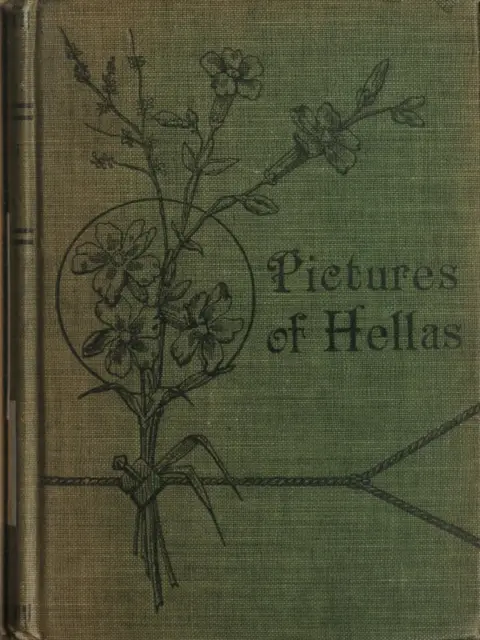
"Pictures of Hellas: Five Tales of Ancient Greece" by Peder Mariager is a collection of historical narratives written in the late 19th century. This work explores the ancient Greek world, focusing on life, culture, and the human element during a period referred to as the flowering of Hellas. Through its five tales, the book aims to bring to life the ordinary figures and daily experiences of ancient Greeks, offering readers a glimpse into a time shaped by divine influences and heroic deeds. The opening of the work sets the stage by introducing the narrative framework and providing a context for the author’s exploration of ancient Greek life. The preface outlines the challenges of capturing the essence of this era due to the scarcity of detailed personal accounts in historical texts. The first tale, "Zeus Hypsistos," centers around a cliff-city called Kranaai, where the conflict between Cychreans and native Pelasgians simmers beneath the surface. Key characters such as Lyrcus, a formidable warrior, and Byssa, the daughter of a priest, illustrate the complex social dynamics and themes of love, jealousy, and conflict that will unfold throughout the tales. The narrative promises to interweave historical elements with personal stories, aiming for an authentic representation of an ancient culture that deeply resonates with modern readers.
Introduction adapted from the source catalogue; source summaries may be automatically generated.
Free to read · English · 75,632 words · No account needed
MAKE TIME FOR A GOOD BOOK
On by default. Untick to stop anonymous reading totals. Each page counts after 10 seconds in view. How this works.
Anonymous counting is on unless you have switched it off.
As he rose from the couch his glance fell upon his foot-gear, which, contrary to habit and custom, he had kept on after having come in from the garden. At the sight of the thin soles, the token of his trade of sycophant, he shuddered.
“How cold the wind blows!” he muttered as though to deceive himself.
Then he called again, thrust out his foot, and said:
“Manes, take off my soles, and”--he spoke hurriedly--“burn them and all the others of the same kind I possess.”
The old man stood as if he were petrified. If his master had been a soldier and had ordered him to break his sword, he could not have been more dumb with amazement.
“Don’t you hear?” said Callippides sternly.
Manes knelt before him, but his hands trembled so that he was unable to
open the buckles.
“You are growing old, Manes,” said Callippides more gently as though he regretted his harshness.
Then he put his foot on the edge of the couch to unfasten the straps himself; but, ere he had touched them with his hands, started up and, with two vigorous kicks, hurled them into the farthest corner of the chamber, where they fell on the ground with a clapping noise.
“Did you hear?” he said to Manes, “the dumb soles spoke. It was their
farewell.”
Callippides then drew from his belt a key with three wards which he
gave to Manes, saying:
“Take it to Philostratus to-morrow morning.”
Mares passed from one surprise to another.
“What shall I say to him?” he asked timidly.
“That I have no farther use for it.”
The old man scarcely believed his ears. He clasped his hands, but dared
not speak.
“What would you say, Manes,” asked Callippides, “if you should see me some day with a helmet on my head leading a troop of horsemen?”
At these words the aged face brightened and the old man fixed his eyes with almost a father’s tenderness upon the master whom, when a child, he had often played with on his knee.
“The day I see you leader of the band of horsemen,” he exclaimed, “the day the bridal torches....”
Manes got no farther; at the last word Callippides started up and covered his mouth with his hand.
“Silence, old fool!” he cried sternly. “You are talking about things which don’t concern you. Do you want me to tear your tongue out of your mouth and fling it to the dogs?”
The slave silently slunk away, trembling from head to foot.
Your reading position is saved on this browser. Take it to another device with a library code. Reading pages adapt to text, rather than matching a printed edition.
BEHIND THE BOOK
This eBook is for the use of anyone anywhere in the United States and most other parts of the world at no cost and with almost no restrictions whatsoever. You may copy it, give it away or re-use it under the terms of the Project Gutenberg License included with this eBook or online at www.gutenberg.org. If you are not located in the United States, you will have to check the laws of the country where you are located before using this eBook. Read the source licence.
The original source file, including credits and licence, is retained by this library. Request an original-format copy at no charge. Please include the book title and Project Gutenberg identifier #56929.
KEEP YOUR CURIOSITY GOING
Cécile Tormay

Moritz Busch
Coulson Kernahan
John L. Ransom

Maurice Baring
Frances Wright