THE CLASSIC COLLECTION✦An outlaw’s diary: the CommuneCLASSIC FREE BOOKS
An outlaw’s diary: the Commune
Cécile Tormay
THE CLASSIC COLLECTION · 1888
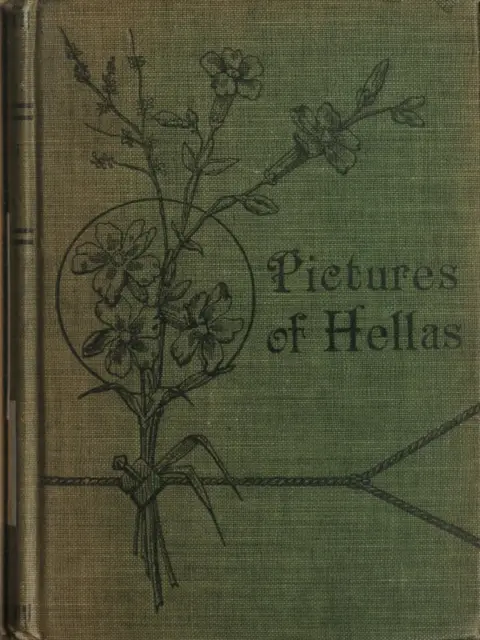
"Pictures of Hellas: Five Tales of Ancient Greece" by Peder Mariager is a collection of historical narratives written in the late 19th century. This work explores the ancient Greek world, focusing on life, culture, and the human element during a period referred to as the flowering of Hellas. Through its five tales, the book aims to bring to life the ordinary figures and daily experiences of ancient Greeks, offering readers a glimpse into a time shaped by divine influences and heroic deeds. The opening of the work sets the stage by introducing the narrative framework and providing a context for the author’s exploration of ancient Greek life. The preface outlines the challenges of capturing the essence of this era due to the scarcity of detailed personal accounts in historical texts. The first tale, "Zeus Hypsistos," centers around a cliff-city called Kranaai, where the conflict between Cychreans and native Pelasgians simmers beneath the surface. Key characters such as Lyrcus, a formidable warrior, and Byssa, the daughter of a priest, illustrate the complex social dynamics and themes of love, jealousy, and conflict that will unfold throughout the tales. The narrative promises to interweave historical elements with personal stories, aiming for an authentic representation of an ancient culture that deeply resonates with modern readers.
Introduction adapted from the source catalogue; source summaries may be automatically generated.
Free to read · English · 75,632 words · No account needed
MAKE TIME FOR A GOOD BOOK
On by default. Untick to stop anonymous reading totals. Each page counts after 10 seconds in view. How this works.
Anonymous counting is on unless you have switched it off.
His face blanched almost as white as his snowy beard, the vessel fell from his hand, and he stood for a moment as though turned to stone. Then he pressed both hands on his breast.
“Horrible!” he faltered. “Byssa ... my gentle Byssa ... has shed blood!”
Byssa’s mother, Strybele, appeared in the doorway. Uttering a loud cry, she rushed with outstretched arms toward her daughter.
Ariston hastily stepped between them.
“Come!” he said, and with resolute authority led his wife out of the
room.
“Ariston,” whispered the poor mother, “utter no curses, no evil words. Remember, she is your daughter.”
When Ariston returned he was clad in his priestly robes. A long white garment fell to his feet, and he wore around his brow a chaplet.
He approached Byssa. In the deep stillness of the house the mother was heard sobbing and praying within.
Ariston, raising his voice, said with great solemnity:
“Zeus was, Zeus is, and Zeus will be; oh, supreme god Zeus! In thy name, Catharsius, cleanser from all guilt, in thy name Meilichius, all-merciful one, I say to ... this woman....”
At the last word his voice trembled.
“This is thy command, oh Zeus. Purification shall be given to him who comes humbly to ask for purification. No one must ask his name, no one must inquire the name of him who is slain; for it is seemly to keep silence in the presence of the unclean. But no one, neither man nor woman, shall refuse to yield him the blessing of purification.”
Ariston then brought the animal to be sacrificed, a tiny sucking-pig. The blood flowed from a wound in the neck.
At the sight of the red stream he fixed an accusing glance on his daughter’s head and then raised his eyes to Heaven, as though seeking refuge from inexpressible agony.
“Woman,” he murmured, “prepare!”
Byssa stretched out her arms.
Ariston held the animal before her and let the blood stream down over her hands, repeating in a low voice:
“Blood expiates blood.”
Then he brought a basin of consecrated water in which Byssa’s mother, to strengthen its effect, had placed a brand from the altar before the house.
Invoking Zeus as the god of purification and the guardian of those who prayed, he washed Byssa’s hands and arms. When this was accomplished he burned the cakes and other offerings, first pouring on them as a libation water mixed with honey--meantime praying that Zeus would restrain the wrath of the goddess of vengeance and show himself merciful and gracious.
Then, taking Byssa’s hand, he drew her up from the hearth.
Your reading position is saved on this browser. Take it to another device with a library code. Reading pages adapt to text, rather than matching a printed edition.
BEHIND THE BOOK
This eBook is for the use of anyone anywhere in the United States and most other parts of the world at no cost and with almost no restrictions whatsoever. You may copy it, give it away or re-use it under the terms of the Project Gutenberg License included with this eBook or online at www.gutenberg.org. If you are not located in the United States, you will have to check the laws of the country where you are located before using this eBook. Read the source licence.
The original source file, including credits and licence, is retained by this library. Request an original-format copy at no charge. Please include the book title and Project Gutenberg identifier #56929.
KEEP YOUR CURIOSITY GOING
Cécile Tormay

Moritz Busch
Coulson Kernahan
John L. Ransom

Maurice Baring
Frances Wright