THE CLASSIC COLLECTION✦An outlaw’s diary: the CommuneCLASSIC FREE BOOKS
An outlaw’s diary: the Commune
Cécile Tormay
THE CLASSIC COLLECTION · 1888
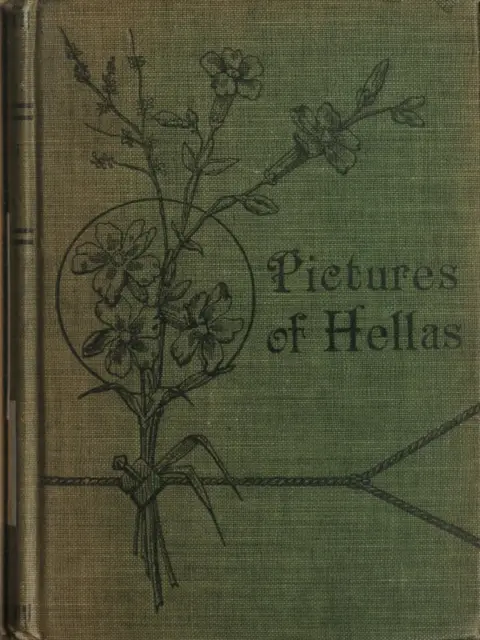
"Pictures of Hellas: Five Tales of Ancient Greece" by Peder Mariager is a collection of historical narratives written in the late 19th century. This work explores the ancient Greek world, focusing on life, culture, and the human element during a period referred to as the flowering of Hellas. Through its five tales, the book aims to bring to life the ordinary figures and daily experiences of ancient Greeks, offering readers a glimpse into a time shaped by divine influences and heroic deeds. The opening of the work sets the stage by introducing the narrative framework and providing a context for the author’s exploration of ancient Greek life. The preface outlines the challenges of capturing the essence of this era due to the scarcity of detailed personal accounts in historical texts. The first tale, "Zeus Hypsistos," centers around a cliff-city called Kranaai, where the conflict between Cychreans and native Pelasgians simmers beneath the surface. Key characters such as Lyrcus, a formidable warrior, and Byssa, the daughter of a priest, illustrate the complex social dynamics and themes of love, jealousy, and conflict that will unfold throughout the tales. The narrative promises to interweave historical elements with personal stories, aiming for an authentic representation of an ancient culture that deeply resonates with modern readers.
Introduction adapted from the source catalogue; source summaries may be automatically generated.
Free to read · English · 75,632 words · No account needed
MAKE TIME FOR A GOOD BOOK
On by default. Untick to stop anonymous reading totals. Each page counts after 10 seconds in view. How this works.
Anonymous counting is on unless you have switched it off.
“No, my friend, believe me, it was something very different from their crime. Don’t you know, Nomion, that no Pelasgian owns larger herds than I--well! If I have offended the gods, no one has brought them more numerous and costly offerings. Besides, I went directly to Kranaai and caused Ariston to purify me, according to priestly fashion, from the stain of blood. As for the dead man’s family--I appeased them long ago with costly gifts.”
“But--the disposition?” asked Nomion, looking Periphas straight in the
eye.
“The disposition!” replied Periphas, shunning Nomion’s glance. “Youth, you utter strange words. When neither gods nor men complain, who asks about the disposition?”
And Periphas burst into a strange, forced laugh, that echoed almost
uncannily through the cave.
“Be that as it may,” said Nomion. “If the Cychreans suffer murderers to live among them unpunished, will not they, too, will not the whole nation be unclean and exposed to the wrath of the gods?”
“It seems so.”
“Yet the Cychreans remain victors, while we, Tydeus’ avengers, are scattered like chaff before the wind. What is the cause?”
“Perhaps their gods are stronger than ours.”
“The sea-nymph Melite stronger than Zeus Hypsistos! You cannot believe
that.”
“Perhaps we ought to have waited for a lucky day.”
“No,” retorted Nomion, “I believe that Lyrcus conquered because he has done no evil. He is a warlike fellow and foremost in the fray, so he cannot content himself with carrying away goats, barley, figs, and honey. But he has never killed a man except in fair fight. Had he been present, Tydeus would never have been stoned.”
“You have a remarkably good opinion of Lyrcus,” said Periphas. “But why talk about this Cychrean continually? There are other chiefs in the country.... Well! We’ll see whether the gods will protect him another time.”
“Periphas! What are you planning?”
“Do you know the pretty bird whose name is Kitta? It loves its mate so dearly that it cannot live without it. Let the hen be caught in the nest by some simple snare, and the cock will fly after her of its own accord and allow itself to be captured.”
“In the name of the gods! Do I understand you? Do you mean to steal
Byssa?”
“Doesn’t she seem to you worth having? Well, by Zeus,” continued Periphas, the blood mounting into his cheeks, “I would rather carry her away than goats, barley, figs, and honey.”
“Beware, Periphas! Don’t drive Lyrcus to frenzy. He will then be
capable of anything.”
“Not when he is in my power.”
Your reading position is saved on this browser. Take it to another device with a library code. Reading pages adapt to text, rather than matching a printed edition.
BEHIND THE BOOK
This eBook is for the use of anyone anywhere in the United States and most other parts of the world at no cost and with almost no restrictions whatsoever. You may copy it, give it away or re-use it under the terms of the Project Gutenberg License included with this eBook or online at www.gutenberg.org. If you are not located in the United States, you will have to check the laws of the country where you are located before using this eBook. Read the source licence.
The original source file, including credits and licence, is retained by this library. Request an original-format copy at no charge. Please include the book title and Project Gutenberg identifier #56929.
KEEP YOUR CURIOSITY GOING
Cécile Tormay

Moritz Busch
Coulson Kernahan
John L. Ransom

Maurice Baring
Frances Wright