THE CLASSIC COLLECTION✦An outlaw’s diary: the CommuneCLASSIC FREE BOOKS
An outlaw’s diary: the Commune
Cécile Tormay
THE CLASSIC COLLECTION · 1888
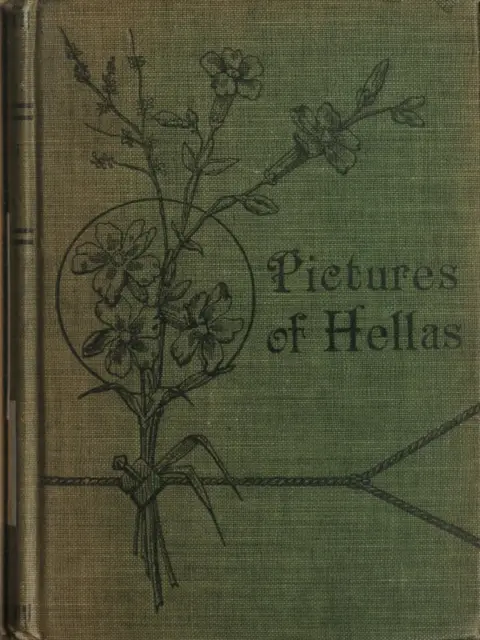
"Pictures of Hellas: Five Tales of Ancient Greece" by Peder Mariager is a collection of historical narratives written in the late 19th century. This work explores the ancient Greek world, focusing on life, culture, and the human element during a period referred to as the flowering of Hellas. Through its five tales, the book aims to bring to life the ordinary figures and daily experiences of ancient Greeks, offering readers a glimpse into a time shaped by divine influences and heroic deeds. The opening of the work sets the stage by introducing the narrative framework and providing a context for the author’s exploration of ancient Greek life. The preface outlines the challenges of capturing the essence of this era due to the scarcity of detailed personal accounts in historical texts. The first tale, "Zeus Hypsistos," centers around a cliff-city called Kranaai, where the conflict between Cychreans and native Pelasgians simmers beneath the surface. Key characters such as Lyrcus, a formidable warrior, and Byssa, the daughter of a priest, illustrate the complex social dynamics and themes of love, jealousy, and conflict that will unfold throughout the tales. The narrative promises to interweave historical elements with personal stories, aiming for an authentic representation of an ancient culture that deeply resonates with modern readers.
Introduction adapted from the source catalogue; source summaries may be automatically generated.
Free to read · English · 75,632 words · No account needed
MAKE TIME FOR A GOOD BOOK
On by default. Untick to stop anonymous reading totals. Each page counts after 10 seconds in view. How this works.
Anonymous counting is on unless you have switched it off.
“A peacemaker. The image of a good spirit.”
“Let me see it.”
“No,” replied Lycon, wrapping the cloth closer. “If any one else should look at the image it would lose its power. So promise me that you will never,--either now or in future--ask to see it.”
Myrtale pointed to an ivory couch which stood in the little room; Lycon reclined upon it, and she took her seat on the edge at his side.
“What harm would it do if I, your wife, should see it?” she whispered coaxingly, putting her arm around Lycon’s neck.
“I have told you,” replied Lycon. “Do what I ask.”
“Well then,” murmured Myrtale sighing, “I promise.”
But at the same moment she turned pale, as if she felt a sudden chill.
“Confess!” she cried in a strangely altered tone. “It is the picture of an Athenian woman.”
Lycon shrank from the fierce expression of her face and, ere he could prevent it, she had seized the little article which he had laid on the edge of the couch in front of her.
She tore off the cloth with her teeth. A clumsy square bit of iron appeared. She turned and twisted it in her hands until, on one end, she discovered the letter K formed of three raised lines.
It was the stamp of the brand Lycon bore on his shoulder.
Myrtale instantly understood why he kept the rough bit of iron. To him, as he had said, it was the image of a good spirit.
By keeping this sign of his humiliation, he not only crushed all arrogance, but learned to judge mildly, govern himself, and become a better man. By remembering that he had been a slave, he made others forget it.
Myrtale felt a new emotion. Her heart swelled with affection, and throwing herself into her husband’s arms, she covered his face with tears and kisses.
“The gods be praised for what has happened!” she exclaimed. “To-day you have become doubly dear to me! For the first time I know you wholly.”
Lycon and Myrtale filled the place of children to the lonely Polycles, and he was never happier than when they visited him in the quiet evening hours.
The hillock in the garden, which had been Simonides’ favorite spot and where his monument stood, was the goal of their walks, and when they had offered their homage to the dead man by adorning his grave with flowers, they sat down on a bench among a group of tall plane-trees to gaze over the city and country.
One evening, when the distant, sun-illumined mountains of Pherae were gleaming more brightly than ever through the twilight, Lycon exclaimed:
Your reading position is saved on this browser. Take it to another device with a library code. Reading pages adapt to text, rather than matching a printed edition.
BEHIND THE BOOK
This eBook is for the use of anyone anywhere in the United States and most other parts of the world at no cost and with almost no restrictions whatsoever. You may copy it, give it away or re-use it under the terms of the Project Gutenberg License included with this eBook or online at www.gutenberg.org. If you are not located in the United States, you will have to check the laws of the country where you are located before using this eBook. Read the source licence.
The original source file, including credits and licence, is retained by this library. Request an original-format copy at no charge. Please include the book title and Project Gutenberg identifier #56929.
KEEP YOUR CURIOSITY GOING
Cécile Tormay

Moritz Busch
Coulson Kernahan
John L. Ransom

Maurice Baring
Frances Wright