THE CLASSIC COLLECTION✦An outlaw’s diary: the CommuneCLASSIC FREE BOOKS
An outlaw’s diary: the Commune
Cécile Tormay
THE CLASSIC COLLECTION · 1888
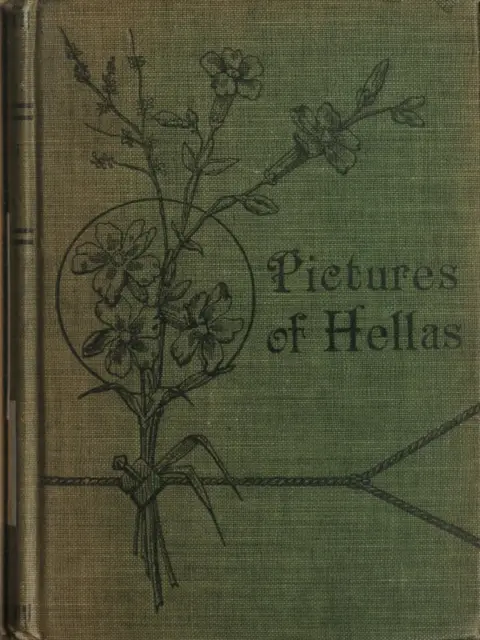
"Pictures of Hellas: Five Tales of Ancient Greece" by Peder Mariager is a collection of historical narratives written in the late 19th century. This work explores the ancient Greek world, focusing on life, culture, and the human element during a period referred to as the flowering of Hellas. Through its five tales, the book aims to bring to life the ordinary figures and daily experiences of ancient Greeks, offering readers a glimpse into a time shaped by divine influences and heroic deeds. The opening of the work sets the stage by introducing the narrative framework and providing a context for the author’s exploration of ancient Greek life. The preface outlines the challenges of capturing the essence of this era due to the scarcity of detailed personal accounts in historical texts. The first tale, "Zeus Hypsistos," centers around a cliff-city called Kranaai, where the conflict between Cychreans and native Pelasgians simmers beneath the surface. Key characters such as Lyrcus, a formidable warrior, and Byssa, the daughter of a priest, illustrate the complex social dynamics and themes of love, jealousy, and conflict that will unfold throughout the tales. The narrative promises to interweave historical elements with personal stories, aiming for an authentic representation of an ancient culture that deeply resonates with modern readers.
Introduction adapted from the source catalogue; source summaries may be automatically generated.
Free to read · English · 75,632 words · No account needed
MAKE TIME FOR A GOOD BOOK
On by default. Untick to stop anonymous reading totals. Each page counts after 10 seconds in view. How this works.
Anonymous counting is on unless you have switched it off.
“Though a stranger,” he said, “you have fulfilled my dearest wish and restored order to my household. May the gods bless you for it! To my dying day I shall remember this time as a happy hour. But tell me, my son, is there nothing you desire, nothing I can do for you?”
Lycon averted his face. Now, in this decisive moment, which he had anticipated during so many days and nights, he could not force himself to utter a single word.
“My son,” persisted Simonides, “there is something that weighs upon your heart. Do not deny it. By Zeus, I want to see only happy faces to-day. So, tell me what it is.”
Lycon sprang from the couch and threw himself at Simonides’ feet.
“Pardon, Master!” he faltered, “I am not worthy to be your guest.”
“What fire-brand are you casting into my bosom,” cried Simonides, half-raising himself on the couch as, seized by a dark foreboding, he gazed with dilated eyes at the kneeling figure.
Lycon turned deadly pale. Grasping a fold of Simonides’ robe, he said in a voice almost choked with emotion:
“Master ... don’t you know me?... I am your slave Zenon.”
“Wonder-working Gods!” exclaimed Simonides doubtfully, “what am I
compelled to hear!”
“Mercy, Master, mercy!”
Simonides, uttering a fierce cry, kicked Lycon away with his foot.
“Thief,” he shouted, trembling with rage, “miserable thief, you have stolen my money and my health, what do you seek in my house? Have you come here to rob me a second time?... For two years I have not suffered your name to be spoken in my hearing.... Begone, begone from my sight, you source of my misery--you destroyer of the happiness of my life!”
And as Lycon still lingered, Simonides pointed to the door of the peristyle, shouting imperatively: “Go, go, I command you!”
Lycon left the room with drooping head, without casting a glance behind. He no longer had a hope.
At the same moment the curtain at the door of a side-chamber stirred slightly, and soon after Myrtale entered and silently seated herself on the edge of the couch at her father’s feet. She was very pale, and through the folds of her thin dress the rapid rising and falling of her bosom showed that she was struggling for breath. Simonides scarcely seemed to notice her and, without moving or looking up, she waited patiently for him to speak.
At last he broke the silence.
“Do you know who Lycon is?” he asked.
“Yes, I know.”
“And you did not tell me?”
“It was his business to confess, not mine.”
“What do you advise, Myrtale?”
“To wait until to-morrow.”
“Why?”
Your reading position is saved on this browser. Take it to another device with a library code. Reading pages adapt to text, rather than matching a printed edition.
BEHIND THE BOOK
This eBook is for the use of anyone anywhere in the United States and most other parts of the world at no cost and with almost no restrictions whatsoever. You may copy it, give it away or re-use it under the terms of the Project Gutenberg License included with this eBook or online at www.gutenberg.org. If you are not located in the United States, you will have to check the laws of the country where you are located before using this eBook. Read the source licence.
The original source file, including credits and licence, is retained by this library. Request an original-format copy at no charge. Please include the book title and Project Gutenberg identifier #56929.
KEEP YOUR CURIOSITY GOING
Cécile Tormay

Moritz Busch
Coulson Kernahan
John L. Ransom

Maurice Baring
Frances Wright