
Letters to a Friend, Written to Mrs. Ezra S. Carr, 1866-1879
John Muir
THE CLASSIC COLLECTION · 1922
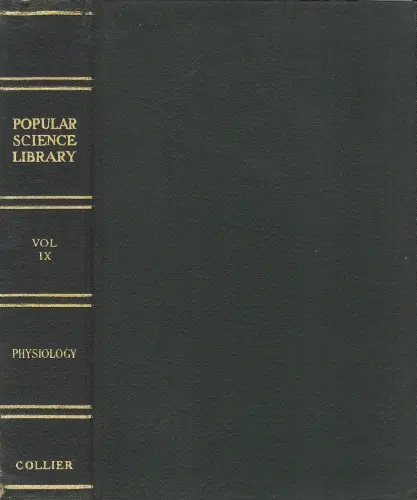
"Physiology: The Science of the Body" by Ernest G. Martin is a scientific publication likely written in the early 20th century. This work delves into the complex mechanisms that govern the human body, focusing on how the biological systems function to sustain life. It aims to provide readers with a foundational understanding of physiology, emphasizing the significance of bodily activities and the principles of hygiene related to health. The opening of the book introduces the fundamental concepts of physiology, starting with the signs of life and differentiating the criteria for determining whether an entity is living. Martin explores various attributes of living organisms, notably motion and the distinction between living beings and mechanical objects. He presents intriguing thought experiments regarding how extraterrestrial observers might misinterpret machines as living entities. The author further develops the discussion by introducing cellular structures such as protoplasm and the various types of cells, asserting that life consists of the interactions and functions of these cellular components. Through these details, Martin sets the stage for a comprehensive exploration of the physiological principles that underlie human life.
Introduction adapted from the source catalogue; source summaries may be automatically generated.
Free to read · English · 99,052 words · No account needed
MAKE TIME FOR A GOOD BOOK
On by default. Untick to stop anonymous reading totals. Each page counts after 10 seconds in view. How this works.
Anonymous counting is on unless you have switched it off.
We have tried to take up one by one the chief things that happen in the body, but thus far have emphasized their importance entirely in connection with bodily well-being; that is, we have seen how the body maintains itself against the competition of other living things and in a world full of hazards. Before leaving the subject entirely, a short account must be given of the way in which the race is maintained upon the earth as distinct from the maintenance of individuals. Early in the book we showed that every one of us starts life as a single cell which, by dividing and subdividing, along with continuous growth, finally develops into our large and complicated body. This cell is really the union of two cells; one furnished by each parent; in the body of the parent it formed part of what is known as the germinal tissue, this name being applied because the cell from which we start may be spoken of as the germ of life. As the cell from which the body is to come begins to develop, the cells formed from it quickly become different one from the other, so that very early it can be distinguished that certain cells are to form the future nervous system, others the future muscles, and so on. One of the earliest of these groups of cells to become distinguishable is that which is to become the germinal tissue in the newly formed individual. A great deal of importance has been attached of recent years to this fact that the germinal tissue is set aside almost from the beginning of development, and when we remember that the next generation will be derived from this germinal tissue and from no other tissue, we see that there is a very close relationship of the germinal tissue from generation to generation. The importance of this is in connection with heredity, namely, with the question of the resemblance of the child to the parent. We all know that sometimes children resemble their parents very closely, at other times there is almost no resemblance at all. The main fact of heredity is, as we have just seen, that the child comes from germinal tissue of the parent and not from the parent as a whole. We can think of an individual as a complex body carrying within itself and nourishing an independent group of cells which are to serve as the starting point for the next generation, but with which the individual himself has nothing to do except to provide nourishment. A little later we shall try to show just why we think of the germinal tissue as so little dependent on the rest of the body. What we want to do first is to point out how this notion must affect our views of heredity. If the germinal tissue is simply harbored and nourished by the body, but otherwise quite independent of it, it follows as a matter of course that things the parent does, provided that they do not disturb the nourishment of the germinal tissue, can have very little effect upon it. For example, anything that the parent may achieve during his lifetime cannot be passed on by heredity to his offspring. This is entirely contrary to the idea of heredity which is held by nearly everybody. Just a little over one hundred years ago a Frenchman by the name of Lamarck published writings in which he argued very strongly in favor of the inheritance of “acquired characters,” meaning by this that the achievements of parents could be and were transmitted to the offspring. It is evident that this would be a very great advantage; the progress of the race would be secure if the children could inherit directly the achievements of their parents. Of course, it might work the other way around and children might inherit unfavorable acquisitions of their parents as well as favorable. Since the time of Lamarck there has been not only hot discussion of his ideas but also a vast amount of experimentation to find out whether acquired characters actually can be inherited. One of the most famous experiments is that of a man who cut off the tails of mice at birth and did this generation after generation in the hope of being able to produce a race of tailless mice; after a great many generations he abandoned the attempt with the conclusion that the artificial removal of tails from parents would not cause the offspring to be born in the tailless condition. More recently similar experiments have been carried out on kinds of animals that have much shorter lives and in which the generations are correspondingly more frequent. In some cases thousands of generations have been studied without any indication that changes brought about during the lifetime of the parents can be transmitted to the offspring.
Your reading position is saved on this browser. Take it to another device with a library code. Reading pages adapt to text, rather than matching a printed edition.
BEHIND THE BOOK
This eBook is for the use of anyone anywhere in the United States and most other parts of the world at no cost and with almost no restrictions whatsoever. You may copy it, give it away or re-use it under the terms of the Project Gutenberg License included with this eBook or online at www.gutenberg.org. If you are not located in the United States, you will have to check the laws of the country where you are located before using this eBook. Read the source licence.
The original source file, including credits and licence, is retained by this library. Request an original-format copy at no charge. Please include the book title and Project Gutenberg identifier #48024.
KEEP YOUR CURIOSITY GOING
John Muir

Asa Gray
Asa Gray

Florence Nightingale
Elizabeth Robins Pennell
Denison Olmsted