
Letters to a Friend, Written to Mrs. Ezra S. Carr, 1866-1879
John Muir
THE CLASSIC COLLECTION · 1922
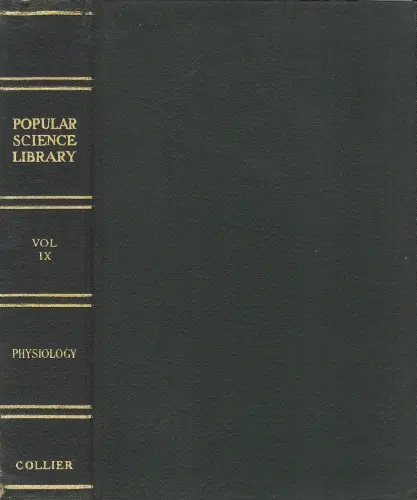
"Physiology: The Science of the Body" by Ernest G. Martin is a scientific publication likely written in the early 20th century. This work delves into the complex mechanisms that govern the human body, focusing on how the biological systems function to sustain life. It aims to provide readers with a foundational understanding of physiology, emphasizing the significance of bodily activities and the principles of hygiene related to health. The opening of the book introduces the fundamental concepts of physiology, starting with the signs of life and differentiating the criteria for determining whether an entity is living. Martin explores various attributes of living organisms, notably motion and the distinction between living beings and mechanical objects. He presents intriguing thought experiments regarding how extraterrestrial observers might misinterpret machines as living entities. The author further develops the discussion by introducing cellular structures such as protoplasm and the various types of cells, asserting that life consists of the interactions and functions of these cellular components. Through these details, Martin sets the stage for a comprehensive exploration of the physiological principles that underlie human life.
Introduction adapted from the source catalogue; source summaries may be automatically generated.
Free to read · English · 99,052 words · No account needed
MAKE TIME FOR A GOOD BOOK
On by default. Untick to stop anonymous reading totals. Each page counts after 10 seconds in view. How this works.
Anonymous counting is on unless you have switched it off.
The third use of the skin, and that with which we are particularly concerned here, is as the fine regulator of body temperature. We have already seen in part how the skin works in this connection, through being warmer when there is more blood flowing through it and cooler when there is less. Its other heat-regulating mechanism is made up of the sweat glands. These, as the name implies, are tiny glands in the skin; they consist of tubes opening on the surface and at their inner end coiled up into a sort of knot. In this knot are a great many fine blood vessels, so that each sweat gland has an abundant blood supply. So far as we can tell, the sweat glands act as filters, corresponding in that respect to the filtering tips of the kidney tubes. One interesting thing about them is that the filtering action is controlled by nerves. These nerves belong to the system which controls the smooth muscles and glands; when the nerves become active the sweat glands are also active, and there is rapid filtration of water and inorganic salts from the blood into the sweat glands and out to the outside of the body. Small amounts of organic materials come out also in the sweat, and these are responsible for its characteristic odor. They evidently differ in different people, since all dogs and some persons are able to recognize individuals by their odor, and body odor is largely the odor of sweat.
The sweat glands are carrying on their filtering activity most if not all of the time; we are not usually aware of it because the sweat comes out in exceedingly fine drops which evaporate as fast as they are formed; it is only when the sweat is poured out faster than it evaporates that we become aware of its presence. If the air is very full of moisture, sweat will stand on our bodies even though it is not being formed more abundantly than usual. This is because of its inability to evaporate into air already laden with moisture. Usually, however, when sweat appears on the surface of the body it is because the sweat glands have become more active. A couple of paragraphs ago we saw that the sweat glands are under the control of nerves; these arise like the other nerves that control smooth muscles and glands from a center in the brain stem; this particular one is called the sweat center. It may become active through various influences. The one most commonly arousing it is a rise in the temperature of the blood. Whenever we begin to exercise, heat is produced very rapidly, warming up the tissues in which the activity is going on and, since the blood is flowing through them rapidly, warming the blood up as well. This warm blood circulates all through the body, tending to raise all parts of it to the temperature of the active regions, or, as it passes through the skin, to cool by loss of heat from the surface. When this warm blood enters the brain stem it arouses the sweat center and an increased secretion of sweat results. The importance of this is that the evaporation of water, no matter at what temperature, requires a large amount of heat. This heat is abstracted from the nearest place, which in this case would be the body itself, so that the evaporation of sweat acts powerfully to cool off the body. In hot weather this is really our only effective means of getting rid of heat, for if the body is no warmer than its surroundings it cannot lose heat directly, but sweat can evaporate, taking heat with it, no matter how warm the surroundings may be. We said a moment ago that a high percentage of water in the air would hamper the evaporation of sweat. The practical workings of this fact are seen in connection with heat prostrations in the summertime. Careful scrutiny of the weather reports will show that these are much more numerous as well as more severe on days of high relative humidity than on days that are simply hot, but without much moisture in the air. As the sweat evaporates from the body, the resulting water vapor has a tendency to linger in the neighborhood and so to interfere with further evaporation. Under these circumstances it is desirable that this moisture-laden air be moved away and fresh air brought into its place. This is the benefit we obtain from fanning. The air that is brought upon us by a fan feels cooler than it really is; this we realize when we notice how comfortable the draft of a fan is even on the very hottest days. When one fans oneself in the old-fashioned way, the heat produced in working the fan is often almost enough to balance the loss through the improved evaporation of sweat. An electric fan, on the other hand, is a very powerful aid to comfort in hot weather. In fact it is hard to think of any mechanical device that has contributed more in recent years. An amusing illustration of the importance of moisture in the air in relation to bodily comfort is in the case of the man who thought he would obtain a cool-weather office in hot weather by installing a block of ice and causing his electric fan to play upon it. Very much to his surprise and quite contrary to his expectations the room quickly became unbearably sultry. The rapid evaporation of the ice filled the air so full of water vapor that evaporation of sweat could not take place and the persons in the room were much worse off than if they had contented themselves with merely keeping the warm and comparatively dry air of the room in rapid motion. Although the evaporation of sweat is a very effective means of getting rid of heat from the body it does not work perfectly in times of great muscular exertion in very hot weather. Careful studies of men in steel industries and other places where hard work is done in intense heat have shown that the production of heat during the course of the working day slightly out-strips its loss, so that by the end of the day it is the regular thing for the body temperature to be up two or three degrees, to 100 or 101 degrees Fahrenheit. Upon finishing the work the temperature quickly falls to normal, so that there is no reason at present for supposing this daily rise to be seriously harmful.
Your reading position is saved on this browser. Take it to another device with a library code. Reading pages adapt to text, rather than matching a printed edition.
BEHIND THE BOOK
This eBook is for the use of anyone anywhere in the United States and most other parts of the world at no cost and with almost no restrictions whatsoever. You may copy it, give it away or re-use it under the terms of the Project Gutenberg License included with this eBook or online at www.gutenberg.org. If you are not located in the United States, you will have to check the laws of the country where you are located before using this eBook. Read the source licence.
The original source file, including credits and licence, is retained by this library. Request an original-format copy at no charge. Please include the book title and Project Gutenberg identifier #48024.
KEEP YOUR CURIOSITY GOING
John Muir

Asa Gray
Asa Gray

Florence Nightingale
Elizabeth Robins Pennell
Denison Olmsted