THE CLASSIC COLLECTION✦Letters on LiteratureCLASSIC FREE BOOKS
Letters on Literature
Andrew Lang
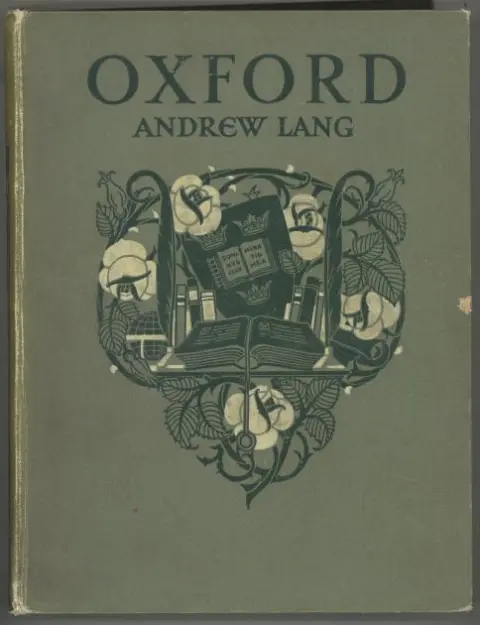
THE CLASSIC COLLECTION · 1910
"Oxford" by Andrew Lang is a historical account written in the early 20th century. The work captures the rich tapestry of life at the University of Oxford, exploring its diverse history through personal impressions and descriptions from various eras. Lang does not aim to provide a comprehensive history but instead offers snapshots of its evolving landscape and culture, reflecting on how Oxford influences and is influenced by its scholars and society over time. The beginning of "Oxford" sets the stage with a contemplative preface that reflects on the city's historical significance and its transitions across different ages. Lang likens the town to a palimpsest, suggesting that its identity has been shaped by its continuous use and modification through time. The opening chapter discusses the early history of Oxford, highlighting its geographical advantages and strategic importance as a center for trade, learning, and religion. It references figures like St. Frideswyde and the shifting dynamics among the early inhabitants, capturing the essence of the relationship between the town and its academic institution. Overall, this opening portion invites readers to ponder the depth of Oxford's historical context while illustrating its unique charm and significance in the realm of education.
Introduction adapted from the source catalogue; source summaries may be automatically generated.
Free to read · English · 31,567 words · No account needed
MAKE TIME FOR A GOOD BOOK
On by default. Untick to stop anonymous reading totals. Each page counts after 10 seconds in view. How this works.
Anonymous counting is on unless you have switched it off.
‘Mihi est propositum in taberna mori,
Vinum sit appositum morientis ori,
Ut dicant, quum venerint, angelorum chori
Deus sit propitius huic potatori.’
The students of the Northern nations mock, of course, at these revellers, thumbs are bitten, threats exchanged, and we shall see what comes of the quarrel. But the hall bells chime half-past noon; it is dinner-time in Oxford, and Stoke, as he throws off his mask (larva) and vine-leaves, mutters to himself the equivalent for ‘there will be a row about this.’ There will, indeed, for the penalty is not ‘crossing at the buttery,’ nor ‘gating,’ but—excommunication! (Munim. Academ., i. 18.) Dinner is not a very quiet affair, for the Catte’s men have had to fight for their beer in the public streets with some Canterbury College fellows who were set on by their Warden, of all people, to commit this violence (ut vi et violentia raperent cerevisiam aliorum scholarum in vico): however, Catte’s has had the best of it, and there is beer in plenty. It is possible, however, that fish is scarce, for certain ‘forestallers’ (regratarii) have been buying up salmon and soles, and refusing to sell them at less than double the proper price. On the whole, however, there a rude abundance of meat and bread; indeed, Stoke may have fared better in Catte’s than the modern undergraduate does in the hall of the college protected by St. Catherine. After dinner there would be lecture in Lent, but we are not in Lent. A young man’s fancy lightly turns to the Beaumont, north of the modern Beaumont Street, where there are wide playing-fields, and space for archery, foot-ball, stool-ball, and other sports. Stoke rushes out of hall, and runs upstairs into the camera of Roger de Freshfield, a reading man, but a good fellow. He knocks and enters, and finds Freshfield over his favourite work, the Posterior Analytics, and a pottle of strawberries. ‘Come down to the Beaumont, old man,’ he says, ‘and play pyked staffe.’ Roger is disinclined to move, he must finish the Posterior Analytics. Stoke lounges about, in the eternal fashion of undergraduates after luncheon, and picking up the Philobiblon of Richard de Bury (then quite a new book), clinches his argument in favour of pyke and staffe with a quotation: ‘You will perhaps see a stiff-necked youth lounging sluggishly in his study . . . He is not ashamed to eat fruit and cheese over an open book, and to transfer his cup from side to side upon it.’ Thus addressed, Roger lays aside his Analytics, and the pair walk down by Balliol, to the Beaumont, where pyked staffe, or sword and buckler, is played. At the Beaumont they find two men who say that ‘sword and buckler can be played sofft and ffayre,’ that is, without hard hitting, and with one of these Stoke begins to fence. Alas! a dispute arose about a stroke, the by-standers interfered, and Stoke’s opponent drew his hanger (extraxit cultellum vocatum hangere), and hit one John Felerd over the sconce. On this the Proctors come up, and the assailant is put in Bocardo, while Stoke goes off to a ‘pass-supper’ given by an inceptor, who has just taken his degree. These suppers were not voluntary entertainments, but enforced by law. At supper the talk ranges over University gossip, they tell of the scholar who lately tried to raise the devil in Grope Lane, and was pleased by the gentlemanly manner of the foul fiend. They speak of the Queen’s man, who has just been plucked for maintaining that Ego currit, or ego est currens, is as good Latin as ego curro. Then the party breaks up, and Stoke goes towards Merton, with some undergraduates of that college, Bridlington, Alderberk, and Lymby. At the corner of Grope Lane, out come many men of the Northern nations, armed with shields, and bows and arrows. Stoke and his friends run into Merton for weapons, and ‘standing in a window of that hall, shot divers arrows, and one that Bridlington shot hit Henry de l’Isle, and David Kirkby unmercifully perished, for after John de Benton had given him a dangerous wound in the head with his faulchion, came Will de la Hyde and wounded him in the knee with his sword.’
Your reading position is saved on this browser. Take it to another device with a library code. Reading pages adapt to text, rather than matching a printed edition.
Andrew Lang
Andrew Lang
Andrew Lang

Andrew Lang
BEHIND THE BOOK
This eBook is for the use of anyone anywhere in the United States and most other parts of the world at no cost and with almost no restrictions whatsoever. You may copy it, give it away or re-use it under the terms of the Project Gutenberg License included with this eBook or online at www.gutenberg.org. If you are not located in the United States, you will have to check the laws of the country where you are located before using this eBook. Read the source licence.
The original source file, including credits and licence, is retained by this library. Request an original-format copy at no charge. Please include the book title and Project Gutenberg identifier #2444.
KEEP YOUR CURIOSITY GOING
Cécile Tormay

Moritz Busch
John L. Ransom
Frances Wright
Cécile Tormay

Mabel Potter Daggett