THE CLASSIC COLLECTION✦Letters on LiteratureCLASSIC FREE BOOKS
Letters on Literature
Andrew Lang
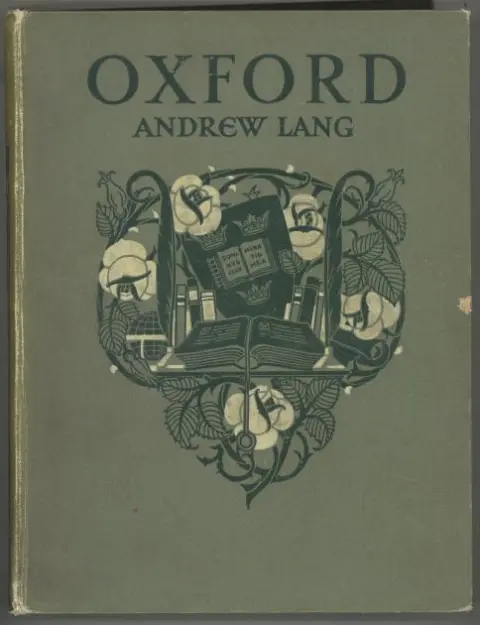
THE CLASSIC COLLECTION · 1910
"Oxford" by Andrew Lang is a historical account written in the early 20th century. The work captures the rich tapestry of life at the University of Oxford, exploring its diverse history through personal impressions and descriptions from various eras. Lang does not aim to provide a comprehensive history but instead offers snapshots of its evolving landscape and culture, reflecting on how Oxford influences and is influenced by its scholars and society over time. The beginning of "Oxford" sets the stage with a contemplative preface that reflects on the city's historical significance and its transitions across different ages. Lang likens the town to a palimpsest, suggesting that its identity has been shaped by its continuous use and modification through time. The opening chapter discusses the early history of Oxford, highlighting its geographical advantages and strategic importance as a center for trade, learning, and religion. It references figures like St. Frideswyde and the shifting dynamics among the early inhabitants, capturing the essence of the relationship between the town and its academic institution. Overall, this opening portion invites readers to ponder the depth of Oxford's historical context while illustrating its unique charm and significance in the realm of education.
Introduction adapted from the source catalogue; source summaries may be automatically generated.
Free to read · English · 31,567 words · No account needed
MAKE TIME FOR A GOOD BOOK
On by default. Untick to stop anonymous reading totals. Each page counts after 10 seconds in view. How this works.
Anonymous counting is on unless you have switched it off.
WE have now arrived at a period in the history of Oxford which is confused and unhappy, but for us full of interest, and perhaps of instruction. The hundred years that passed by between the age of Chaucer and the age of Erasmus were, in Southern Europe, years of the most eager life. We hear very often—too often, perhaps—of what is called the Renaissance. The energy of delight with which Italy welcomed the new birth of art, of literature, of human freedom, has been made familiar to every reader. It is not with Italy, but with England and with Oxford, that we are concerned. How did the University and the colleges prosper in that strenuous time when the world ran after loveliness of form and colour, as, in other ages, it has run after warlike renown, or the far-off rewards of the saintly life? What was Oxford doing when Florence, Venice, and Rome were striving towards no meaner goal than perfection?
It must be said that ‘the spring came slowly up this way.’ The University merely reflected the very practical character of the people. In contemplating the events of the fifteenth and sixteenth centuries, in their influence on English civilisation, we are reminded once more of the futility of certain modern aspirations. No amount of University Commissions, nor of well-meant reforms, will change the nature of Englishmen. It is impossible, by distributions of University prizes and professorships, to attract into the career of letters that proportion of industry and ingenuity which, in Germany for example, is devoted to the scholastic life. Politics, trade, law, sport, religion, will claim their own in England, just as they did at the Revival of Letters. The illustrious century which Italy employed in unburying, appropriating, and enjoying the treasures of Greek literature and art, our fathers gave, in England, to dynastic and constitutional squabbles, and to religious broils. The Renaissance in England, and chiefly in Oxford, was like a bitter and changeful spring. There was an hour of genial warmth, there breathed a wind from the south, in the lifetime of Chaucer; then came frosts and storms; again the brief sunshine of court favour shone on literature for a while, when Henry VIII. encouraged study, and Wolsey and Fox founded Christ Church and Corpus Christi College; once more the bad days of religious strife returned, and the promise of learning was destroyed. Thus the chief result of the awakening thought of the fourteenth century in England was not a lively delight in literature, but the appearance of the Lollards. The intensely practical genius of our race turned not to letters, but to questions about the soul and its future, about property and its distribution. The Lollards were put down in Oxford; ‘the tares were weeded out’ by the House of Lancaster, and in the process the germs of free thought, of originality, and of a rational education, were destroyed. ‘Wyclevism did domineer among us,’ says Wood; and, in fact, the intellect of the University was absorbed, like the intellect of France during the heat of the Jansenist controversy, in defending or assailing ‘267 damned conclusions,’ drawn from the books of Wyclif. The University ‘lost many of her children through the profession of Wyclevism.’ Those who remained were often ‘beneficed clerks.’ The Friars lifted up their heads again, and Oxford was becoming a large ecclesiastical school. As the University declared to Archbishop Chichele (1438), ‘Our noble mother, that was blessed in so goodly an offspring, is all but utterly destroyed and desolate.’ Presently the foreign wars and the wars of the Roses drained the University of the youth of England. The country was overrun with hostile forces, or infested by disbanded soldiers. Plague and war, war and plague, and confusion, alternate in the annals. Sickly as Oxford is to-day by climate and situation, she is a city of health compared to what she was in the middle ages. In 1448 ‘a pestilence broke out, occasioned by the overflowing of waters, . . . also by the lying of many scholars in one room or dormitory in almost every Hall, which occasioned nasty air and smells, and consequently diseases.’ In the general dulness and squalor two things were remarkable: one, the last splendour of the feudal time; the other, the first dawn of the new learning from Italy. In 1452, George Neville of Balliol, brother of the King-maker, gave the most prodigious pass-supper that was ever served in Oxford. On the first day there were 600 messes of meat, divided into three courses. The second course is worthy of the attention of the epicure:
Your reading position is saved on this browser. Take it to another device with a library code. Reading pages adapt to text, rather than matching a printed edition.
Andrew Lang
Andrew Lang
Andrew Lang

Andrew Lang
BEHIND THE BOOK
This eBook is for the use of anyone anywhere in the United States and most other parts of the world at no cost and with almost no restrictions whatsoever. You may copy it, give it away or re-use it under the terms of the Project Gutenberg License included with this eBook or online at www.gutenberg.org. If you are not located in the United States, you will have to check the laws of the country where you are located before using this eBook. Read the source licence.
The original source file, including credits and licence, is retained by this library. Request an original-format copy at no charge. Please include the book title and Project Gutenberg identifier #2444.
KEEP YOUR CURIOSITY GOING
Cécile Tormay

Moritz Busch
John L. Ransom
Frances Wright
Cécile Tormay

Mabel Potter Daggett