THE CLASSIC COLLECTION✦Letters to His ChildrenCLASSIC FREE BOOKS
Letters to His Children
Theodore Roosevelt
THE CLASSIC COLLECTION · 1908
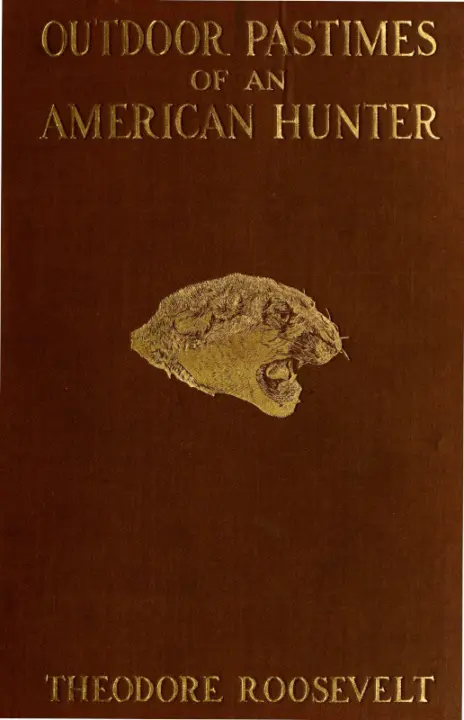
"Outdoor Pastimes of an American Hunter" by Theodore Roosevelt is a collection of personal accounts and observations regarding hunting and outdoor life written in the late 19th century. The book reflects Roosevelt's passion for nature and wildlife, showcasing his hunting experiences on various adventures, particularly focusing on cougars and other big game in the American wilderness. It serves as both a memoir and a commentary on the natural world, steeped in the author's vivid recollections and insights into the behavior of both the animals and the ecosystem. The opening of the book presents an engaging narrative of Roosevelt's winter cougar hunt in the harsh terrain of Northwest Colorado, accompanied by companions and expertly trained hounds. He recounts the challenges they faced from the cold weather and rugged environment while illustrating the unique bond between the hunters and their dogs, who play a vital role in the chase. Roosevelt takes the reader through the thrilling experiences of tracking and confronting cougars, weaving in descriptions of the majestic landscape and the importance of conservation for wildlife. This initial chapter sets the tone for the rest of the book, blending adventure with an appreciation for the wilderness.
Introduction adapted from the source catalogue; source summaries may be automatically generated.
Free to read · English · 122,861 words · No account needed
MAKE TIME FOR A GOOD BOOK
On by default. Untick to stop anonymous reading totals. Each page counts after 10 seconds in view. How this works.
Anonymous counting is on unless you have switched it off.
The mule-deer differs widely from the whitetail in its habits, and especially in its gait, and in the kind of country which it frequents. Although in many parts of its range it is found side by side with its whitetail cousin, the two do not actually associate together, and their propinquity is due simply to the fact, that the river bottoms being a favorite haunt of the whitetail, long tongues of the distribution area of this species are thrust into the domain of its bolder, less stealthy and less crafty kinsman. Throughout the plains country the whitetail is the deer of the river bottoms, where the rank growth gives it secure hiding-places, as well as ample food. The mule-deer, on the contrary, never comes down into the dense growths of the river bottoms. Throughout the plains country it is the deer of the broken Bad Lands which fringe these river bottoms on either side, and of the rough ravines which wind their way through the Bad Lands to the edge of the prairie country which lies back of them. The broken hills, their gorges filled with patches of ash, buck brush, cedar, and dwarf pine, form a country in which the mule-deer revels. The whitetail will, at times, wander far out on the prairies where the grass is tall and rank; but it is not nearly so bold or fond of the open as the mule-deer. The latter is frequently found in hilly country where the covering is so scanty that the animal must be perpetually on the watch, as if it were a bighorn or prongbuck, in order to spy its foes at a distance and escape before they can come near; whereas the whitetail usually seeks to elude observation by hiding—by its crouching, stealthy habits.
It must be remembered, however, that with the mule-deer, as with all other species of animals, there is a wide variability in habits under different conditions. This is often forgotten even by trained naturalists, who accept the observations made in one locality as if they applied throughout the range of the species. Thus in the generally good account of the habits of this species in Mr. Lydeker’s book on the “Deer of All Lands” it is asserted that mule-deer never dwell permanently in the forest, and feed almost exclusively on grass. The first statement is entirely, the second only partly, true of the mule-deer of the plains from the Little Missouri westward to the headwaters of the Platte, the Yellowstone, and the Big Horn; but there are large parts of the Rockies in which neither statement applies at all. In the course of several hunting trips among the densely wooded mountains of western Montana, along the water-shed separating the streams that flow into Clarke’s Fork of the Columbia from those that ultimately empty into Kootenay Lake, I found the mule-deer plentiful in many places where practically the whole country was covered by dense forest, and where the opportunities for grazing were small indeed, as we found to our cost in connection with our pack-train. In this region the mule-deer lived the entire time among the timber, and subsisted for the most part on browse. Occasionally they would find an open glade and graze; but the stomachs of those killed contained not grass, but blueberries and the leaves and delicate tips of bushes. I was not in this country in winter, but it was evident that even at that season the deer must spend their time in the thick timber. There was no chance for them to go above the timber line, because the mountains were densely wooded to their summits, and the white goats of the locality also lived permanently in the timber.[3] It was far harder to get the mule-deer than it was to get the white goats, for the latter were infinitely more conspicuous, were slower in their movements, and bolder and less shy. Almost the only way we succeeded in killing the deer was by finding one of their well-trodden paths and lying in wait beside it very early in the morning or quite late in the afternoon. The season was August and September, and the deer were astir long before sunset. They usually, but not always, lay high up on the mountain-sides, and while they sometimes wandered to and fro browsing on the mountains, they often came down to feed in the valleys, where the berries were thicker. Their paths were well beaten, although, like all game trails, after being as plainly marked as a pony track for a quarter of a mile or so, they would suddenly grow faint and vanish. The paths ran nearly straight up and down hill, and even when entirely undisturbed, the deer often came down them at a great rate, bouncing along in a way that showed that they had no fear of developing the sprung knees which we should fear for a domestic animal which habitually tried the same experiment.
Your reading position is saved on this browser. Take it to another device with a library code. Reading pages adapt to text, rather than matching a printed edition.
Theodore Roosevelt
Theodore Roosevelt
Theodore Roosevelt

Theodore Roosevelt & Kermit Roosevelt
BEHIND THE BOOK
This eBook is for the use of anyone anywhere in the United States and most other parts of the world at no cost and with almost no restrictions whatsoever. You may copy it, give it away or re-use it under the terms of the Project Gutenberg License included with this eBook or online at www.gutenberg.org. If you are not located in the United States, you will have to check the laws of the country where you are located before using this eBook. Read the source licence.
The original source file, including credits and licence, is retained by this library. Request an original-format copy at no charge. Please include the book title and Project Gutenberg identifier #61935.
KEEP YOUR CURIOSITY GOING

Fanny Van de Grift Stevenson

Isabel Anderson
Charles King
Henry Vizetelly
Randall Parrish
James De Mille