
Neka, the boy conjuror
Edward Stratemeyer
THE CLASSIC COLLECTION · 1900
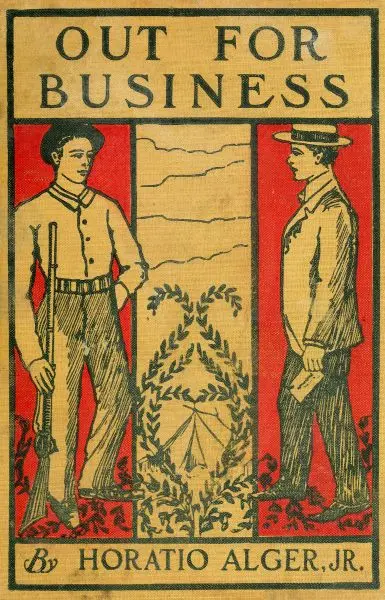
"Out for Business, or Robert Frost's Strange Career" by Horatio Alger Jr. is a work of juvenile fiction written in the late 19th century. The narrative follows a young boy named Robert Frost, who must navigate a series of challenges after his mother remarries a man he finds objectionable. The story details Robert's journey of self-discovery and ambition as he sets out into the world to find his place and seek success against the odds. At the start of the narrative, we are introduced to Robert Frost, a sixteen-year-old boy who is grappling with the recent loss of his father and the emotional turmoil of his mother's sudden marriage to James Talbot, a man whom Robert immediately disdains. The opening scenes present Robert's conflicted feelings as well as his initial interactions with his new step-father, which are tense and filled with resentment. After a particularly heated exchange, Robert decides to leave home in search of a better life, setting off on a journey that promises growth, hardship, and experiences that will shape his character. This initial chapter establishes not only the family conflict but also the themes of perseverance and moral integrity that are central to Alger's storytelling.
Introduction adapted from the source catalogue; source summaries may be automatically generated.
Free to read · English · 49,280 words · No account needed
MAKE TIME FOR A GOOD BOOK
On by default. Untick to stop anonymous reading totals. Each page counts after 10 seconds in view. How this works.
Anonymous counting is on unless you have switched it off.
"Oh, if that's so, excuse me for troubling you," and the boy turned on
his heel to walk out.
"Hold on," said the head waiter. "I don't think the new man suits Mr. Hinks entirely. Perhaps he'll give you a show after all. You'll find Mr. Hinks over at the pie counter yonder," and the waiter jerked his thumb in the direction.
Robert walked to the counter and found a short, stout man in charge. The individual had a pair of crafty eyes that the boy did not at all admire.
"I came to see about that position which you advertised," he said.
"Yes? Have you had any experience?"
"I worked in a cut-rate ticket office--the one that was burned out on Sunday last. I think I could do the work of an ordinary cashier."
"No doubt you could, if you are used to handling money. Did you work
for Gray?"
"Yes, sir."
"Well, I reckon he wouldn't have you unless you were all right," said Mr. Hinks. "I've got a new man on but he don't suit--he's too fussy and particular. Last night he left his desk and ran all the way to the sidewalk to give a man a dollar bill which he had forgotten."
"Well, that shows he is honest," said Robert, with a laugh.
"Yes, but my desk might have been robbed in the meantime."
"I suppose that is true."
"I don't want a man to be so honest as all that,--that is, with the customers,--although he must be honest with me. If a customer is foolish enough to leave his change behind, why let him lose it, that's my motto. What do you want a week?"
"I was getting twelve dollars."
"Phew! That's pretty stiff."
"I might start in for less."
"I never pay a man over five dollars."
"I cannot live on five dollars, I am afraid."
"Well, you pick up a good deal, you know," replied Mr. Hinks, and
closed one eye suggestively.
"You mean in the way of tips?"
"Tips? Oh, no, they go to the waiters. But through making change and the like," and Mr. Hinks closed one eye again.
Robert's face flushed.
"Do you mean by giving people the wrong change?" he demanded
indignantly.
"I didn't say so. But I know almost every cashier picks up lots of extra money in one way and another."
"Not if they are honest, sir. And I would not be dishonest--I would starve first. I am out for business, but not the kind of business you seem to expect of your employees."
At this plain talk Mr. Hinks scowled darkly at Robert.
Your reading position is saved on this browser. Take it to another device with a library code. Reading pages adapt to text, rather than matching a printed edition.
Edward Stratemeyer

Edward Stratemeyer
Edward Stratemeyer

Edward Stratemeyer
BEHIND THE BOOK
This eBook is for the use of anyone anywhere in the United States and most other parts of the world at no cost and with almost no restrictions whatsoever. You may copy it, give it away or re-use it under the terms of the Project Gutenberg License included with this eBook or online at www.gutenberg.org. If you are not located in the United States, you will have to check the laws of the country where you are located before using this eBook. Read the source licence.
The original source file, including credits and licence, is retained by this library. Request an original-format copy at no charge. Please include the book title and Project Gutenberg identifier #54737.
KEEP YOUR CURIOSITY GOING
Cécile Tormay

Moritz Busch
Coulson Kernahan
John L. Ransom

Maurice Baring
Frances Wright