
Neka, the boy conjuror
Edward Stratemeyer
THE CLASSIC COLLECTION · 1900
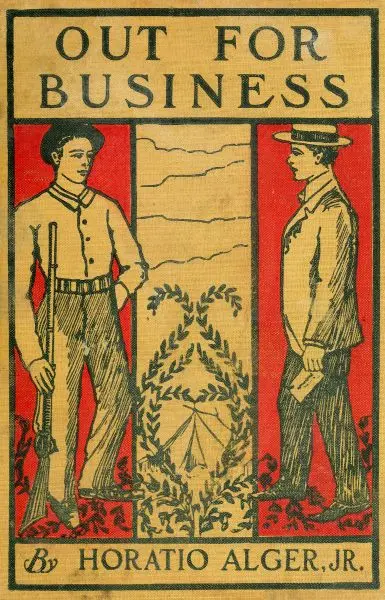
"Out for Business, or Robert Frost's Strange Career" by Horatio Alger Jr. is a work of juvenile fiction written in the late 19th century. The narrative follows a young boy named Robert Frost, who must navigate a series of challenges after his mother remarries a man he finds objectionable. The story details Robert's journey of self-discovery and ambition as he sets out into the world to find his place and seek success against the odds. At the start of the narrative, we are introduced to Robert Frost, a sixteen-year-old boy who is grappling with the recent loss of his father and the emotional turmoil of his mother's sudden marriage to James Talbot, a man whom Robert immediately disdains. The opening scenes present Robert's conflicted feelings as well as his initial interactions with his new step-father, which are tense and filled with resentment. After a particularly heated exchange, Robert decides to leave home in search of a better life, setting off on a journey that promises growth, hardship, and experiences that will shape his character. This initial chapter establishes not only the family conflict but also the themes of perseverance and moral integrity that are central to Alger's storytelling.
Introduction adapted from the source catalogue; source summaries may be automatically generated.
Free to read · English · 49,280 words · No account needed
MAKE TIME FOR A GOOD BOOK
On by default. Untick to stop anonymous reading totals. Each page counts after 10 seconds in view. How this works.
Anonymous counting is on unless you have switched it off.
In about twenty minutes Miss Churchill appeared. She was a stout young lady, weighing at least one hundred and sixty pounds. She had a high color, black hair, and a loud metallic voice.
Mr. Palmer surveyed her with rapt intensity.
"That's she!" he whispered. "Didn't I tell you she was a daisy?"
Robert was tempted to smile. He had a very indefinite idea of what might be considered a feminine daisy, but he recognized his companion's conception of the term.
Miss Churchill sang in a loud voice and with plenty of action one of the popular songs of the day. Livingston Palmer looked the picture of rapture. With his head thrown back and his eyes fastened upon his charmer, he could hardly fail to attract her attention.
She paused between two of the verses, and looked at him with a smile.
"Did you see?" he whispered in delight, "she smiled at me."
"Yes," answered Robert, "I noticed that she did."
"It looks as if she was sweet on me, don't you think so?"
"Perhaps so, I don't know much about young ladies. I can't read their
thoughts."
"How would it do for me to write her a note?"
"What could you write? You don't know her?"
"But she has taken notice of me. I might ask her for an interview."
"I don't feel competent to give you advice, Mr. Palmer; I am only a
boy."
"That is true. I--I think I will venture."
"But what will it lead to? Your attachment is not serious, I presume?"
"I don't know but it may be. The fact is, Robert, I am in love."
"Were you ever in love before, Mr. Palmer?"
"Never. This is the first time I have met my ideal."
"You surely wouldn't think of marrying her," said Robert.
"Why not?"
"I thought perhaps you would not care to marry on ten dollars a week."
"I could not. But she is probably earning considerably more. If we both of us worked, there would be a nice income between us."
"Then you would not object to your wife appearing in a theater?"
"No, Robert. I have no narrow prejudices."
"Then you think she would marry you?"
"You saw for yourself how sweetly she smiled on me. Oh, Robert, I am very happy!" and the infatuated young man looked in the seventh heaven of bliss.
"Excuse me for ten minutes, Robert," he said. "I am going into the
Sherman House to write a note. I will try to get it to her this
evening."
Robert smiled. He was a good deal amused by Palmer's romantic infatuation, but he did not feel called upon to remonstrate with him.
Your reading position is saved on this browser. Take it to another device with a library code. Reading pages adapt to text, rather than matching a printed edition.
Edward Stratemeyer

Edward Stratemeyer
Edward Stratemeyer

Edward Stratemeyer
BEHIND THE BOOK
This eBook is for the use of anyone anywhere in the United States and most other parts of the world at no cost and with almost no restrictions whatsoever. You may copy it, give it away or re-use it under the terms of the Project Gutenberg License included with this eBook or online at www.gutenberg.org. If you are not located in the United States, you will have to check the laws of the country where you are located before using this eBook. Read the source licence.
The original source file, including credits and licence, is retained by this library. Request an original-format copy at no charge. Please include the book title and Project Gutenberg identifier #54737.
KEEP YOUR CURIOSITY GOING
Cécile Tormay

Moritz Busch
Coulson Kernahan
John L. Ransom

Maurice Baring
Frances Wright