
Neka, the boy conjuror
Edward Stratemeyer
THE CLASSIC COLLECTION · 1900
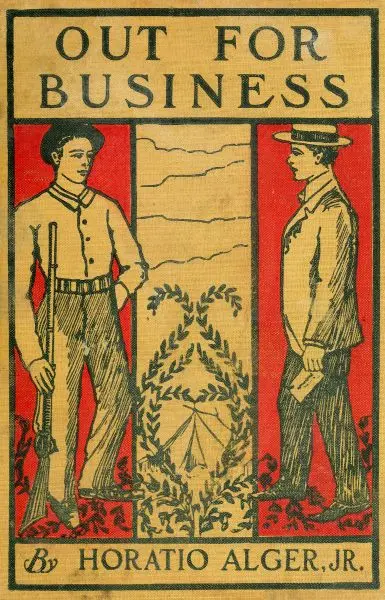
"Out for Business, or Robert Frost's Strange Career" by Horatio Alger Jr. is a work of juvenile fiction written in the late 19th century. The narrative follows a young boy named Robert Frost, who must navigate a series of challenges after his mother remarries a man he finds objectionable. The story details Robert's journey of self-discovery and ambition as he sets out into the world to find his place and seek success against the odds. At the start of the narrative, we are introduced to Robert Frost, a sixteen-year-old boy who is grappling with the recent loss of his father and the emotional turmoil of his mother's sudden marriage to James Talbot, a man whom Robert immediately disdains. The opening scenes present Robert's conflicted feelings as well as his initial interactions with his new step-father, which are tense and filled with resentment. After a particularly heated exchange, Robert decides to leave home in search of a better life, setting off on a journey that promises growth, hardship, and experiences that will shape his character. This initial chapter establishes not only the family conflict but also the themes of perseverance and moral integrity that are central to Alger's storytelling.
Introduction adapted from the source catalogue; source summaries may be automatically generated.
Free to read · English · 49,280 words · No account needed
MAKE TIME FOR A GOOD BOOK
On by default. Untick to stop anonymous reading totals. Each page counts after 10 seconds in view. How this works.
Anonymous counting is on unless you have switched it off.
As Palmer looked at the stalwart black-bearded man facing him a terrible fear sent a tremor through his slender frame. Suppose the fellow had come to inflict punishment upon him? Suppose he had a cowhide somewhere concealed about his clothes? He felt ready to sink through the floor.
"I hope," he said tremulously, "you found my letter satisfactory. I--I didn't know Alameda--I mean Mrs. Churchill--was married."
"Oh, that's all right. So you supposed her single?"
"I assure you I do."
"Well, at any rate she got even with you. She told me of the pitcher of water she threw on you out of the window. How did it feel?"
"Very wet," responded Palmer with a faint smile.
"Good joke!" said Churchill, laughing boisterously. "I wish I had been
there."
Somehow Palmer did not enjoy having the scene which had been so harrowing to him recalled. Yet this man must be propitiated.
"I was there," he said with a feeble attempt at a joke.
"So you were, so you were. When Alameda told me about it I nearly
laughed myself to death."
Palmer began to recover from his alarm. Evidently the injured husband
was not disposed to take things seriously, for he seemed in a good
humor.
"I hope you don't object to my admiring your wife?" he said.
"No, it does credit to your taste, but I can't have you flirting with
her."
"I assure you my intentions were and are strictly honorable."
"Oh, Alameda will take care of that. I'll tell you what I came about."
"As long as it isn't about a duel, I don't mind," thought Palmer.
"My wife is to have a benefit next Thursday evening. Tickets are a dollar each. How many will you take?"
"I'll take one."
"Better take two. You can scare up some young lady to take with you."
"I don't know many young ladies."
"Don't tell me that. You were not so very bashful with Alameda."
"I--I believe I'll take two."
"All right! Here they are."
"I'm afraid I haven't got two dollars with me," said Palmer embarrassed. In fact, he lived so closely up to his income that he seldom had that amount about him.
Peter Churchill frowned a little.
"I can't leave the tickets without the money," he said.
"I'll lend you the money, Mr. Palmer," said Robert.
"Thank you," said the senior clerk gratefully.
"Won't you take a couple of tickets, young fellow?" asked Churchill.
"No, sir. I will use one of Mr. Palmer's tickets."
The tickets were paid for and transferred to Palmer's vest-pocket. Then Alameda's husband left the office.
"I'm glad he's gone," said Livingston Palmer feebly. "I--I really thought he'd come in to horsewhip me."
Your reading position is saved on this browser. Take it to another device with a library code. Reading pages adapt to text, rather than matching a printed edition.
Edward Stratemeyer

Edward Stratemeyer
Edward Stratemeyer

Edward Stratemeyer
BEHIND THE BOOK
This eBook is for the use of anyone anywhere in the United States and most other parts of the world at no cost and with almost no restrictions whatsoever. You may copy it, give it away or re-use it under the terms of the Project Gutenberg License included with this eBook or online at www.gutenberg.org. If you are not located in the United States, you will have to check the laws of the country where you are located before using this eBook. Read the source licence.
The original source file, including credits and licence, is retained by this library. Request an original-format copy at no charge. Please include the book title and Project Gutenberg identifier #54737.
KEEP YOUR CURIOSITY GOING
Cécile Tormay

Moritz Busch
Coulson Kernahan
John L. Ransom

Maurice Baring
Frances Wright