
Neka, the boy conjuror
Edward Stratemeyer
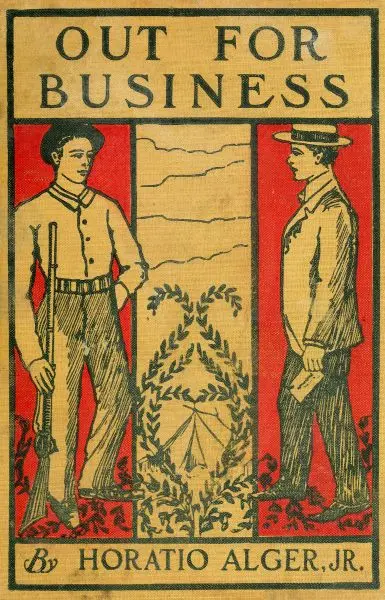
THE CLASSIC COLLECTION · 1900
"Out for Business, or Robert Frost's Strange Career" by Horatio Alger Jr. is a work of juvenile fiction written in the late 19th century. The narrative follows a young boy named Robert Frost, who must navigate a series of challenges after his mother remarries a man he finds objectionable. The story details Robert's journey of self-discovery and ambition as he sets out into the world to find his place and seek success against the odds. At the start of the narrative, we are introduced to Robert Frost, a sixteen-year-old boy who is grappling with the recent loss of his father and the emotional turmoil of his mother's sudden marriage to James Talbot, a man whom Robert immediately disdains. The opening scenes present Robert's conflicted feelings as well as his initial interactions with his new step-father, which are tense and filled with resentment. After a particularly heated exchange, Robert decides to leave home in search of a better life, setting off on a journey that promises growth, hardship, and experiences that will shape his character. This initial chapter establishes not only the family conflict but also the themes of perseverance and moral integrity that are central to Alger's storytelling.
Introduction adapted from the source catalogue; source summaries may be automatically generated.
Free to read · English · 49,280 words · No account needed
MAKE TIME FOR A GOOD BOOK
On by default. Untick to stop anonymous reading totals. Each page counts after 10 seconds in view. How this works.
Anonymous counting is on unless you have switched it off.
"My uncle owns a large lumber interest here, close to the upper end of the State, and several Canadians are trying to force him into a sale of his lands at a low price. They claim to have some hold upon the land.
"I must say I wish you were up here with me--to help run the lumber office. I have to be out on the lands a greater part of the time, and the office clerk is not to be trusted, since he is a great friend of the Canadians I mentioned. I am in hopes that my uncle will soon recover, to take charge for himself."
Dick Marden's letter interested Robert greatly. The confinement of city life was beginning to tell on the boy, who had heretofore lived more or less in the open at home.
"I'd like to go to Timberville," he said to Palmer, when he showed the communication. "The smell of pine and spruce would do a fellow a world of good."
"It wouldn't suit me," said Palmer, with a decided shake of his head. "Why, you have no amusements in a place like that--no theaters, no concerts, no billiard parlors, nothing."
"And yet people get along very well without them," smiled Robert.
"They can't have very elevated tastes."
"Perhaps more elevated than you think, Livingston. I've known some lumbermen who were very well educated."
"If I made a change do you know what I would do?" asked Palmer.
"No."
"I would go on the stage," said the senior clerk earnestly.
"What stage? Perhaps the variety stage the adorable Alameda is on, eh?"
"No! no! I am done with that forever. I would go in for tragedy."
"Tragedy doesn't pay, so I've heard said."
"Good, real talent will pay, I feel sure of it."
"And what would you play, Hamlet?"
"I would play all of Shakespeare's plays, but the part of Sparticus the Gladiator would suit me better."
"Did you ever act?"
"Twice--at the Twice-a-week Club. We gave Julius Cæsar, and I was Cæsar. The performance was a great success from an artistic standpoint."
"How about it financially?"
"Well, to tell the truth, we ran about thirty-three dollars behind."
"Which proves what I said, that tragedy doesn't pay," said Robert, with
a short laugh.
"My support was very poor, and, besides, our performance was not
advertised widely enough."
"I presume the newspapers gave you some favorable notices."
"No, they did nothing of the sort. We had not given them much advertising and so they ignored us. You know they won't do a thing without being paid for it."
Your reading position is saved on this browser. Take it to another device with a library code. Reading pages adapt to text, rather than matching a printed edition.
Edward Stratemeyer

Edward Stratemeyer
Edward Stratemeyer

Edward Stratemeyer
BEHIND THE BOOK
This eBook is for the use of anyone anywhere in the United States and most other parts of the world at no cost and with almost no restrictions whatsoever. You may copy it, give it away or re-use it under the terms of the Project Gutenberg License included with this eBook or online at www.gutenberg.org. If you are not located in the United States, you will have to check the laws of the country where you are located before using this eBook. Read the source licence.
The original source file, including credits and licence, is retained by this library. Request an original-format copy at no charge. Please include the book title and Project Gutenberg identifier #54737.
KEEP YOUR CURIOSITY GOING
Cécile Tormay

Moritz Busch
Coulson Kernahan
John L. Ransom

Maurice Baring
Frances Wright