
Neka, the boy conjuror
Edward Stratemeyer
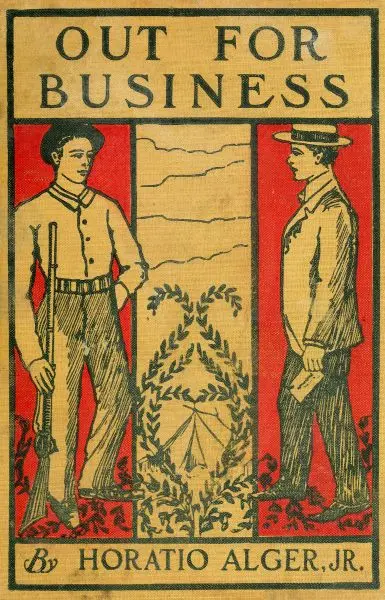
THE CLASSIC COLLECTION · 1900
"Out for Business, or Robert Frost's Strange Career" by Horatio Alger Jr. is a work of juvenile fiction written in the late 19th century. The narrative follows a young boy named Robert Frost, who must navigate a series of challenges after his mother remarries a man he finds objectionable. The story details Robert's journey of self-discovery and ambition as he sets out into the world to find his place and seek success against the odds. At the start of the narrative, we are introduced to Robert Frost, a sixteen-year-old boy who is grappling with the recent loss of his father and the emotional turmoil of his mother's sudden marriage to James Talbot, a man whom Robert immediately disdains. The opening scenes present Robert's conflicted feelings as well as his initial interactions with his new step-father, which are tense and filled with resentment. After a particularly heated exchange, Robert decides to leave home in search of a better life, setting off on a journey that promises growth, hardship, and experiences that will shape his character. This initial chapter establishes not only the family conflict but also the themes of perseverance and moral integrity that are central to Alger's storytelling.
Introduction adapted from the source catalogue; source summaries may be automatically generated.
Free to read · English · 49,280 words · No account needed
MAKE TIME FOR A GOOD BOOK
On by default. Untick to stop anonymous reading totals. Each page counts after 10 seconds in view. How this works.
Anonymous counting is on unless you have switched it off.
Robert opened the front door quickly, and hurried out. Meanwhile, the gentleman had helped Mrs. Frost out, and she was advancing up the walk, leaning on the arm of her companion. Mrs. Frost smiled, and turning to the man at her side, said, "This is my son Robert, James."
"Ah, indeed!" said the other with a smile. "He looks like a stout,
strong boy."
"I wonder who he is," thought Robert. But he was soon to learn.
"Did you have a pleasant visit, mother?" he asked.
"Yes, very pleasant," answered his mother, with a meaning glance at her companion. "Robert, did you receive my telegram?"
"Yes, mother."
"You remember what I said about the great surprise?"
"Yes, mother."
"Well, this gentleman is the great surprise," she said, simpering.
By this time the whole party had entered the house.
"I don't understand you, mother," said the boy, but a sudden suspicion had entered his mind, and he was afraid that he did understand. He waited in painful suspense for his mother to speak.
"I have brought you a new father, Robert. This is my husband, Mr.
Talbot."
"Oh, mother!" exclaimed Robert in a grief-stricken tone. "How could you
marry again?"
Mrs. Talbot, for this was now her name, blushed and looked uncomfortable. Her husband looked angry.
"Really, young man," he said, "it seems to me that is a very improper way of addressing your mother."
For the first time Robert fixed his eyes upon this man whom he was so suddenly called upon to think of as--not his father, for he could not tolerate the thought--but as his mother's husband. As before mentioned, he was a small-sized man, with black hair and side whiskers, a thin face, aquiline nose, and an expression which, so far from attracting, actually repelled the boy. It was a baleful look, which suggested Mephistopheles, though this well-known character in Faust did not occur to Robert, for he had never heard of him. The boy was not accustomed to regard new acquaintances with repugnance, but this was the feeling with which he regarded Mr. Talbot.
"I hate you!" he blazed out in sudden fury. "Oh, mother, why did you
marry him?"
This, it must be admitted, was not a very cordial welcome, and the boy's anger was reflected in the face of his new step-father, who bit his nether lip, and glared at our hero with wrathful eyes.
"You are an impudent cub!" he exclaimed. "I won't forget the way you
have received me."
"Oh, James, forgive him!" pleaded the mother. "He doesn't realize what he says. He will get over it to-morrow."
Your reading position is saved on this browser. Take it to another device with a library code. Reading pages adapt to text, rather than matching a printed edition.
Edward Stratemeyer

Edward Stratemeyer
Edward Stratemeyer

Edward Stratemeyer
BEHIND THE BOOK
This eBook is for the use of anyone anywhere in the United States and most other parts of the world at no cost and with almost no restrictions whatsoever. You may copy it, give it away or re-use it under the terms of the Project Gutenberg License included with this eBook or online at www.gutenberg.org. If you are not located in the United States, you will have to check the laws of the country where you are located before using this eBook. Read the source licence.
The original source file, including credits and licence, is retained by this library. Request an original-format copy at no charge. Please include the book title and Project Gutenberg identifier #54737.
KEEP YOUR CURIOSITY GOING
Cécile Tormay

Moritz Busch
Coulson Kernahan
John L. Ransom

Maurice Baring
Frances Wright