THE CLASSIC COLLECTION✦Building the pacific railwayCLASSIC FREE BOOKS
Building the pacific railway
Edwin L. (Edwin Legrand) Sabin
THE CLASSIC COLLECTION · 1913
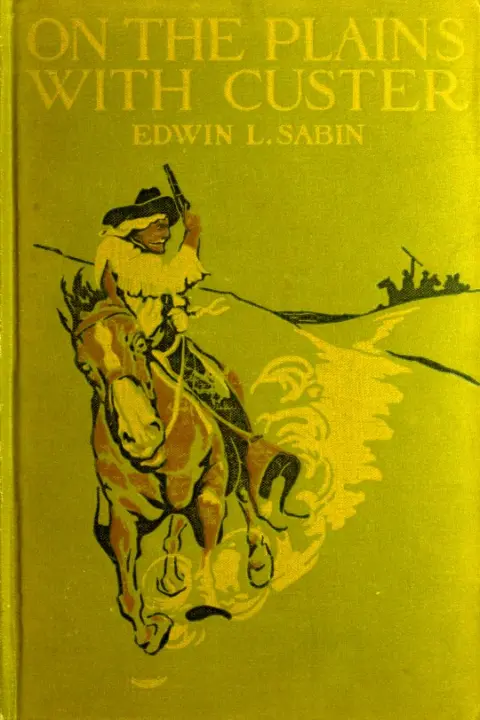
"On the Plains with Custer" by Edwin L. Sabin is a historical account written in the early 20th century. The work centers around the life and experiences of the young bugler Ned Fletcher during the tumultuous years of the late 1860s and the 1870s when General George Armstrong Custer and the Seventh Cavalry played critical roles in the westward expansion of white civilization and the conflicts with Native American tribes. The narrative offers insights into both the military and everyday life on the American plains during a period of significant historical change. The opening of the book introduces us to Ned Fletcher, a young boy who has escaped from captivity with the Sioux and is navigating the vast and lonely Kansas prairie alone in search of safety and his lost sister. As he wanders, he encounters a herd of buffalo being chased by a horseman, who is revealed to be the famous General Custer. The interaction between Ned and Custer leads to a sense of hope for the boy, who expresses a desire to join the army and find his sister. The early chapters set the tone for an adventure filled with the realities of frontier life, the challenges faced by young soldiers, and the complex relations between white settlers and Native Americans, establishing the groundwork for Ned's journey alongside Custer and the Seventh Cavalry.
Introduction adapted from the source catalogue; source summaries may be automatically generated.
Free to read · English · 68,963 words · No account needed
MAKE TIME FOR A GOOD BOOK
On by default. Untick to stop anonymous reading totals. Each page counts after 10 seconds in view. How this works.
Anonymous counting is on unless you have switched it off.
“By fours, right! For-r-r’d—march!”
Across the valley of the Smoky Hill they soberly jogged, their wagons lumbering in their rear, for the stage route, and the frightened stations. Presently they might turn east, upon the well-worn wagon-trail, to follow it to Fort Hays.
The first two stage stations were silent and abandoned. Along the route was not a sign of life. The advance of the fleeing Cheyennes and Sioux seemed to have swept the country clean. About the deserted appearance of the valley was something ominously quiet. But the third station was occupied.
A little cheer arose from it as the column rode in; and a group of stablemen and drivers stood out, to welcome. They were heavily armed, and log stables and station house, under their sod roofs, were tightly closed as if for a siege. At this point four stations had gathered in mutual protection.
“What’s the matter here?” demanded the general.
“Matter enough!” spoke one in the group. “Hello, Bill. The Injuns are out. They’ve crossed the line, goin’ north. Several parties of ’em, both Sioux an’ Cheyennes. Yes, sir. The lid’s off an’ the pot’s bubblin’. One party had women an’ children, but the bucks are in their war paint, an’ they’re raidin’ right an’ left. The stages have quit, till things simmer down agin, an’ the settlers ought to be warned.”
With parting word, and with grave face, issuing his crisp “For-r-r’d—march!” repeated by the bugles, the general pressed on.
On the second day they approached a station which, alas, presented a different aspect. From afar it showed, beside the trail, blackened and smoking and partially razed to the ground.
“Lookout Station,” informed Wild Bill.
“Bad work there,” quoth the general, abruptly, spurring Custis Lee.
The Delawares arrived first, to nose about, and to stand surveying.
“They’ve found something,” declared Wild Bill.
He, and the general, and Adjutant Moylan galloped forward; Ned plugged after; the column followed at a trot.
Bad work, indeed. Much of the buildings was in ashes, still smouldering. A portion of the heavy chinked log walls jutted up charred and ugly. The Delawares were clustered, at one side, on the plain, examining a mass difficult to determine, at a little distance. But a nearer view told. The litter once had been human beings.
“Scalped and burned,” said Wild Bill.
Nobody else spoke a word. He and the general and the lieutenant sombrely gazed. The doctor joined, horrified. The Delawares looked from face to face, and waited. Ned stared, and choked.
“The station gang, three of ’em,” announced Wild Bill. “Delawares say they were staked down, alive. You can guess the rest.”
Your reading position is saved on this browser. Take it to another device with a library code. Reading pages adapt to text, rather than matching a printed edition.
Edwin L. (Edwin Legrand) Sabin

Edwin L. (Edwin Legrand) Sabin

Edwin L. (Edwin Legrand) Sabin

Edwin L. (Edwin Legrand) Sabin
BEHIND THE BOOK
This eBook is for the use of anyone anywhere in the United States and most other parts of the world at no cost and with almost no restrictions whatsoever. You may copy it, give it away or re-use it under the terms of the Project Gutenberg License included with this eBook or online at www.gutenberg.org. If you are not located in the United States, you will have to check the laws of the country where you are located before using this eBook. Read the source licence.
The original source file, including credits and licence, is retained by this library. Request an original-format copy at no charge. Please include the book title and Project Gutenberg identifier #60157.
KEEP YOUR CURIOSITY GOING
Cécile Tormay

Moritz Busch
Coulson Kernahan
John L. Ransom

Maurice Baring
Frances Wright