THE CLASSIC COLLECTION✦Building the pacific railwayCLASSIC FREE BOOKS
Building the pacific railway
Edwin L. (Edwin Legrand) Sabin
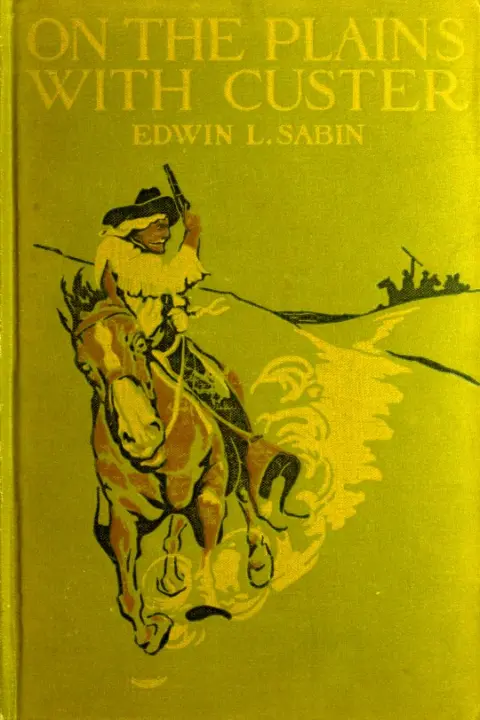
THE CLASSIC COLLECTION · 1913
"On the Plains with Custer" by Edwin L. Sabin is a historical account written in the early 20th century. The work centers around the life and experiences of the young bugler Ned Fletcher during the tumultuous years of the late 1860s and the 1870s when General George Armstrong Custer and the Seventh Cavalry played critical roles in the westward expansion of white civilization and the conflicts with Native American tribes. The narrative offers insights into both the military and everyday life on the American plains during a period of significant historical change. The opening of the book introduces us to Ned Fletcher, a young boy who has escaped from captivity with the Sioux and is navigating the vast and lonely Kansas prairie alone in search of safety and his lost sister. As he wanders, he encounters a herd of buffalo being chased by a horseman, who is revealed to be the famous General Custer. The interaction between Ned and Custer leads to a sense of hope for the boy, who expresses a desire to join the army and find his sister. The early chapters set the tone for an adventure filled with the realities of frontier life, the challenges faced by young soldiers, and the complex relations between white settlers and Native Americans, establishing the groundwork for Ned's journey alongside Custer and the Seventh Cavalry.
Introduction adapted from the source catalogue; source summaries may be automatically generated.
Free to read · English · 68,963 words · No account needed
MAKE TIME FOR A GOOD BOOK
On by default. Untick to stop anonymous reading totals. Each page counts after 10 seconds in view. How this works.
Anonymous counting is on unless you have switched it off.
“Bring in those stray animals! Have those horses secured, major. One platoon of each company with the horses. The other platoons fall in. Sound the assembly, trumpeter.”
A heavy mist hung low along the horizon; but through it could be descried, dimly, almost a mile away, a group of moving horsemen. They seemed to be riding rapidly for the camp. Wild Bill had reported at once to headquarters, and peering through field-glasses, to him the general spoke.
“What do you think of them, Bill?”
“They’re up to mischief, I should think,” coolly replied Wild Bill, whose eyes were as good as the general’s glass. “Act as if they meant to ride us down.”
“Line of skirmishers ahead; main body in reserve,” murmured the general, studying them. “By Jove! They’re as well disciplined as regular troops! Let ’em come. All we want is a fair fight.” These words, “a fair fight,” were among General Custer’s favorites. “Form line of platoons, adjutant. Have the men take intervals, and lie down, enclosing the camp.”
Captain Robbins had been posted upon the knoll whence the sentry had given the alarm. From him came reports that the enemy seemed to number about eighty; presently he reported that the enemy had halted; and next, the enemy had turned and were making off.
“Pshaw!” exclaimed the general, in that brisk voice of his. “Confound them! I was hoping they’d try closer quarters. Look into this, Moylan. Send out a small detail, for a better view of those fellows. Not too far, remember.”
Gladly into the saddle sprang the young Captain Hamilton and Lieutenant Tom Custer, and leading their detail raced out at a gallop. The mists were breaking under the rising sun; and it could be seen that the detail were galloping on and on, right into the waiting company before.
“Hamilton must intend to settle the war,” quoth Adjutant Moylan.
However, here galloped back again the detail. Pulling up short, Captain Hamilton saluted the general.
“Colonel West’s company, sir, confused in the mist. They mistook our Sibley tents for Indian tipis, and were about to charge us.”
“Plucky enough!” commented the general. “But West won’t hear the last of this, for some time.”
When, toward evening, Colonel West returned, with his weary company, he reported that there was no hope. The Indians had struck the stage line, and raiding right and left had crossed it. Probably all the bands and tribes to the north would be aroused. This was war.
Now the wagons had rolled in. To the bugles the Seventh Cavalry grimly buckled on its sabres, and bridled and saddled.
“Prepare to mount! Mount!”
They mounted.
Your reading position is saved on this browser. Take it to another device with a library code. Reading pages adapt to text, rather than matching a printed edition.
Edwin L. (Edwin Legrand) Sabin

Edwin L. (Edwin Legrand) Sabin

Edwin L. (Edwin Legrand) Sabin

Edwin L. (Edwin Legrand) Sabin
BEHIND THE BOOK
This eBook is for the use of anyone anywhere in the United States and most other parts of the world at no cost and with almost no restrictions whatsoever. You may copy it, give it away or re-use it under the terms of the Project Gutenberg License included with this eBook or online at www.gutenberg.org. If you are not located in the United States, you will have to check the laws of the country where you are located before using this eBook. Read the source licence.
The original source file, including credits and licence, is retained by this library. Request an original-format copy at no charge. Please include the book title and Project Gutenberg identifier #60157.
KEEP YOUR CURIOSITY GOING
Cécile Tormay

Moritz Busch
Coulson Kernahan
John L. Ransom

Maurice Baring
Frances Wright