THE CLASSIC COLLECTION✦Building the pacific railwayCLASSIC FREE BOOKS
Building the pacific railway
Edwin L. (Edwin Legrand) Sabin
THE CLASSIC COLLECTION · 1913
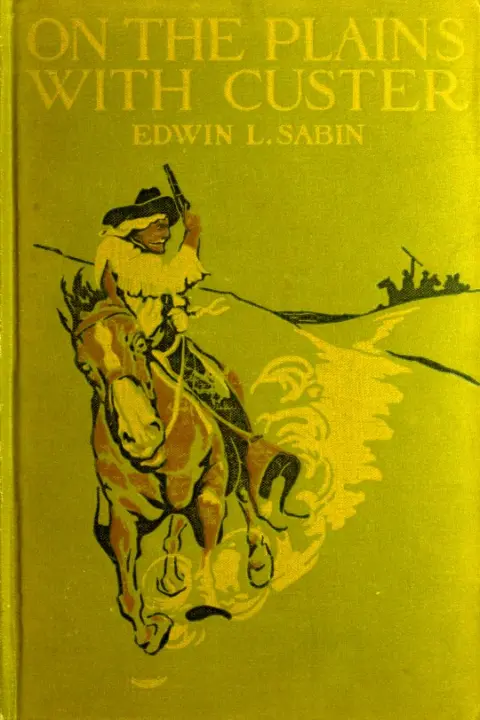
"On the Plains with Custer" by Edwin L. Sabin is a historical account written in the early 20th century. The work centers around the life and experiences of the young bugler Ned Fletcher during the tumultuous years of the late 1860s and the 1870s when General George Armstrong Custer and the Seventh Cavalry played critical roles in the westward expansion of white civilization and the conflicts with Native American tribes. The narrative offers insights into both the military and everyday life on the American plains during a period of significant historical change. The opening of the book introduces us to Ned Fletcher, a young boy who has escaped from captivity with the Sioux and is navigating the vast and lonely Kansas prairie alone in search of safety and his lost sister. As he wanders, he encounters a herd of buffalo being chased by a horseman, who is revealed to be the famous General Custer. The interaction between Ned and Custer leads to a sense of hope for the boy, who expresses a desire to join the army and find his sister. The early chapters set the tone for an adventure filled with the realities of frontier life, the challenges faced by young soldiers, and the complex relations between white settlers and Native Americans, establishing the groundwork for Ned's journey alongside Custer and the Seventh Cavalry.
Introduction adapted from the source catalogue; source summaries may be automatically generated.
Free to read · English · 68,963 words · No account needed
MAKE TIME FOR A GOOD BOOK
On by default. Untick to stop anonymous reading totals. Each page counts after 10 seconds in view. How this works.
Anonymous counting is on unless you have switched it off.
While dragged the cold hours, some of the officers threw the capes of their cavalry greatcoats over their heads, and stretched upon the snow, slept. The general, having finished his inspection, did likewise. But the Osages did not sleep; neither did the men of the ranks, now collected closer in groups at their horses’ heads, to keep warm. The stag-hounds, Maida and Blucher, shivered and whined, and curled in a ball.
Beyond, upon the crest of the ridge, an Osage and two of the officers were keeping keen watch upon the unconscious village below.
Ned dozed; when he awakened, stiff and shivering, the moon had set, all was pitchy dark, except that far in the east just a tinge of grayness signaled the approach of dawn.
Somebody near Ned stirred, and struck a match. It was the general, who looked at his watch. The flickering light revealed his anxious face and moustache rimmed with frost. He stood, and bending over another sleeping form he said, low and earnest: “Moylan! Moylan!”
“Yes, sir.” And the adjutant also sat up, to yawn, and spring to his
feet.
“It’s time we were forming. Wake the officers,” continued the general. “Is that you, trumpeter?”
“Yes, sir,” answered Ned.
“You may help us. When you come to Colonel Myers, either of you, give him my compliments and tell him to move his command out at once and take position.”
“Yes, sir.”
Many of the officers already were awake, waiting, peering, listening. All around up-towered dim figures, and cautious voices spoke in undertones. Faint jingle sounded, as the horses stirred at movement of their guardians.
Presently into the darkness filed away Colonel Myers’ column, to take position further along on the right.
The troopers of the center column were not yet mounted; the companies in column of fours bided the time when the light from the east should be stronger.
Ned, beside his horse, quivered with cold and excitement mingled. All before was grim and silent; the ridge, snowy and blotched with brush, lay against the sky-line to the south; beyond the ridge was the fated village. Not even a dog barked.
Suddenly through the columns of fours ran a murmur. Into the velvet black sky over the ridge soared slowly and stately a fire signal, of yellow glow. Instantly through Ned’s mind surged the thought that the village was alarmed, Major Elliot or Colonel Thompson had been detected, and this was a flaming arrow to spread the news adown the valley. Next would come the volleys, the shouts, and the shrieks.
“A rocket! A signal rocket!” ejaculated somebody.
“How long it hangs fire! Why doesn’t it burst?” wondered Adjutant
Moylan, impatient.
Your reading position is saved on this browser. Take it to another device with a library code. Reading pages adapt to text, rather than matching a printed edition.
Edwin L. (Edwin Legrand) Sabin

Edwin L. (Edwin Legrand) Sabin

Edwin L. (Edwin Legrand) Sabin

Edwin L. (Edwin Legrand) Sabin
BEHIND THE BOOK
This eBook is for the use of anyone anywhere in the United States and most other parts of the world at no cost and with almost no restrictions whatsoever. You may copy it, give it away or re-use it under the terms of the Project Gutenberg License included with this eBook or online at www.gutenberg.org. If you are not located in the United States, you will have to check the laws of the country where you are located before using this eBook. Read the source licence.
The original source file, including credits and licence, is retained by this library. Request an original-format copy at no charge. Please include the book title and Project Gutenberg identifier #60157.
KEEP YOUR CURIOSITY GOING
Cécile Tormay

Moritz Busch
Coulson Kernahan
John L. Ransom

Maurice Baring
Frances Wright