THE CLASSIC COLLECTION✦Building the pacific railwayCLASSIC FREE BOOKS
Building the pacific railway
Edwin L. (Edwin Legrand) Sabin
THE CLASSIC COLLECTION · 1913
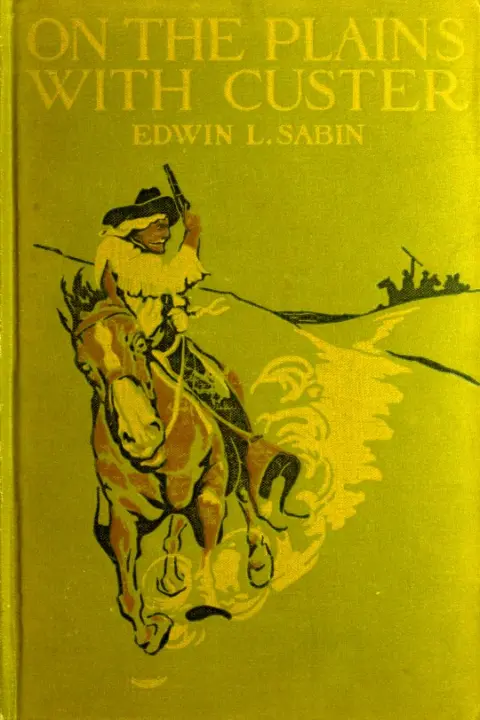
"On the Plains with Custer" by Edwin L. Sabin is a historical account written in the early 20th century. The work centers around the life and experiences of the young bugler Ned Fletcher during the tumultuous years of the late 1860s and the 1870s when General George Armstrong Custer and the Seventh Cavalry played critical roles in the westward expansion of white civilization and the conflicts with Native American tribes. The narrative offers insights into both the military and everyday life on the American plains during a period of significant historical change. The opening of the book introduces us to Ned Fletcher, a young boy who has escaped from captivity with the Sioux and is navigating the vast and lonely Kansas prairie alone in search of safety and his lost sister. As he wanders, he encounters a herd of buffalo being chased by a horseman, who is revealed to be the famous General Custer. The interaction between Ned and Custer leads to a sense of hope for the boy, who expresses a desire to join the army and find his sister. The early chapters set the tone for an adventure filled with the realities of frontier life, the challenges faced by young soldiers, and the complex relations between white settlers and Native Americans, establishing the groundwork for Ned's journey alongside Custer and the Seventh Cavalry.
Introduction adapted from the source catalogue; source summaries may be automatically generated.
Free to read · English · 68,963 words · No account needed
MAKE TIME FOR A GOOD BOOK
On by default. Untick to stop anonymous reading totals. Each page counts after 10 seconds in view. How this works.
Anonymous counting is on unless you have switched it off.
“Nothing very sweet about an Indian village, doctor,” retorted the general. “I’ll just take you along, to prove it. Tell the officers to have their troops wait at a ready, Moylan, while we take a nearer look. Come back at once. I want you with me.”
The adjutant quickly started the word down the circle, and returned.
“We’d better all go in,” bade the general, dismounting. “The bugler, too. I may need him. Leave your horses here.”
Quickly Ned swung from Buckie. Quickly swung from their horses also the doctor, and the lieutenant, and Guerrier the interpreter. They left the animals in charge of an orderly, and trudged forward afoot.
The general and Guerrier led. The moonlight made walking easy, and staring hard at the tents, step by step they advanced, across the open space separating the cavalry circle from the village in the middle. Nothing happened. As before, silence, broken only by the slight breeze and the tinkling water, reigned.
Guerrier called out loudly, in Cheyenne. Instantly a dog barked, and another, and another, until a furious angry chorus rent the quiet moonlight.
“Many dogs,” he said. “So I think they still there. Dogs would go, too.”
“Call again.”
He did so. The doctor had nervously drawn his revolver.
“Then why don’t they answer?”
“Guess they wait, in the trees; and when we get nearer, maybe they
shoot. No like this.”
“That’s a comforting idea,” blurted the general. “But we’ve gone too far to back out with honor now. Let’s investigate those first lodges.”
He drew his revolver. Lieutenant Moylan drew his, and Ned imitated. The butt of the heavy Colt’s six-shooter felt good to his hand. Once more they stole forward, this time more cautiously. Ned’s heart beat with a thumpity-thumpity; but he was not afraid, where the general led.
The general dropped to hands and knees, as example to the others, and thus crept to the nearest of the little bunch of lodges. Occasionally he stopped, and listened; and then stopped and listened all, holding their breaths. Still from the trees sped no arrow, belched no sudden shot, pealed no shrill, exultant voice; and from the lodges issued not a sound.
“I believe every soul has fled,” spoke the general, more in ordinary tone, and somewhat as if relieved. He arose to stooping posture. Guerrier advanced quickly to the first of the lodges, pulled aside the mat that closed the entrance, and stepped within. One after another they followed. The lodge was empty of inmate.
Your reading position is saved on this browser. Take it to another device with a library code. Reading pages adapt to text, rather than matching a printed edition.
Edwin L. (Edwin Legrand) Sabin

Edwin L. (Edwin Legrand) Sabin

Edwin L. (Edwin Legrand) Sabin

Edwin L. (Edwin Legrand) Sabin
BEHIND THE BOOK
This eBook is for the use of anyone anywhere in the United States and most other parts of the world at no cost and with almost no restrictions whatsoever. You may copy it, give it away or re-use it under the terms of the Project Gutenberg License included with this eBook or online at www.gutenberg.org. If you are not located in the United States, you will have to check the laws of the country where you are located before using this eBook. Read the source licence.
The original source file, including credits and licence, is retained by this library. Request an original-format copy at no charge. Please include the book title and Project Gutenberg identifier #60157.
KEEP YOUR CURIOSITY GOING
Cécile Tormay

Moritz Busch
Coulson Kernahan
John L. Ransom

Maurice Baring
Frances Wright