THE CLASSIC COLLECTION✦Building the pacific railwayCLASSIC FREE BOOKS
Building the pacific railway
Edwin L. (Edwin Legrand) Sabin
THE CLASSIC COLLECTION · 1913
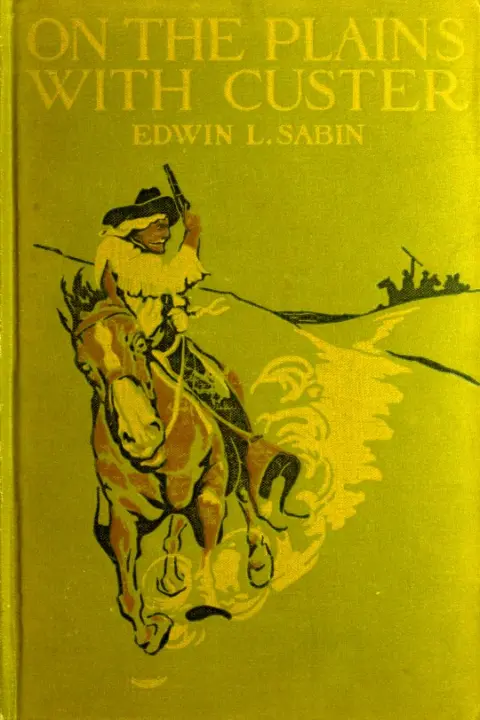
"On the Plains with Custer" by Edwin L. Sabin is a historical account written in the early 20th century. The work centers around the life and experiences of the young bugler Ned Fletcher during the tumultuous years of the late 1860s and the 1870s when General George Armstrong Custer and the Seventh Cavalry played critical roles in the westward expansion of white civilization and the conflicts with Native American tribes. The narrative offers insights into both the military and everyday life on the American plains during a period of significant historical change. The opening of the book introduces us to Ned Fletcher, a young boy who has escaped from captivity with the Sioux and is navigating the vast and lonely Kansas prairie alone in search of safety and his lost sister. As he wanders, he encounters a herd of buffalo being chased by a horseman, who is revealed to be the famous General Custer. The interaction between Ned and Custer leads to a sense of hope for the boy, who expresses a desire to join the army and find his sister. The early chapters set the tone for an adventure filled with the realities of frontier life, the challenges faced by young soldiers, and the complex relations between white settlers and Native Americans, establishing the groundwork for Ned's journey alongside Custer and the Seventh Cavalry.
Introduction adapted from the source catalogue; source summaries may be automatically generated.
Free to read · English · 68,963 words · No account needed
MAKE TIME FOR A GOOD BOOK
On by default. Untick to stop anonymous reading totals. Each page counts after 10 seconds in view. How this works.
Anonymous counting is on unless you have switched it off.
A slight bustle from the remainder of the camp indicated that the
infantry and artillery also had been awakened and were being put under
arms.
This was exciting; and as off they rode, at a walk, in long column, through the still night, Ned, behind the general and Adjutant Moylan and Guerrier the interpreter, thrilled with it. They were going to surround the Indian village; and there might be a fight.
Every sabre was tucked between leg and saddle-flap, so that it would not clink. All in silence proceeded the shadowy column. Orders were given in a whisper, and by whisper passed from troop to troop. The moon was almost full, but luckily the clouds concealed it constantly. In the distance before flickered the red light of a camp fire, at the village; it was made the guide.
The column swung in an oblique change of direction, to strike the village from above. This was a good move, for if the Indians tried to escape, they would be forced to run right into the infantry, at the camp.
“Do you think they suspect we’re coming, Guerrier?” in low tone asked
the general.
“I do not think so,” answered Guerrier.
“We’ll have to watch sharp for an ambuscade, Moylan,” prompted the general. “Our visit may not please the red gentlemen.”
Now the column was near. The moon peeped out between clouds, and then could be seen the glimmer of the white buffalo-hide lodges amidst the grove of willows and cottonwoods by the river.
“Have each rear troop deploy, in succession, as skirmishers, forming a continuous line facing inward, around the village,” ordered the general, to the adjutant. “But quietly, remember.” And back rode Lieutenant Moylan, carrying the instructions.
Skillfully the great circle was formed; for when, suddenly, out from the clouds burst the moon, shining like a light-house on an island of the sky, it revealed the cavalrymen sitting motionless on their motionless horses, in a great fringe; and in the center was the ghostly village. Just a little breeze sighed softly through the cottonwoods, while the stream flowing through grove and village murmured music.
A horseman rode from down the line. It was the regimental surgeon, Dr. Coates—a jolly man, always eager for adventure.
“By thunder! Believe they’re all asleep yet,” he whispered, excited.
“What do you think, Guerrier?” queried the general, ill at ease.
“Can’t tell. Maybe,” answered the half-breed, peering from his pony.
“Well, we can go in and see. I’d like to know whether we’ve captured a deserted village, after all.”
“Sweet Auburn, loveliest village of the plain,” quoted the doctor, who was given to saying such things.
Your reading position is saved on this browser. Take it to another device with a library code. Reading pages adapt to text, rather than matching a printed edition.
Edwin L. (Edwin Legrand) Sabin

Edwin L. (Edwin Legrand) Sabin

Edwin L. (Edwin Legrand) Sabin

Edwin L. (Edwin Legrand) Sabin
BEHIND THE BOOK
This eBook is for the use of anyone anywhere in the United States and most other parts of the world at no cost and with almost no restrictions whatsoever. You may copy it, give it away or re-use it under the terms of the Project Gutenberg License included with this eBook or online at www.gutenberg.org. If you are not located in the United States, you will have to check the laws of the country where you are located before using this eBook. Read the source licence.
The original source file, including credits and licence, is retained by this library. Request an original-format copy at no charge. Please include the book title and Project Gutenberg identifier #60157.
KEEP YOUR CURIOSITY GOING
Cécile Tormay

Moritz Busch
Coulson Kernahan
John L. Ransom

Maurice Baring
Frances Wright