THE CLASSIC COLLECTION✦Building the pacific railwayCLASSIC FREE BOOKS
Building the pacific railway
Edwin L. (Edwin Legrand) Sabin
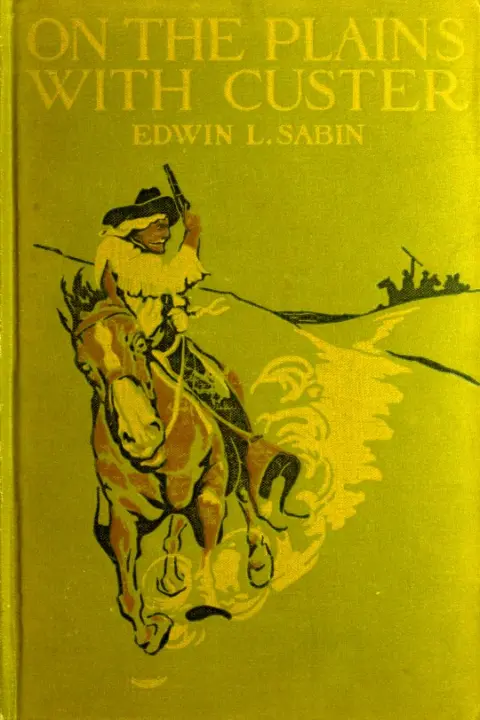
THE CLASSIC COLLECTION · 1913
"On the Plains with Custer" by Edwin L. Sabin is a historical account written in the early 20th century. The work centers around the life and experiences of the young bugler Ned Fletcher during the tumultuous years of the late 1860s and the 1870s when General George Armstrong Custer and the Seventh Cavalry played critical roles in the westward expansion of white civilization and the conflicts with Native American tribes. The narrative offers insights into both the military and everyday life on the American plains during a period of significant historical change. The opening of the book introduces us to Ned Fletcher, a young boy who has escaped from captivity with the Sioux and is navigating the vast and lonely Kansas prairie alone in search of safety and his lost sister. As he wanders, he encounters a herd of buffalo being chased by a horseman, who is revealed to be the famous General Custer. The interaction between Ned and Custer leads to a sense of hope for the boy, who expresses a desire to join the army and find his sister. The early chapters set the tone for an adventure filled with the realities of frontier life, the challenges faced by young soldiers, and the complex relations between white settlers and Native Americans, establishing the groundwork for Ned's journey alongside Custer and the Seventh Cavalry.
Introduction adapted from the source catalogue; source summaries may be automatically generated.
Free to read · English · 68,963 words · No account needed
MAKE TIME FOR A GOOD BOOK
On by default. Untick to stop anonymous reading totals. Each page counts after 10 seconds in view. How this works.
Anonymous counting is on unless you have switched it off.
General Custer has left his own story of his plains days in Kansas and Nebraska. It lies before me. Mrs. Custer, his comrade of garrison and camp and march, has written several books about him. They lie before me. There is a biography by one Captain Whittaker, written at the close of the last battle, near forty years ago. With General Sheridan and General Custer upon their campaign against the Cheyennes and the Kiowas was a newspaper reporter, Randolph Keim, who also wrote a book. Chapters have there been, in other books and in magazines, and pamphlets of time agone; and, as I say, men and women are now alive who knew the general. From all these more information should be sought. No one pen can describe so fine a thing as a Man.
So this book must tell of the Custer whom Ned the boy and youth saw; and of affairs in which he took part during that final struggle when the white race would supplant the red race, on the plains of north and south. In the narrative of these years I have tried to show how the white race felt and how the red race felt; for each had their rights and their wrongs, and each did right and did wrong. Out of the result came general good, that the church and the school-house might rise and people might work and play in peace, where formerly stood only the unproductive hide lodges, and the main thought was war and Plunder.
Coronado, California, June 1, 1913.
Famous American soldier and cavalry leader in the Civil War and on Indian campaigns afterward. A loyal citizen, a tender son, a devoted husband. Family name “Autie”; otherwise called Armstrong; by war correspondents styled “the Boy General”; by the soldiers nicknamed “Old Curly,” and “Jack”; entitled by the Indians “the Yellow Hair,” “the Long Hair,” or, in full, “White Chief with the Long Yellow Hair.”
Born at New Rumley, Ohio, December 5, 1839.
Father: Emmanuel H. Custer, of Maryland.
Mother: Maria Ward Kirkpatrick, of Pennsylvania.
Spent his boyhood at New Rumley, on the farm, and with his
sister at Monroe, Michigan.
Educated at New Rumley, at the Stebbins Academy (Monroe) and the Monroe “Seminary,” and at the Hopedale, Ohio, Normal School.
Appointed to West Point Military Academy, 1857.
Graduates last in his class, 1861.
Assigned as second lieutenant, G Company, Second United States
Cavalry.
Three days after leaving West Point reports for duty with
General McDowell’s army, on the morning of the battle of Bull
Run.
Soon detailed as aide-de-camp and assistant adjutant-general on the staff of General Philip Kearny.
Second lieutenant, Fifth United States Cavalry, 1862, under
General Stoneman.
Your reading position is saved on this browser. Take it to another device with a library code. Reading pages adapt to text, rather than matching a printed edition.
Edwin L. (Edwin Legrand) Sabin

Edwin L. (Edwin Legrand) Sabin

Edwin L. (Edwin Legrand) Sabin

Edwin L. (Edwin Legrand) Sabin
BEHIND THE BOOK
This eBook is for the use of anyone anywhere in the United States and most other parts of the world at no cost and with almost no restrictions whatsoever. You may copy it, give it away or re-use it under the terms of the Project Gutenberg License included with this eBook or online at www.gutenberg.org. If you are not located in the United States, you will have to check the laws of the country where you are located before using this eBook. Read the source licence.
The original source file, including credits and licence, is retained by this library. Request an original-format copy at no charge. Please include the book title and Project Gutenberg identifier #60157.
KEEP YOUR CURIOSITY GOING
Cécile Tormay

Moritz Busch
Coulson Kernahan
John L. Ransom

Maurice Baring
Frances Wright