
Childhood in literature and art, with some observations on literature for children
Horace Elisha Scudder
THE CLASSIC COLLECTION · 1881
"Noah Webster" by Horace Elisha Scudder is a historical account written in the late 19th century. The book explores the life and contributions of Noah Webster, a pivotal figure in American education and lexicography, particularly noted for his efforts in creating an American spelling system and dictionary. Scudder's work delves into Webster's early life, his educational endeavors, and the profound influence he had on the American language and identity. The opening of the biography sets the stage by detailing Noah Webster's early life in West Hartford, Connecticut, where he was born into a family with deep roots in the community. The narrative describes the simplicity and hardships of rural life during the mid-18th century, which shaped his character and intellect. Scudder highlights Webster's education, from his time at the village school to his studies at Yale, and frames these experiences within the context of the American Revolution, suggesting that his formative years were characterized by a blend of scholarly pursuits and active participation in significant historical events. The groundwork laid in this opening chapter foreshadows Webster's later achievements in education and linguistics, providing readers with insights into how his upbringing and education influenced his lifelong mission to develop a distinctly American language.
Introduction adapted from the source catalogue; source summaries may be automatically generated.
Free to read · English · 56,953 words · No account needed
MAKE TIME FOR A GOOD BOOK
On by default. Untick to stop anonymous reading totals. Each page counts after 10 seconds in view. How this works.
Anonymous counting is on unless you have switched it off.
Revision Committee's work and N. W.'s compared, 173, 175, 176, 181; the American company and N. W., 291.
Revolution, The, and its connection with American history, 283, 284.
Roman precedents, 49.
Rousseau, 119.
Rowan, Mr., 66.
Sabbath, the, as the shrine of Puritanism, 30.
Sabbath-Day Houses, 27;
description of, by W. C. Fowler, 28-30.
Savage, James, and his sarcastic remarks on N. W., 95.
School-teaching by N. W., at Glastonbury, 8;
at Hartford, 9;
at Sharon, 10;
at Goshen, 33.
Schuyler, Philip, 55.
Sharon, N. W. teaches school at, 9;
advertisement of school there, 10.
"Sketches of American Policy," 113;
N. W.'s publication of, 115;
a specimen of political thought, 119;
analyzed, 120-126.
Slavery, N. W. on, 139.
Sleighing parties, 11.
Smith, Samuel Stanhope, examines N. W.'s manuscript, 53.
Smith, Zephaniah, N. W.'s classmate, 4.
South, literature at the, in the War of 1861-1865, 74.
Spelling-reform, hints of by N. W., 40;
his pioneer efforts at, 187;
his formal views on, 192-202.
Stiles, Ezra, President of Yale College, 4;
his impressive scholarship, 5.
Strong, Jedediah, 9.
Sunday, observance of, in New England, 27, 31.
Tetard, M., N. W.'s French teacher, 12.
Thomas, Isaiah, 89.
Ticknor, George, quoted, upon the difficulties in the way of a
student, 21.
"Times, The," a series of papers by N. W., 134.
Tooke, Horne, N. W.'s teacher in grammar, 43;
in derivations, 258.
Trumbull, Governor, of Connecticut, 95.
Trumbull, John, on N. W.'s prospects, 97.
Unabridged, The, 275.
Union, The, and its connection with social and individual life, 293.
Verplanck, Mr., 63, 66.
Washington, George, passes through New Haven, 5;
is escorted by N. W., 6;
his virtues commemorated in a spelling-book, 39;
Mirabeau, conscious of his own defects, wishes children early taught
the name of, 47;
visited by N. W., 56;
defended by N. W. against the Republicans, 131;
his connection with the French difficulties, 132.
Waterston, R. C., 184.
Watson, James, 130.
Webster, Daniel, letter to, from N. W., 57;
his part in passing copyright law, 66.
Webster, Mercy, 3.
Webster, Noah, born, 2;
his ancestry, 3;
his early education, 4;
at Yale College, 4;
escorts Washington and Lee through New Haven, 6;
serves as private in the Revolutionary Army, 7;
graduates and takes up school-teaching, 8;
studies law and teaches in Hartford, 9;
is admitted to the bar, 9;
resumes teaching at Sharon, 9;
has a tender regard for R. P., 11;
goes on sleighing parties, 11;
the influences about his youth, 13-32;
enters upon the making of school-books, 33;
his Grammatical Institute, 34;
his portrait, 35;
his aim in his early writings, 38;
his hints at orthographic reform, 40;
his early conversion in the matter of grammars, 42;
issues a new grammar, 43;
his views on usage, 44;
appeals to the pride of his countrymen, 45;
his Federalism, 46;
his attention to the political interests of America in his
reading-book, 47;
not a mere Anglo-phobian, 50;
his weakness and strength, 51;
sets out to secure copyright laws, 52;
makes a journey to Southern States, 56;
writes a letter to Daniel Webster on copyright laws, 57-61;
his publication of his Spelling-Book, 69;
his contracts with book-sellers, 70;
his venture in the American Magazine, 78;
his magazine projects, 80-93;
his enterprise, 94;
his publication of Winthrop's Journal, 95;
marries Rebecca Greenleaf, 96;
is outside of the Hartford Wits, 97;
writes a letter to Priestley, 104;
contributes to the "Connecticut Courant," 111;
publishes a pamphlet entitled "Sketches of American Policy," 113;
the product of certain forces, 118;
goes to Philadelphia at Franklin's request, 128;
writes "An Examination of the Leading Principles of the Federal
Constitution," 129;
editor of "The Minerva," 130;
his defense of the administration, 133;
discusses the French Revolution, 134;
writes "The Times," 134;
publishes a pamphlet on the French Revolution, 136;
defends Jay's Treaty, 137;
mistaken for Hamilton by Jefferson, 138;
his editorial skill, 138;
what he thought of slavery, 139;
closes his connection with "The Minerva," 142;
publishes further political works, 142;
his attack on Jefferson, 144;
at the polls, 145;
is concerned in the Hartford Convention, 146;
the ephemeral character of his political writings, 148;
his general average, 151;
his likeness to Franklin, 152;
writes "The Prompter," 153;
his interest in the people, 161;
his taste for statistics, 162;
his theological writings, 167;
his revision of the Bible, 168-181;
is discouraged about his prospects, 184;
his pecuniary resources, 186;
his pioneer efforts in spelling reform, 187;
his sympathy with Franklin, 190;
his formal views on spelling reform, 192-202;
his doctrine of usage, 208;
his varied method of disseminating his views, 213;
his mental habits, 215;
his Compendious Dictionary, 216;
introduces new features, 217;
criticises Dr. Johnson, 219-225;
replies to J. Pickering, 226-232;
the improvement in his style, 233;
his announcement of his great work, 235;
his labor upon it, 236;
visits Europe, 237;
completes his work with Gibbonian emotion, 238;
his individuality, 275;
his proprietorship in the present edition of the Dictionary, 276;
his industry after publication of the first edition, 277;
his personal appearance, family life, and death, 278, 279;
his place in history, 280;
what he attempted, 282;
and what he did, 286;
a representative American, 289;
his career illustrative of the individuality resident in early national
life, 294.
Your reading position is saved on this browser. Take it to another device with a library code. Reading pages adapt to text, rather than matching a printed edition.
Horace Elisha Scudder
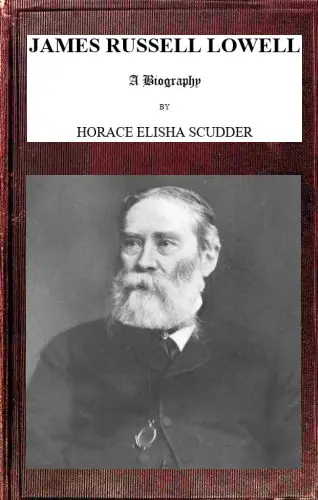
Horace Elisha Scudder
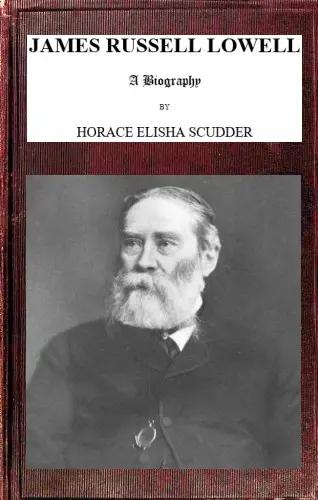
Horace Elisha Scudder
Horace Elisha Scudder
BEHIND THE BOOK
This eBook is for the use of anyone anywhere in the United States and most other parts of the world at no cost and with almost no restrictions whatsoever. You may copy it, give it away or re-use it under the terms of the Project Gutenberg License included with this eBook or online at www.gutenberg.org. If you are not located in the United States, you will have to check the laws of the country where you are located before using this eBook. Read the source licence.
The original source file, including credits and licence, is retained by this library. Request an original-format copy at no charge. Please include the book title and Project Gutenberg identifier #31238.
KEEP YOUR CURIOSITY GOING
Cécile Tormay

Moritz Busch
John L. Ransom
Frances Wright
Cécile Tormay

Mabel Potter Daggett